
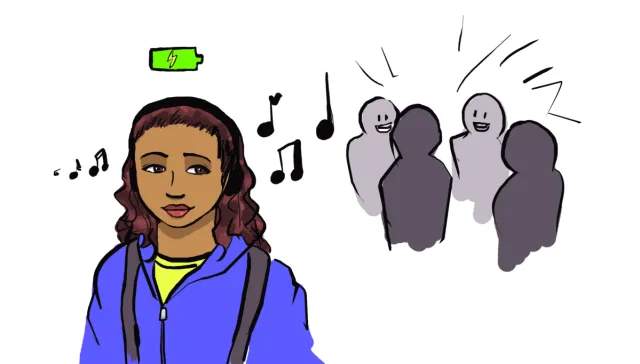
The term “introvert” often conjures up images of a shy, reclusive individual. However, this stereotype barely scratches the surface. In reality, introverts comprise a diverse group, encompassing various subtypes with distinct characteristics.
According to Healthline, an introvert is someone who focuses inwardly, prioritizing their thoughts and ideas over external stimuli. Yet, introverts are more diverse than we typically assume. Some enjoy socializing with close friends and family, preferring intimate gatherings over large crowds. Others may identify as ambiverts, blending introverted and extroverted traits.
Read more: Introversion: 10 reasons why you don’t enjoy being around people
Research has identified four distinct categories of introverts, highlighting the complexity of introversion. By recognizing this diversity, we can move beyond oversimplified notions and gain a more in-depth understanding of introverted individuals.
It’s essential to acknowledge that being an introvert doesn’t define one’s personality entirely. This complexity enables us to appreciate the diverse range of introverted personalities, as individuals exist on a spectrum.
1. Social Introverts
Social introverts embody a unique combination of outgoing and private characteristics, making them a fascinating subtype. When they’re in the right mood, they can be the life of the party, unencumbered by shyness or social anxiety. However, if they overextend themselves, they may experience emotional exhaustion and anxiety.
Despite their need for alone time, social introverts enjoy the company of a select few close friends. In fact, being around these trusted individuals can bring out their most social side. To outsiders, they may appear to be extroverts, but beneath the surface, they remain guarded, only sharing personal details with their inner circle.
2. Thinking Introverts
Thinking introverts are good at thinking deeply and coming up with new ideas. They often appear lost in thought, as if daydreaming, and may seem distant to those who don’t know them. This subtype of introverts is frequently distracted by their imagination, making social interactions secondary to their inner world.
Even though they tend to be introspective, thinking introverts are not always shy around people. However, it may be difficult for others to relate to them because of their complex inner lives. They have a propensity to live inside their own head and would rather explore their feelings and thoughts than share them with others.
This introspective and creative subtype of introverts exhibits a unique sensitivity to their emotions, regularly engaging in deeply insightful self-reflection. While it may be difficult to penetrate their inner world, thinking introverts offer a fascinating glimpse into the complexities of the human mind.
3. Anxious Introverts
Have you ever encountered someone who frequently replays past social encounters in their mind, wondering what they could have done differently? This introspective tendency is often characteristic of anxious introverts.
Anxious introverts typically feel uneasy or nervous in social situations, which can lead them to seek solitude even when surrounded by friends. They tend to avoid new or large social gatherings, and their minds regularly race with self-evaluation when they’re in public. It’s essential to distinguish between anxious introversion and social anxiety disorder.
While anxious introverts may exhibit shy tendencies, their experiences differ from those with social anxiety disorder. If social situations trigger intense physical reactions such as trembling, rapid heartbeat, or nausea, it may indicate social anxiety, which requires professional attention.
It’s crucial to recognize that anyone can experience social anxiety or other anxiety disorders, regardless of their personality type. We can support and understand anxious introverts and people with social anxiety more effectively if we recognize these differences.
4. Restrained Introverts
You may have encountered a restrained introvert in your daily life, perhaps as a neighbour or close friend. This subtype of introverts is characterized by their discomfort with being rushed into situations, particularly those involving social interaction. Restrained introverts are characterized by their reticence to change, thoughtfulness, and conservation. When they are making decisions, they like to take their time and frequently spend too many hours considering all of their options.
These individuals appreciate structure and planning, valuing notice of upcoming events and preferring to stick to their established routines. Spontaneity is not their strong suit, and they may decline last-minute invitations, even from close friends.
Restrained introverts find solace in relaxing activities like watching their favorite shows, reading, or sleeping. They typically struggle to shake off the slumber and get moving in the morning, finding comfort in their predictable routines and resisting changes to their daily rhythms.
Conclusion
In today’s generation, introversion is more common than you might think. While we have explored four distinct types of introverts, it is important to remember that many individuals possess a combination of traits from multiple categories.
Furthermore, introverts typically define traditional stereotypes, exhibiting qualities that might seem unexpected. For example, some introverts are truly interested in social interaction, while others may surprise you by being more reserved than their extroverted counterparts.
Understanding your personality type is significant for expressing your needs, connecting with like-minded individuals, and building meaningful relationships. If you identify as an introvert but don’t align with the four types discussed, you might be an ambivert or lean more toward the extroverted side of the spectrum. Regardless of your personality type, embracing your unique qualities is key to living authentically and fostering deep connections with others.
Photo credit : Los Angeles Times (High School Insider)



Leave a Reply