

The idea of a single African identity has been called into question by the difficulties Africa has faced for 1,400 years as a result of Arab Muslim imperialism. Many North African Arabs do not consider themselves or their countries to be African.
Some North Africans perceive the term “Africa” negatively because it refers to people who live south of the Sahara. This viewpoint is linked to ongoing racial discrimination, in which people with darker skin face significant obstacles and harassment in Egypt, Morocco, Libya, Algeria, Mauritania, and Tunisia.
In these countries, black people are frequently depicted in inferior roles in the media and face segregation in various aspects of life. Even black people’s historical contributions to the area are frequently overlooked or dismissed. Some of the factors that contribute to this issue include an obsession with whiteness and the belief that lighter skin is better.
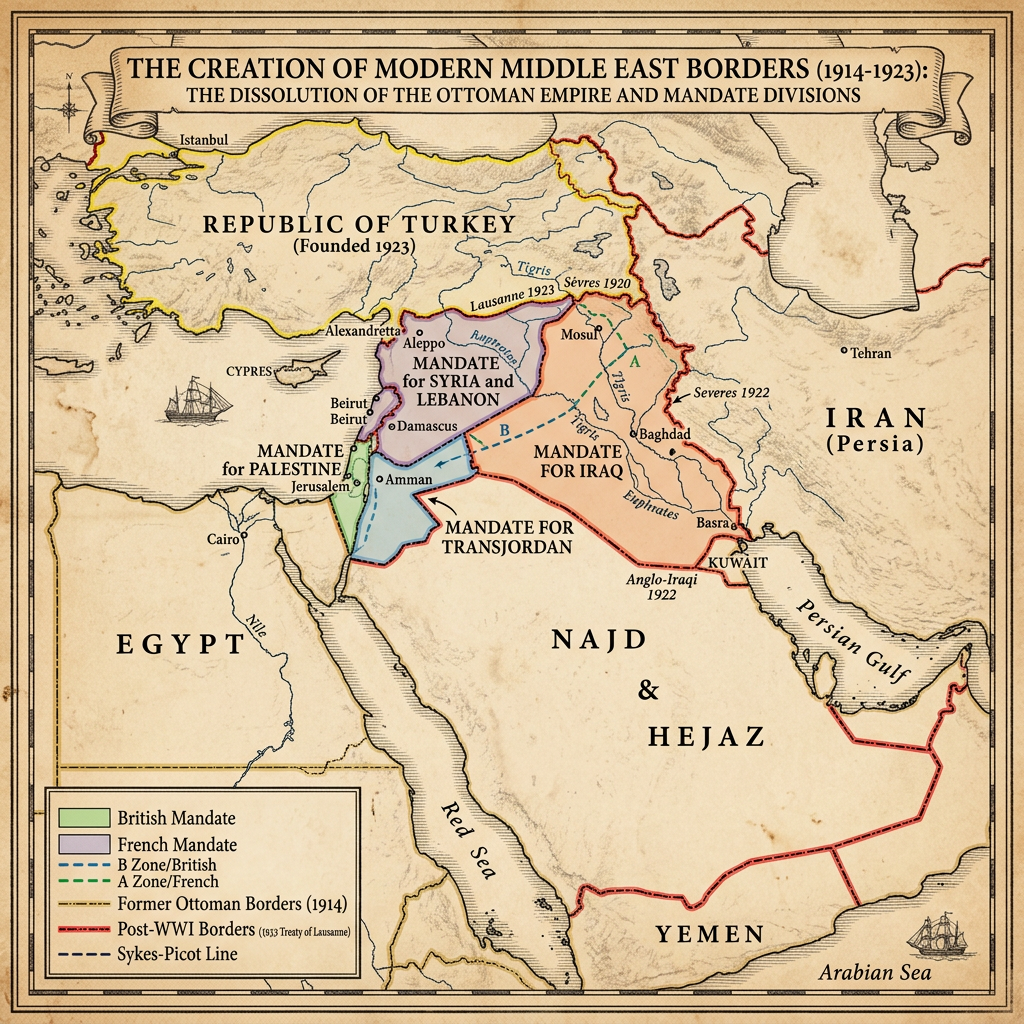
Read more: Explained: How the Middle East was Created
Some argue that the mistreatment of people with darker skin in North Africa is due to the influence of Arabism and Islam. However, Arab and Islamic influences are not limited to North Africa, but extend throughout the continent. An example of this phenomenon can be observed in Mauritius and Sudan, where the influence of Arabs or their Arabization has resulted in the discrimination and violent expulsion of numerous black Africans.
The Prejudice against Black people in Mauritania
Mauritania’s government, predominantly Arab Berber, has been criticized for discriminating against its black citizens since gaining independence in 1960. The Arab Berber population (25%) holds significant power and privileges, while black citizens (50%) face severe discrimination, and other black ethnic groups (25%) are widely abused.
According to reports, these communities face systemic issues that include detention and confiscation of identification documents. The country’s history of closed international observation has contributed to these issues, with the 1989 border dispute with Senegal serving as an excuse to target black citizens.
The actions of Mauritania’s Arab Berber-led government resulted in severe violations that forced many black citizens to flee to Senegal and Mali. Mauritanian Fulanis were forcibly expelled, losing their livelihoods, lands, and homes. Village names were changed to Arabic as part of an effort to Arabize the country. Making Arabic the official language further marginalized black people, limiting their access to education and job opportunities.
Following Mauritania’s independence, the Arab Berber community gained control, which resulted in serious human rights problems that impacted the black population’s ability to acquire equal opportunities. Unlawful arrests are said to have resulted from black Mauritanians’ difficulties obtaining passports and identification documents.
There were also reports of land and business seizures, wage discrimination, and black protesters being arrested or deported. During this period, 100,000 to 200,000 black Mauritanians were displaced, losing their homes, properties, and national identities.
With the 1960 declaration of Mauritanian independence, the nation began to align itself with Arab Islamic identity, which benefited the Arab Berber population in particular. This has contributed to the region’s ongoing issues. These dynamics are part of a larger racial hierarchy shaped by factors such as Islam and Arabism.
Sudan also has a similar situation
In the 14th century, Arabs invaded Northeastern Sudan and overthrew its black Christian kingdoms. While the southern part of Sudan was predominantly black and Christian, the western part was already overwhelmingly Muslim.
During British colonial rule, the separate regions in the south and north were merged into a single nation, later known as Sudan. Following British colonization of Sudan, the Arab majority government implemented the Arabic language, Islam, and Sharia law throughout the country to govern the oil-rich south.
This is comparable to what is currently done in nations like Nigeria. This has also led to the outbreak of protracted civil wars in both the northern and southern parts of Sudan, which killed three million people and created a severe humanitarian crisis in the latter.
Read more: Tulsa: How America Committed Genocide Against Its Black Citizens in 1921
In 2011, South Sudan gained independence, a significant turning point that symbolized the South Sudanese’s reclamation of land and autonomy. The exclusion of black people from power, as well as Arab groups’ encroachment on their resources, have created significant challenges for black people in Sudan. This heightened tension was most noticeable in Darfur’s western region.
The Darfur conflict, which began in 2003, is a tragic example of how ethnicity, religion, and identity can be used to justify violence and oppressive behaviour. The Arab-dominated government’s response to protests and unrest triggered a devastating conflict that resulted in an estimated 300,000 deaths, commonly referred to as genocide.
Sudan’s name is derived from the Arabic word for “black,” which refers to the region’s historically black population. However, Arab groups have dominated the government, resulting in tensions and violence, particularly in Darfur. The dispute brings to light Sudan’s complicated past, in which social and political goals are frequently supported by claims to identity, religion, and ethnicity.
How the Introduction of Islam to North Africa led to prejudices against Black people
The arrival of the Arabs on the continent resulted in a more tangled geopolitical situation involving issues of regional control, cultural identity, and violations of fundamental liberties. Although many Eurocentric and their Arab stooges deny its existence, northwest Africa was originally inhabited by black people.
When the Romans first arrived in North Africa in 146 BCE, they referred to the inhabitants as Moors, a term used to describe someone with dark skin. The Moorish influence they witnessed led them to refer to the area as Mauritania, which in its literal translation means the land of the black, a term that influenced the current name of the region.
In the sixth century, Arab forces, mostly descendants of Ottoman Turks, entered the continent and established their control over North Africa, including modern-day Egypt. Modern Egypt was heavily influenced by the Ottoman Turks in almost all major areas of culture, including government structure, education, courts, medicine, law, and infrastructure.
This is why so many modern Egyptian Arabic words have Turkish roots. Even though they were a minority, the Ottoman Turks contributed to the spread of Islam in the region and allowed Islamized moors to rule the Maghreb.
Around the 16th century, the Ottoman Turks extended their empire from Egypt to Morocco. Beginning in the 8th century, Muslim rulers, especially the Turks, began to enslave black populations south of the Sahara and some Moors as well as white European Christians. During this brief period of enslavement, many of them were forced to convert to Islam.
This changed the demographic makeup of the Maghreb, with the region becoming mostly mixed and white and blacks becoming a smaller minority. Eventually, it became possible to distinguish between black and white Berber, reflecting the diverse racial and cultural heritage of the area.
It’s important to know that over time, the meaning of ‘Moor’ has changed and lost its true meaning. It was once used to describe the black population in the region of northwest Africa. Nonetheless, in recent times, certain Arab Berber groups, predominantly white, have begun to redefine the term to exclusively refer to themselves. This situation draws attention to the ongoing conflict between Africans and Arab Muslims in the region, which is frequently overlooked.
Some Arab and white Berber societies hold the view that black people are divine natural slaves, so much so that the names Abid or Abeed are regularly used to refer to black folks. This mindset was reinforced during European colonization, particularly by the French and British, who spread ideas of white superiority and black inferiority in North Africa.
For the past 500 years, there has been a coordinated effort to erase black Africans’ contributions to the majority of the world’s great civilizations. For example, modern Tunisians rarely consider the Carthaginians to be black Africans. It is also uncommon for Moroccans to recognize their former Imperial dynasties’ black African heritage, despite abundant evidence that Black Africans were the original inhabitants and contributors to North and Sub-Saharan African civilization.
Read more: How the One-Drop Rule Caused Confusion and Discrimination For Black People in America
This situation shows how the agenda to rewrite African historical stories can influence social dynamics. This same agenda has resulted in a racial divide, with North African Arabs believing that they are superior to the rest of Africa in all aspects. As we all know, this complex period of history and social situation has resulted in racial tensions and unfairness toward people from Sub-Saharan Africa.
Conclusion
North Africa has consistently demonstrated that its cultural and spiritual beliefs differ from those of Sub-Saharan Africa. For example, North African countries have repeatedly threatened to leave the African Union or the African Football Governing Body (CAF).
Even during sporting events, North African nations have been known to engage in violent superiority plays to demonstrate their superiority over other African countries. When competing in international events or contests with light-skinned Europeans, they won’t do this.
The 2021 Fifa Arab Cup saw eleven African Arab nations compete. Ironically, these same African Arab countries continue to compete in the African Cup of Nations. Even when it comes to critical issues affecting sub-Saharan African countries, North Africans rarely participate or want to be involved in their geographical politics. The most important question in all of this is where their loyalty lies. Are they siding with Africa or the Arab world?
In light of this, it is evident that Black sub-Saharan Africa and North African Arabs cannot coexist in the same geographic area while claiming to have Pan-African interests. The most likely solution would be to end the relationship between Sub-Saharan African and North African countries in the following ways:
Step 1
We need to understand that black and Arab Muslims have their ways of life and can’t live together. After the Western world, the Arab world is the second most powerful force vying for control of Sub-Saharan Africa.
Their superiority attitude will continue to linger as long as Arabs in North Africa feel closer to their religious brothers in the Middle East than to the rest of sub-Saharan Africa. This will continue to undermine Africa’s chances of unity.
The most effective solution would be for all North African Arab countries to leave the African Union and fully align with their Middle Eastern Arab Community state in the Arab League.
To replace the current members of the African Union, a union exclusively for sub-Saharan African states should be established. In terms of military efficacy, this union would be better able to handle disputes unique to these sub-Saharan countries as well as cultural and religious factors.
Step 2
Islam has never contributed to the intellectual growth of Black African men. This explains why the Arab Middle Eastern nations have far more developed economies than the Arab nations in Africa.
The solution is to stop the spread of Islam in black African countries, which will help to promote African vitalism. This will increase African’s sense of belonging to their culture while decreasing the influence of other languages, such as Arabic, particularly in countries like Chad, where Arabic is the official language.
Step 3
We must teach Africa’s true history in all of its primary, secondary, and higher education systems. Many Africans are skeptical of their ancestors’ contributions to human civilization’s advancement, particularly in the region now known as North Africa.
This approach, as a form of Pan-Africanism learning, will help us understand our true history, excluding slavery and colonization. This will also significantly increase the historical truth about the original role of black Africans in civilizing the continent. Storylines that downplay the contributions and presence of Black Africans in North Africa would be significantly impacted by this strategy.
Step 4
African governments must collaborate to develop specific measures to end Arab discrimination and abuse of black Africans, particularly in countries such as Mauritania, Egypt, Morocco, and others.
This action is regarded as a critical step toward protecting the rights and dignity of all Africans. These solutions will highlight the importance of black African nations taking a more autonomous approach to addressing their specific historical, cultural, and geopolitical challenges.
Credit
Refworld – UNHCR’s Global Law and Policy Database. (2024, February 11). Human Rights Watch World Report 1990 – Mauritania. Refworld. https://www.refworld.org/reference/annualreport/hrw/1991/en/41237
Historia Africana. (2024, January 13). Why do North Africans Look Down on Black Africans? [Video]. YouTube. https://www.youtube.com/watch?v=xilV2GHEj84
Ezzat, D. A. (2020). Pharaonic or Ottoman in modern Egyptian culture: Consequences of immigration. Journal of Social Sciences, 16(1), 1–16. https://doi.org/10.3844/jssp.2020.1.16
Nations nègres et culture, Paris: Éditions Africaines. Second edition (1955) : By Cheikh Anta Diop




Leave a Reply