
For those who don’t know, we celebrate Sunday as the Sabbath because we follow the Roman Gregorian calendar system. In fact, almost every tradition that we follow today originated in ancient Rome.
The seventh day of the week is actually Saturday, according to Genesis 2:2-3 and Exodus 20:8-11, the day God rested after creating the world. This day is still observed as Shabbat on the Hebrew calendar, a tradition that originated among God’s children. Even the Bible does not mention keeping the Sabbath on Sundays.
When Pope Gregory XIII established the Gregorian calendar in 1582, Sunday remained the first day of the week, carrying on a tradition dating back to ancient Rome when it was a day of sun worship. As a result of Roman influences, Sunday became the recognized Christian Sabbath, replacing Saturday, the original biblical Sabbath.
In essence, when we observe the Sabbath on Sunday, we are celebrating a day set aside to worship the Sun. This is how the name Sun Day came about. This is why it’s important to understand where everything you celebrate comes from.
The True Origin of Sun-day
The origins of sun worship can be traced back to Babylon around 4000 BC, when Nimrod, Noah’s grandson, was worshipped as the sun god. From there, the practice spread to Egypt, Greece, Rome, and finally to us.

Many scholars regard Nimrod as the father of paganism. His reign in Babylon saw the rise of paganism and idolatry in the area. Described as a “mighty hunter before the Lord” (Genesis 10:9), Nimrod’s intimidating stature and boldness, including his alleged plan to invade heaven and challenge God, inspired worship, with many recognizing him as a deity. His rebellion against God led to the evolution of languages and speech.
Nimrod was not only known as the Sun God, but he was also compared to Baal and Moloch due to the sacrifices required to honor him. To match his godlike status, his followers practiced various barbaric idolatry practices, some of which included child sacrifice.
The Ancient Egyptians knew him as Ra-Horakhty or Amun-Ra, and they honored him with elaborate rituals such as sunrise ceremonies, astrological observations, fire rituals, and grand processions.
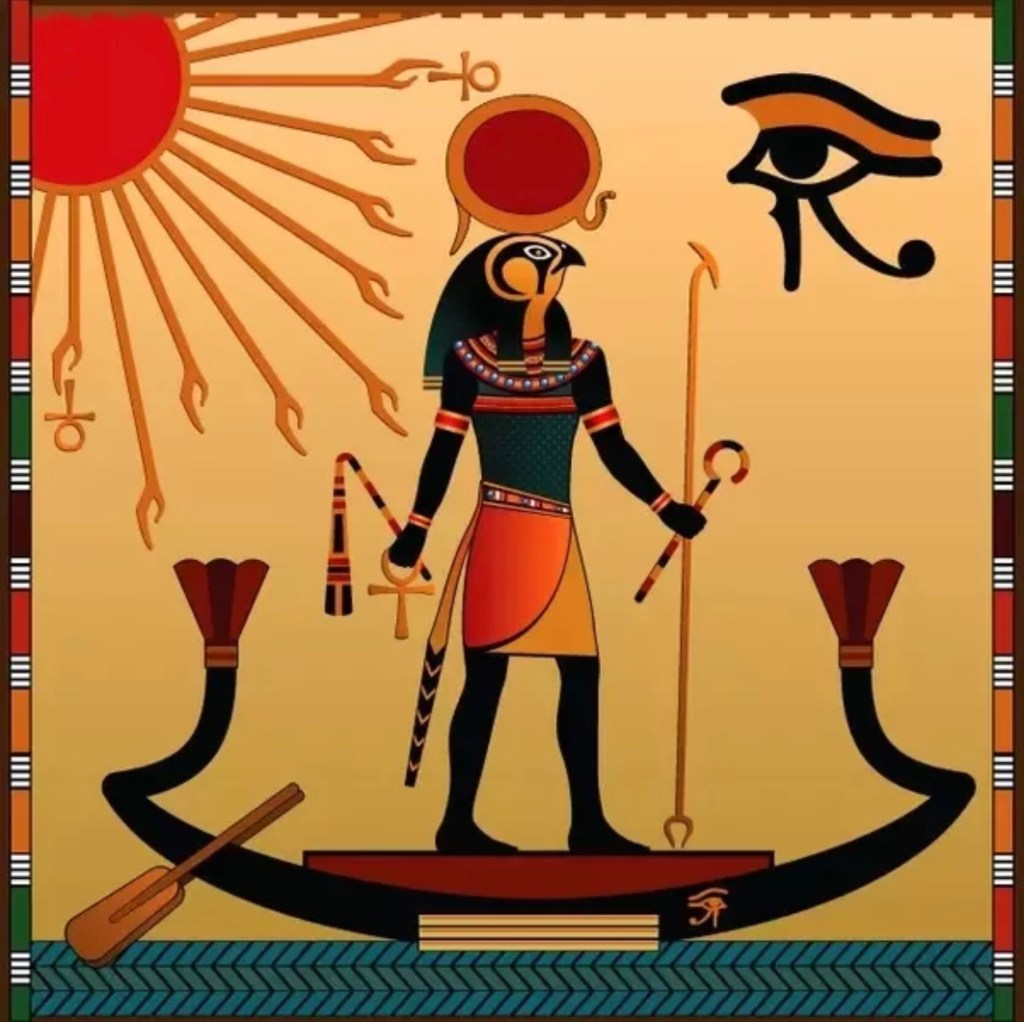
In Ancient Greece, Nimrod was worshipped as Helios, the sun god, and later as Apollo, symbolizing the sun’s life-giving power. Helios was depicted as a radiant figure driving his chariot across the sky, receiving daily offerings and hymns. The Carneia festival, dedicated to Apollo, included processions, music, athletic competitions, and sacred objects commemorating the sun’s power.

Nimrod’s legacy reached Rome, where he was revered as Sol Invictus (Unconquered Sun). The Romans celebrated Sol Invictus on December 25 with the Dies Natalis Solis Invicti festival, which included sacrifices, games, and feasts, cementing the sun’s place in Roman worship.

Roman Emperors such as Augustus, Nero, and Elagabalus used Sol Invictus to unite diverse cultures and consolidate their power. After converting to Christianity, Constantine incorporated aspects of Sol Invictus, declaring Sunday the “venerable day of the Sun” in 321 AD. This decision was cemented by the Council of Nicaea in 325 AD, which established Sunday as the official worship day of Christianity.
Constantine’s goal was to combine pagan and Christian traditions, making it easier for pagans to convert to Christianity across the empire. The Catholic Church, pursuing a similar goal, established Sunday as the Sabbath, and its global authority led to widespread acceptance as the main Christian worship day.
This explains why the Catholic Church uses so many images of the sun, such as the Sacred Heart, which represents the heart of Jesus, the monstrance, a golden vessel used to display the Eucharist, the Feast of the Transfiguration, which Jesus was drenched in light, and the halo, a circular symbol of light that surrounds the heads of Jesus and the saints.


Even the Catholic Church acknowledged its role in moving the Sabbath to Sunday, citing apostolic authority. According to the Council of Trent Catechism, this transformation was triggered by Christ’s resurrection and the Holy Spirit’s visitation on Sunday.
Conclusion
All of this leads us to the conclusion that the Sunday Sabbath is not related to the Sabbath our Creator established for us in the Old Testament.
Because Satan is the master of counterfeiting, he only used the Catholic Church to spread the idea of Sunday worship in the hearts of billions of so-called Christians.
Source
- Catholic Church. (1997). Catechism of the Catholic Church. Our Sunday Visitor. https://www.vatican.va/archive/ccc_css/archive/catechism/p3s2c1a3.htm
- Council of Trent. (1566). Catechism of the Council of Trent. http://www.catholicapologetics.info/thechurch/catechism/C TrentCatechism.pdf
- McCullough, J. (2016, July 14). The Pagan Origins of Sunday Worship. Christian Research Institute. https://www.equip.org/issues/pagan-origins-sunday-worship/
- The Editors of Encyclopaedia Britannica. (2022, July 26). Sol Invictus. Encyclopaedia Britannica. https://www.britannica.com/topic/Sol-Invictus




 Makewetalknow
Leave a comment