
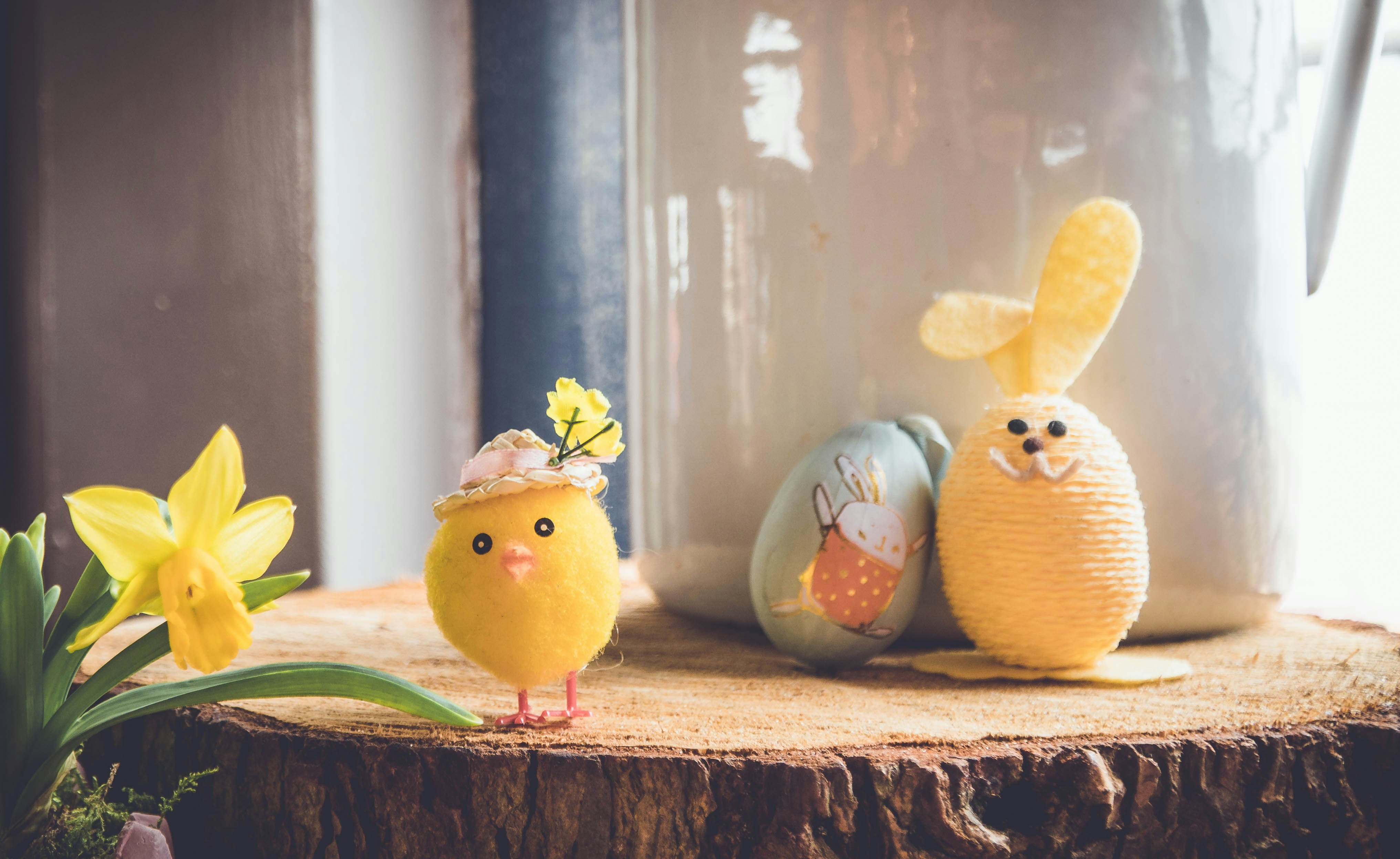
In ancient times, there were two kinds of people: those who practiced pagan religions and those who followed the Creator. Many modern Christians unintentionally follow paganism by celebrating holidays founded by ancient pagans. One of these holidays is none other than Easter.
Yahusha and his disciples celebrated Passover instead of Easter at the Last Supper (Luke 22:15; John 13:1). Passover, which falls on the lunar Hebrew calendar (Leviticus 23:4-6), is linked to the resurrection. This calendar starts with Nisan as its first month.
During biblical times, the only people who celebrated Easter were Pagans and Satanic worshippers. This was because Easter was more closely associated with a single family in Babylon, the Nimrod family.
This is just one of many secrets that the early church cabal kept hidden from future generations. In this article, I will expose the dark history of Easter and its pagan roots.
How Nimrod and his Mother Invented Easter
After the Great Flood, Nimrod, a powerful figure, emerged and introduced pagan practices that still influence cultures today. Many scholars consider him the father of paganism, as his reign in Babylon marked the beginning of paganism and idolatry in the region.

As Noah’s great-grandson, Nimrod ruled in Shinar and earned the title “mighty hunter before the Lord” (Genesis 10:9). This title refers to his extraordinary abilities, including his reportedly giant size, and his audacious plan to invade heaven by building the Tower of Babel. His reputation was so strong that Abraham fled his wrath when he refused to bow down.
Read more: Exposed: Jesus Christ Did Not Die on The Cross
However, Nimrod was not the only one to gain influence in Babylon. He was said to have committed an abomination by marrying his mother, Inanna, who later became his second in command when it came to idol worship. She was first known as Inanna in Sumerian culture, before becoming Semiramis in Assyrian-Babylonian legends.
After Nimrod’s death, Semiramis’s influence only grew, as she exported Babylonian Paganism worldwide. She became known as the Queen of Heaven (Jeremiah 7:18, 44:17-25) and was also known as Ashtaroth (Judge’s 10:6, 1 Kings 11:5).
According to her claim, Nimrod’s spirit appeared to her as a ray of sunlight, impregnating her while she was a virgin, thus legitimizing her position as queen after his death.
She named the child Tammuz, meaning “heavenly divine child” in ancient Akkadian, and claimed he was Nimrod’s reincarnation. This led to her being called Ishtar, Queen of Heaven, and Tammuz, the Son of God. The name “Easter” is derived from Ishtar, which was later respelled and pronounced as Easter by the Romans.
Read more: How Ancient Babylonian Religion is still practised today in the Catholic Church
Festivals and ceremonies were held in Semiramis’ honor as Ishtar, including the annual Ishtar Festival. This Babylonian festival was centered on life and fertility cycles, with orgiastic rites and sacred cakes. The festival celebrated Tammuz with a 40-day Lent period that ended in a feast of cross-marked on the first Sunday after the full moon. These fertility festivals featured symbols such as rabbits, eggs, and other life cycle icons.
Read more: Worshipping the Queen of Heaven (Virgin Mary) is a Sin against God
This became the norm throughout Babylon, as men, women, and even children came to worship Ishtar, the Queen of Heaven. God was so dissatisfied with Babylon’s worship of Ishtar that his wrath was recorded in Scripture (17:1-18, Ezekiel 8-12, Jeremiah 7:17-19, 44:19-29). Ishtar worship did not end in Babylon, as it spread throughout the world, particularly among the Romans.
How the Romans continued the Legacy of Semiramis (Ishtar)
When the Persians conquered Babylon in 539 BCE, Semiramis’ priest brought her cult to Rome, where it drew Emperor Constantine’s attention. Seeking to unite pagan groups under Christianity, Constantine proposed incorporating Babylonian pagan practices into Catholicism at the First Council of Nicaea.
The council approved the proposal, which combined pagan festivals with Roman culture, including Ishtar’s festivals, to form Roman Christianity and, later, the Roman Catholic Church.
The Romans combined Ishtar’s festival with Saturnalia, a week-long celebration during the Winter Solstice that included gift-giving, singing, and feasting. This fusion resulted in the adoption of Ishtar’s triad (Nimrod, Semiramis/Ishtar, and Tammuz) into Catholicism, with names adapted to fit Christian theology: God, Mary, and Jesus.
As Roman Christianity spread, Ishtar/Easter symbols like eggs, hams, and hot cross buns became popular, adopted by many cultures, including ours.
Easter Eggs

In the Ishtar Religion, eggs symbolized fertility and rebirth, representing female power. Rabbits, known for prolific breeding, were offered to Ishtar to petition her for children, believed to be empowered by Nimrod’s influence. This blended symbolism evolved into the Easter Bunny tradition.
Read more: Exposed: How the Holy Trinity verse was added to the Modern Bible
Some ancient Ishtar festivals included disturbing practices, such as child sacrifice, where infants were sacrificed and eggs were dipped in their blood to determine fertility and mortality.
Eating Ham

Tammuz, Semiramis/Ishtar’s son, was killed by a wild boar, resulting in an annual tradition of eating pig in remembrance. This practice, which originated in Babylon, has spread to other cultures, including Christianity, where eating ham on Easter Sunday commemorates Tammuz.
Hot Cross Buns

In the Ishtar cult, sweet breads (precursors to hot cross buns) were baked as offerings on the Friday before Easter. The ‘T’ cross symbol honored Tammuz (Jeremiah 7:18) and evolved into the modern hot cross bun tradition, which has its roots in ancient Ishtar worship.
Her worship did not end there, as she was also worshipped as the Black Madonna in medieval Europe in the 12th and 15th centuries, and statues of her could be found in hundreds of shrines across the world, including the well-known Our Lady of Czestochowa in Poland. Her image can also be found on Starbucks franchise.

Even your popular musicians sing her praises, using the term “Nana” to refer to her given name, “Inanna.” Some songs you may have listened to that honor the queen of heaven as Nana or Inanna are:
| Song | Artist | Year | “Na” Hook |
|---|
| What’s My Name? | Rihanna ft. Drake | 2010 | “Oh na na, what’s my name?” |
| Havana | Camila Cabello ft. Young Thug | 2017 | “Havana, ooh na-na“ |
| Na Na | Trey Songz | 2014 | Entire chorus built around “Na Na“ |
| (It Goes Like) Nanana | Peggy Gou | 2023 | Repeated “na-na-na” hook |
| Oh Na Na | Camila Cabello, Myke Towers & Tainy | 2021 | “Oh na na” chorus |
| Ohnana | Kapo | 2024 | Viral Afro-Latin hit |
| Na Na Na (Na Na Na) | My Chemical Romance | 2010 | Title and chorus |
| Na Na Na | One Direction | 2012 | Chorus |
| Nanana | Peggy Gou | 2023 | Dance anthem |
| Replay | Iyaz | 2009 | Memorable “na-na-na” vocal refrain |
| Can’t Remember to Forget You | Shakira ft. Rihanna | 2014 | Multiple “na na” vocal sections |
| Rude Boy | Rihanna | 2010 | Uses repeated “na-na” ad-libs between verses |
| S&M | Rihanna | 2010 | Contains repeated “na-na” vocal phrases |
| Pon de Replay | Rihanna | 2005 | Dance hall-style “na-na” vocalizations |
Conclusion
As you have just read, Easter originated in Babylon and is attributed to one woman, Inanna, the Queen of Heaven, who is described in the Bible as the mother of all harlots (Revelation 17:5). Her worship only became part of the doctrine of the Roman Catholic Church because of emperor Constantine’s leadership.
You must take some time to reflect on the world and how the devil has forced us to worship things we should not. Help yourself today and Get out of Babylon before it’s too late.
Photo by Sebastian Staines on Unsplash




Leave a Reply