

European dominance was built on the blood, sweat, and tears of countless indigenous people. The Europeans were notorious for never playing a fair game, and much of what they have today is nothing more than blood money.
Read more: The Painful Story of How Germany Wiped Out its Black Population
Native communities faced extreme hardships, leaving painful scars and violent histories across the Americas, Australia, Asia, and Africa. They also left their mark in Namibia, where they committed another round of genocide nearly a century ago.
During this period, the Herero population fell from 80,000 to 20,000, with 65,000 Herero and 10,000 Namaqua deaths due to forced labour, concentration camps, and harsh conditions. This devastating event resulted in not only bloodshed, but also division and pain among both tribes.
The Herero and Namaqua Tribe
Namibia is home to 11 major ethnic groups, including the Ovambo, Herero, Kavango, Himba, Damara, Namaqua, San, Rehoboth Basters, Caprivian, Swana, and Coloured communities.

The Herero people, a Bantu-speaking group, migrated to Namibia from the Great Lakes region in the 15th century. They established themselves as skilled pastoralists in central Namibia, with a strong connection to their cattle and complex social hierarchy. Their kinship system is built around ‘otuzo’ (patrilineage) and ‘oruzo’ (clan), with otuzo establishing lineage through the father’s side and oruzo referring to shared ancestry and cultural identity.
The Herero people are also known for their vibrant traditional attire, including distinctive horn-like headpieces called ‘otjize’, which symbolize marital status. Their traditional clothing and exquisite jewellery showcase their artisanal skills. Spirituality plays a fundamental role in daily life, honouring ancestral spirits and sacred cattle. Traditional dances and music are integral to ceremonies and celebrations, highlighting community and familial connections.
The Namaqua people, a Khoikhoi-speaking group, developed a distinct cultural heritage tailored to Namibia’s arid desert environment. They’re skilled hunters and gatherers deeply connected to their ancestral lands, which hold cultural and spiritual significance.
Their society is organized around small, mobile groups led by a council of elders, who make decisions through consensus-driven dialogue. The Namaqua leveraged their knowledge of the desert terrain and wildlife to survive. Music, dance, and storytelling preserve their history, myths, and cultural values.
Traditionally, the Namaqua were led by clan leaders and elders, guiding their communities with wisdom and care. They had a profound respect for the environment, employing sustainable practices to manage resources and maintain the desert ecosystem’s balance.
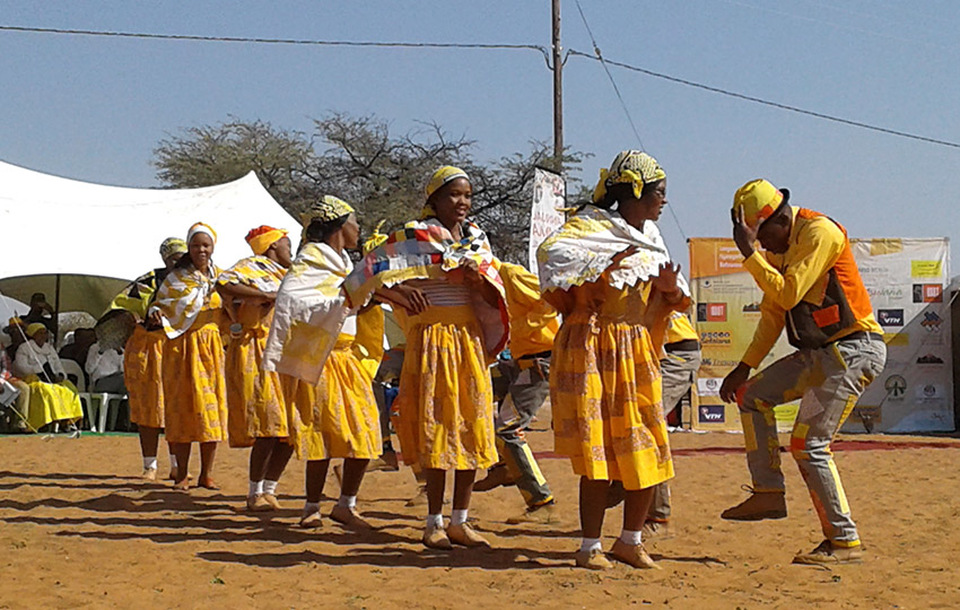
The historical relationship between the Namaqua and Herero people was complex, marked by conflicts over territory and resources. Wars over land, water, and livestock characterized their interactions in the 19th century. Despite these conflicts, both groups developed a profound understanding of their environments, demonstrating a delicate balance with nature.
Read more: Genocide: How King Leopold of Belgium Massacred Over 10 Million Congolese
The arrival of German colonizers had a significant impact on the region, leading to widespread violence and displacement. The German colonial period in Namibia, which lasted from 1884 to 1915, was marked by extreme violence, particularly against the Herero and Namaqua populations, resulting in substantial loss of life and cultural disruption.
What Led to the German-Herero conflict of 1904?
Germany’s colonial rule in South West Africa (1884-1915) was marked by significant changes to the region. The Germans imposed their own administrative systems, laws, and taxation policies. The Herero and Namaqua people were required to pay taxes and abide by German laws, which impacted their traditional way of life.
The German colonial government also implemented policies that affected the local population’s access to land, water, and resources. Forced labour was used, and land was confiscated, leading to increased tensions between the German colonizers and the Herero and Namaqua people.

The German colonial government’s imposition of its own system disrupted the equilibrium, leading to escalating tensions over limited resources like land, water, and cattle. By 1903, around 3,000 German colonists had settled in the central highlands, often through means such as land treaties or seizure. The Herero and Namaqua were displaced, subjected to harsh treatment, and forced into labour.
The loss of ancestral lands and livestock, crucial to their economic and cultural survival, led to resistance. Samuel Maharero, a paramount chief of the Herero people, attempted to negotiate with German officials to defend Herero rights and territory, but grew frustrated with the lack of response as German encroachment intensified.

In 1904, Samuel Maharero led the Herero rebellion against German colonial rule, driven by the loss of ancestral lands, livestock, and cultural identity. He issued a directive forbidding violence against women, a significant commitment to protecting the weak during the conflict. The fighting began on January 12, 1904, with Herero fighters besieging the German fort in Okahandja.
Maj. Theodor Leutwein sought a pragmatic approach, advocating for a negotiated settlement to avoid bloodshed and find a middle ground. However, the Berlin General Staff prioritized a military response, driven by a militaristic and expansionist ideology seeking to consolidate German control and demonstrate power. This approach reflected colonial powers’ common attitudes, prioritizing dominance over indigenous populations. The General Staff’s decision was part of a larger strategy to assert German power and deter opposition.
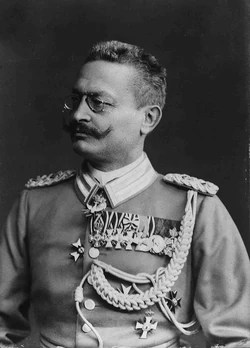
Following Leutwein’s retreat, Kaiser Wilhelm II appointed Lieutenant General Lothar von Trotha as the new commander-in-chief. Von Trotha, a seasoned officer with experience in suppressing resistance, had served in the Boxer Rebellion and colonial wars in East Africa. Known for his ruthless strategies, he was committed to crushing opposition.
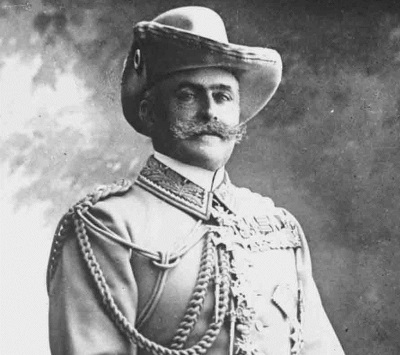
When Lieutenant General Lothar von Trotha arrived on June 11, 1904, the Herero had fled to the Waterberg plateau, seeking refuge and escape routes to British Bechuanaland (now Botswana). Von Trotha launched a massive encirclement operation, cutting off their escape routes.
On August 11, 1904, he attacked with 1,500 troops against an estimated 40,000 Herero at Waterberg. The German forces leveraged their superior firepower and artillery, forcing the Herero to flee into the Kalahari Desert, where thousands perished. Several Herero who surrendered or were captured were put to death. The pursuit was called off in October due to fatigue, supply shortages, and logistical difficulties.
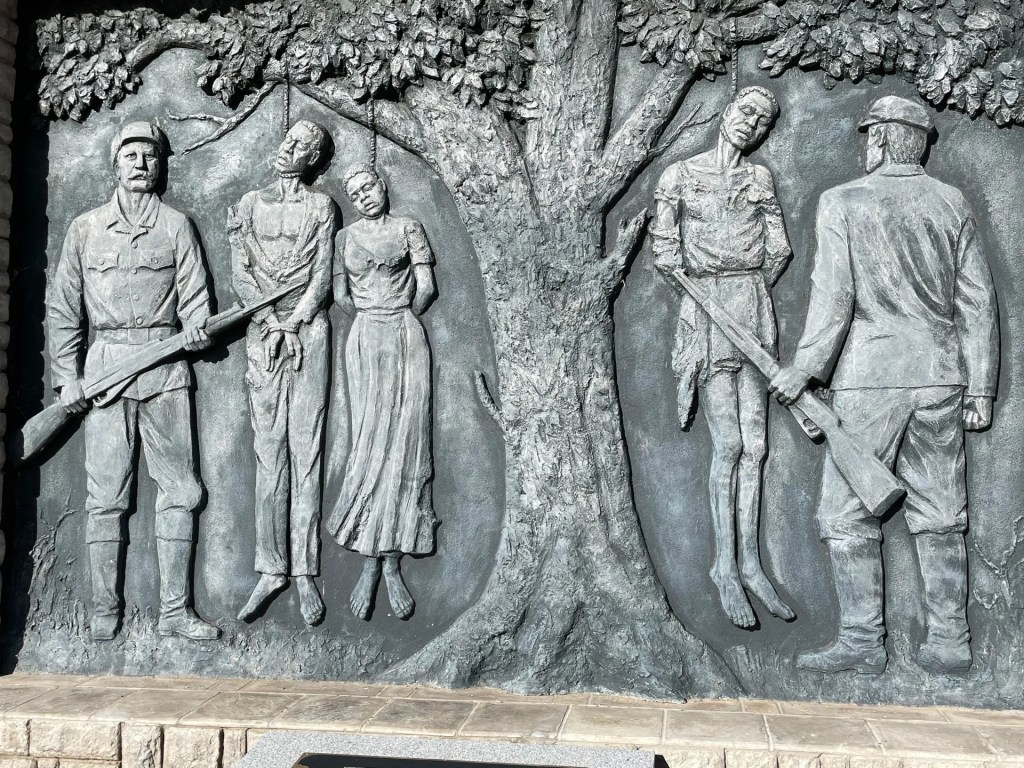
After von Trotha’s pursuit was called off, patrols were stationed along the desert’s edge to prevent the Herero from returning, as outlined in Lieutenant General Lothar von Trotha’s “extermination order” (Vernichtungsbefehl) issued on October 2, 1904.
The order stated that any Herero found within the German colony’s borders would be killed or forced into the desert, resulting in the deaths of tens of thousands from starvation, dehydration, and violence. The order read, inter alia:
Within the German boundaries, every Herero, whether found armed or unarmed, with or without cattle, will be shot. I shall not accept any more women and children.
Lieutenant General Lothar von Trotha
This policy marked a watershed moment in the war, indicating a shift toward systematic violence and persecution of the Herero people. The “extermination order” was rescinded by Kaiser Wilhelm II on December 9, 1904, due to pressure from Reich Chancellor Bernhard von Bülow. The Germans then established Konzentrationslager (concentration camps), where Herero prisoners faced harsh conditions, leading to high mortality rates.
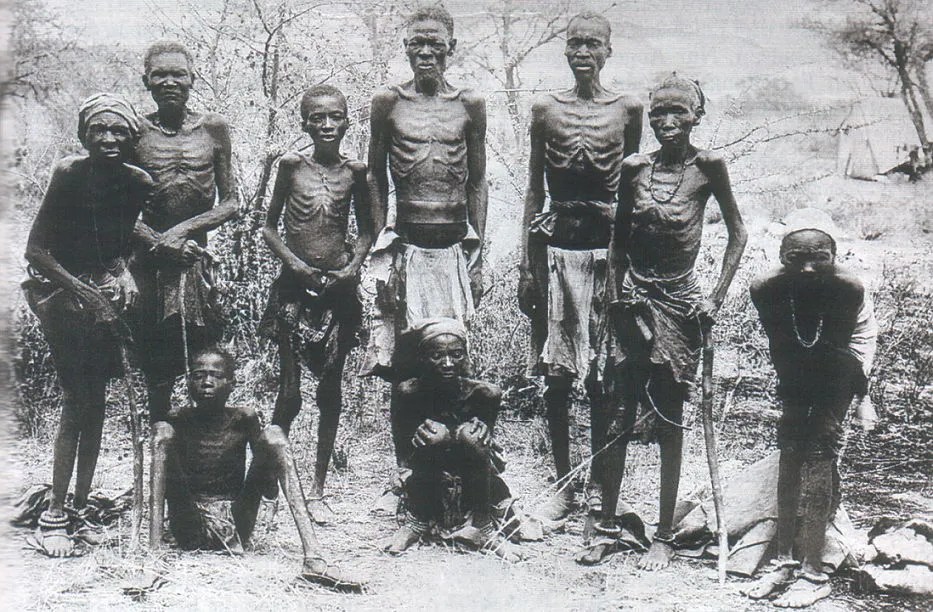
The Namaqua communities joined the resistance against German colonial rule in October 1904, following the imprisonment and mistreatment of their leader, Hendrik Witbooi.
Like the Herero, the Namaqua were eventually imprisoned in concentration camps, with many being sent to the Shark Island camp near Lüderitz. Shark Island was known for its harsh conditions, with prisoners facing exposure to the elements, forced labour, malnutrition, and disease. An estimated 80 percent of Namaqua prisoners perished there due to these conditions.

The atrocities in Namibia gained public awareness through missionary reports, diplomatic correspondence, and survivor testimonies. The Treaty of Versailles in 1919 led to Germany giving up control of Namibia to South Africa. The scope of the atrocities was highlighted in 1966 when German historian Horst Drechsler called the campaign against the Herero and Namaqua genocide.
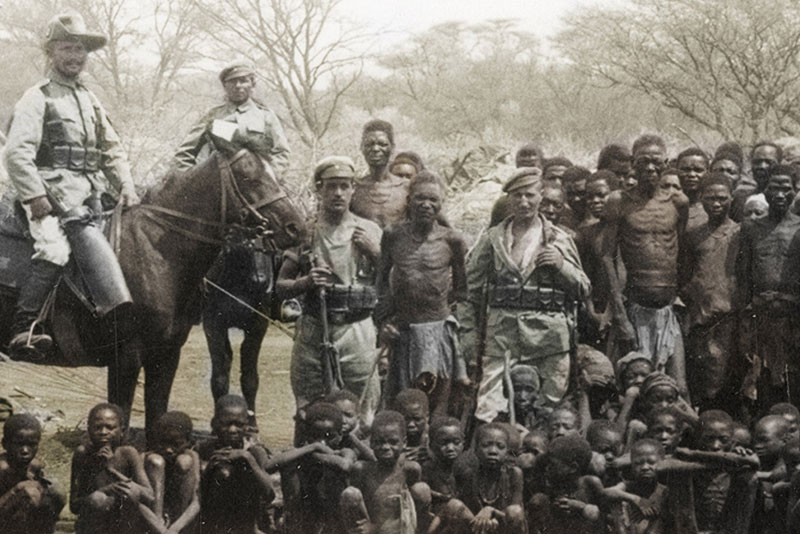
The Herero and Namaqua genocide resulted in devastating population losses, with around 75% of the Herero population (approximately 65,000 people) and 50% of the Namaqua population (around 10,000 people) dying in concentration camps. The genocide caused cultural disruption, intergenerational trauma, and loss of land, identity, and heritage.
The legacy of these crimes may have influenced Nazi ideology and methods employed during the Holocaust, as colonial settings were used to test and refine concepts of racial superiority and extermination policies.
Conclusion
The legacy of German colonial rule in Namibia remains a complex and sensitive issue. Germany has acknowledged its role in the genocide and provided financial support. However, the process of addressing this history is ongoing, with discussions about reparations and representation of affected communities continuing.
The fact that this terrible chapter in history has not received international recognition is even more depressing. Apart from a few people in Namibia and possibly Southern Africa, not many people are still aware of the atrocities committed by Germany.
Sources
- Drechsler, H. (1966). Südwestafrika unter deutscher Kolonialherrschaft [South West Africa under German colonial rule]. Akademie-Verlag.
- Zimmerer, J., & Zeller, J. (2003). Völkermord in Deutsch-Südwestafrika: Der Kolonialkrieg (1904-1908) in Namibia und seine Folgen [Genocide in German South West Africa: The colonial war (1904-1908) in Namibia and its consequences]. Ch. Links Verlag.
- Erichsen, C. W. (2005). What the Elders Used to Say: Namibian Perspectives on the Last Decade of German Colonial Rule. Namibia Institute for Democracy.
- Gewald, J.-B. (1999). Herero Heroes: A Socio-political History of the Herero of Namibia, 1890-1923. Ohio University Press.
- Silvester, J., & Gewald, J.-B. (2003). Words Cannot Be Found: German Colonial Rule in Namibia: An Annotated Reprint of the 1918 Blue Book. Brill.
- Hinz, M. O. (2008). The Namibian Genocide: A Study of the Historical and Contemporary Relevance of the Herero and Namaqua Genocide. Namibia Wissenschaftliche Gesellschaft.




 Makewetalknow
Leave a reply to Genocide: How Britain Massacred the Tasmanian Aboriginal Natives in Australia – Makewetalknow Cancel reply