
The Bible doesn’t support the idea that Peter founded the church or appointed a successor like Linus. These claims emerged in the 15th century, most likely to boost the Catholic Church’s popularity at a time when it was experiencing internal and external crises.
In fact, the Catholic Church did not exist during Jesus’ lifetime (circa 30-33 AD) or immediately after. The Church did not take on formal form in the Roman Empire until Emperor Constantine’s reign (306-337 AD).
Must Read: Revealed: We Existed in Heaven as Celestial Beings Before We were Born into this World
In addition, some Catholics frequently point to Matthew 16:18, in which Jesus states, “You are Peter, and on this rock I will build my church,” as evidence of Peter’s involvement. However, if you look at this same verse in the Greek version, you’ll notice that it distinguishes between “Petros” (Peter) and “petra” (rock), implying that Jesus was referring to Peter’s faith rather than establishing him as a catholic leader.
Instead, the Roman Emperor Constantine is more directly linked to the Catholic Church’s growth because the Church was founded in Rome at the same time as his rise to power.
How Constantine influenced Christianity and the Catholic Church
Constantine, born Flavius Valerius Constantinus around 272 AD in Naissus, Moesia, rose to power after his father Emperor Constantius Chlorus’ death. Appointed Roman Emperor in 306 AD, he implemented reforms and achieved military victories, becoming sole leader in 324 AD.
Constantine’s influence in the church grew, particularly with the First Council of Nicaea (325 AD), which addressed the Arianism controversy started by Arius, an Alexandrian Christian priest who claimed that Jesus was only a man and a created being, not God. This argument caused a heated debate, threatening the unity of the church and the empire as a whole.
In response, Constantine convened the Council of Nicaea, gathering over 200 bishops to address the theological divisions made by Arius. This resulted in the establishment of a unified doctrine, giving Constantine control and authority over the Roman Catholic Church. As a result, Constantine created the Nicene Creed, which changed the entire narrative. This creed ultimately declared that Jesus was God the Father.
The Council of Nicaea’s decision to create the Nicene Creed had a significant impact on the Roman Catholic Church because it not only established a unified doctrine of Jesus as God, but it also became the main statement of faith for many Christian groups that still use it today. This is why many Catholics refer to Jesus as God, thanks to Emperor Constantine.
Constantine’s legacy continued to influence Christian and Catholic history long after he died in 337 AD. Many pagans joined the church, bringing with them their own beliefs and traditions. Some traditions brought into the Catholic Church and Christianity by the pagans were the celebration of Christmas and Easter, which was previously a pagan festival.
Various forms of Christian iconography and pagan images began to appear in the Catholic Church as a result of the mixing and adapting. During this time, the Roman Catholic Church established new positions of authority, such as deacons, bishops, and priests, to assist in the organization and governance of the expanding community.
Conclusion
The idea that Peter founded the Catholic Church is not based on the Bible or its original texts. Instead, it emerged in the 1400s, most likely to strengthen the Church’s authority at a time when its power was being challenged by movements such as conciliarism, which questioned papal authority. This narrative helped the Church gain popularity, particularly after Christianity became legal.
Finally, it makes sense to say that the Catholic Church was founded by Constantine rather than Peter or Paul.
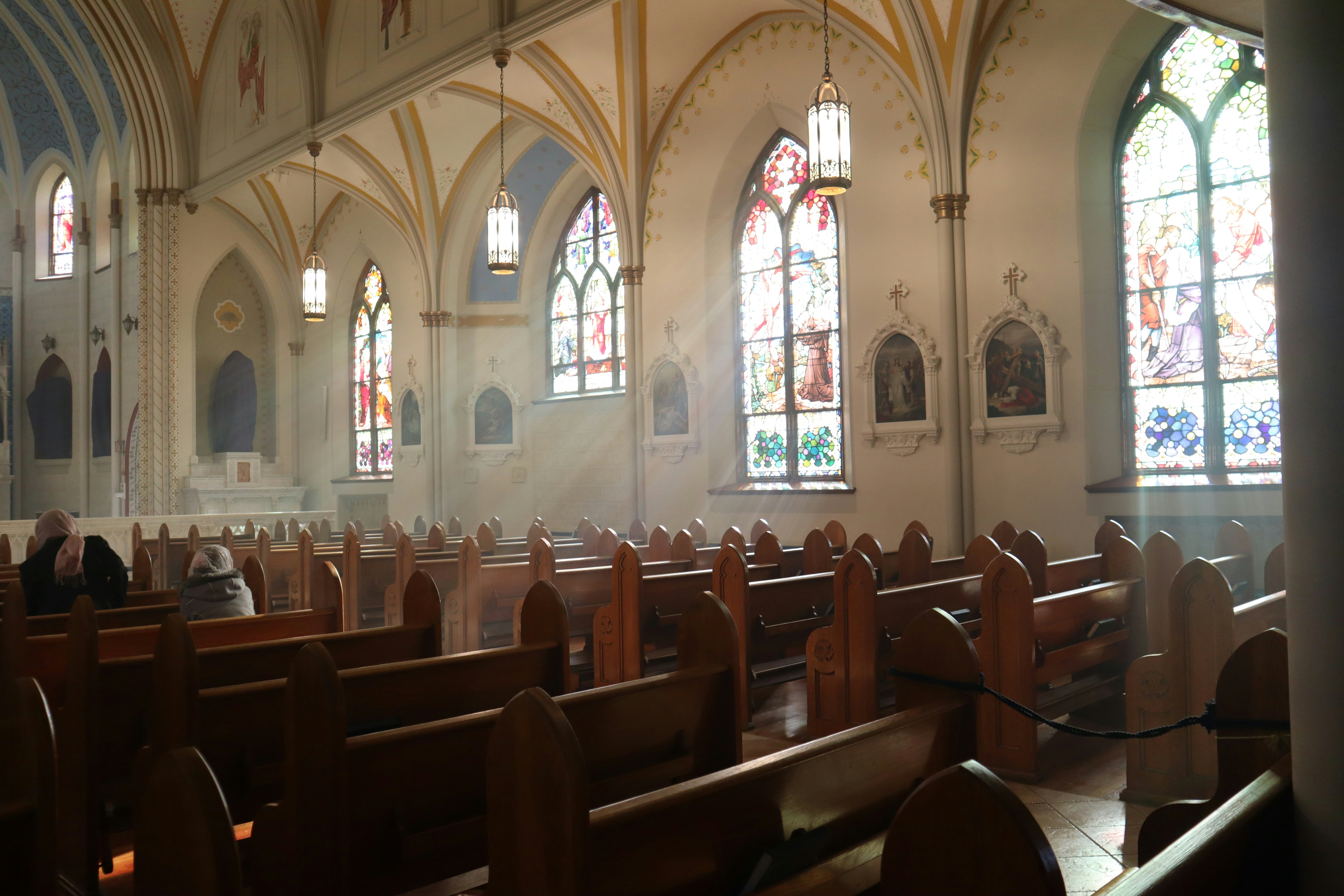
Photo by Channel 82 on Unsplash
Sources
1. Bokenkotter, T. (2004). A concise history of the Catholic Church. Doubleday.
4. Eusebius of Caesarea. (324 AD). The life of Constantine. (Translated by A. Cameron & S. G. Hall). Retrieved from https://www.newadvent.org/fathers/2502.htm
5. Catholic Church. (1997). Catechism of the Catholic Church (2nd ed., §§ 857-858, 869-870). Retrieved from http://www.vatican.va/archive/ccc_css/archive/catechism/p123a9p3.htm



Leave a Reply to Richard I. InegbedionCancel reply