
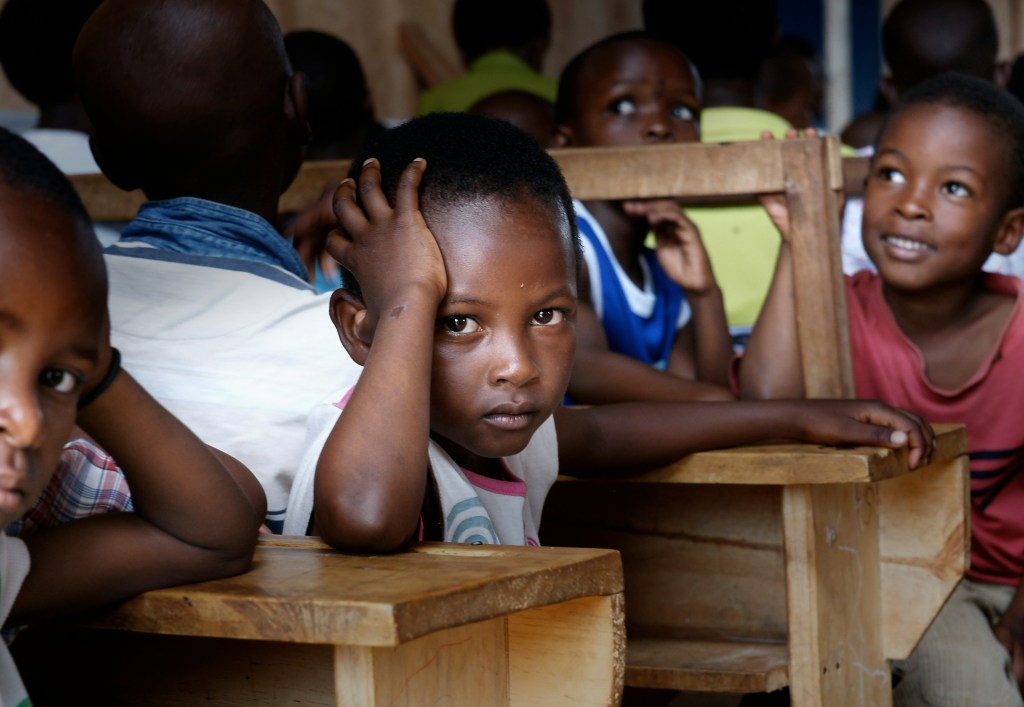
With over 7,164 languages spoken worldwide, that’s roughly one language for every 1.1 million people. Asia leads with 2,314 languages, followed by Africa with 2,149 languages in the broader region, and 2000+ languages emanating from 3000 diverse tribes across 55 African countries.
This linguistic diversity is a testament to Africa’s remarkable heritage, with each language embodying unique history, customs, and traditions. The continent’s dynamic linguistic landscape is shaped by both native and foreign dialects, enriching African cultures and identity. Let’s explore the top 10 most widely spoken languages in Africa.
10. Amharic
Amharic is a significant language in Africa, spoken by over 25 million native speakers, primarily in Ethiopia. As a Semitic language with its own unique alphabet, Ge’ez or Fidel, Amharic stands out. Its global presence extends beyond Ethiopia, with 3 million immigrant speakers worldwide.
Rastafarians in the Caribbean regard Amharic as a sacred language. Both African and international cultures value Amharic because of its distinctive alphabet and rich cultural legacy.
9. Berber
The Berber people, also known as Amazigh or Imazighen, are indigenous to the Maghreb region of North Africa, with a rich and ancient history. Their language, part of the Afroasiatic family, comprises around 26 closely related languages and is spoken by 30-40 million people across Morocco, Algeria, Libya, and other countries.
Despite historical intermingling with other ethnic groups, the Berbers maintain a strong cultural identity tied to their language and traditions. Today, efforts are ongoing to preserve their distinct heritage, which includes language, customs, and history, highlighting North Africa’s rich cultural diversity.
8. Oromo
The Oromo language is a prominent member of the Afroasiatic language family, specifically belonging to the Cushitic branch. Spoken by over 41.7 million people, primarily in Ethiopia’s Oromia state and northern Kenya, Oromo is also found in South Africa, Libya, Egypt, and Sudan. As the second most widely spoken language in Ethiopia, Oromo plays a vital role in the country’s culture and identity, with 33.8% of the population speaking it.
7. Igbo
The Igbo language, part of the Niger-Congo language family, is spoken by around 44 million people in Southern Nigeria and has also been adopted in Equatorial Guinea and parts of Cameroon. With up to 15 distinct dialects, Igbo’s diversity reflects the rich cultural heritage of the Igbo community. As one of Africa’s largest ethnic groups, the Igbo people’s language and culture significantly shape the continent’s cultural landscape.
6. Yoruba
Yoruba is a vital language in West Africa, spoken by around 50 million native speakers and 5 million second-language speakers. Primarily spoken in Southwestern and Central Nigeria, Yoruba is also spoken in other West African countries, including Benin Republic, Ghana, and Togo. Its unique tonal system, featuring three distinct tones represented by the Pan-Nigerian alphabet, adds depth and nuance to the language, making it a fascinating aspect of Yoruba culture and identity.
5. Hausa
Hausa is a prominent language in Africa, belonging to the Chadic language group and spoken by 80-85 million people across West Africa, including Nigeria, Ghana, and Sudan. In Nigeria, it’s the second most widely spoken language, with 53.7 million speakers. Hausa’s significance extends beyond its widespread use in business and education to its recognition in international universities, thanks to its rich literary heritage. This underscores Hausa’s importance as a vital component of African culture and identity.
4. French
French has become a significant language in Africa, introduced through colonialism, with 115 million Africans speaking it as a primary or secondary language. Africa is home to the largest proportion of French speakers worldwide, accounting for a substantial portion of the estimated 300 million global French speakers.
By 2050, Africa is expected to account for 80% of the projected 700 million French speakers worldwide. French is widely spoken in 29 African nations, particularly in West and Central Africa, and has become integral to the cultural and linguistic landscape of countries like Senegal, Ivory Coast, and Gabon.
3. Swahili
Swahili, or Kiswahili, is the third most spoken language in Africa, with over 200 million speakers across the continent and the Middle East. Originating from the coastlines of Kenya and Tanzania, Swahili has a rich history, influenced by languages such as Arabic, Portuguese, English, and others.
With only 15 million native speakers, Swahili’s widespread use is attributed to its role as a trade language and its adoption in several countries, including Kenya, Tanzania, and Uganda. Recognized by UNESCO as a significant contributor to African culture and identity, Swahili was declared a official language day on July 7th.
2. Arabic
Arabic is the second most spoken language in Africa, with around 150 million speakers, primarily in North and sub-Saharan Africa. It’s an official language in many African countries, including Egypt, Algeria, and Morocco.
Arabic has three main forms: Quranic-Classical Arabic, Modern-Standard Arabic, and Dialect-Colloquial Arabic. Mastering Modern-Standard Arabic can facilitate global communication, as it’s one of the UN’s six official languages. However, understanding regional dialects is crucial, as native speakers often prefer communicating in their local dialect.
1. English
English is the most widely spoken language in Africa, with 237 million speakers across 23 countries. Introduced by British colonizers, English has become integral to African communication, particularly in government, business, and education.
Nigeria, Uganda, South Africa, and Cameroon are among the countries with the largest English-speaking populations. As a unifying language, English facilitates cross-cultural communication and connects Africans to the global community, driving economic, educational, and social development.
Sources
- Arabic: Over 300 million speakers, primarily in North Africa and parts of East Africa. (Source: Cooljugator, TalkAfricana)
- Swahili: Approximately 100-150 million speakers, primarily in East Africa. (Source: VerboLabs, TalkAfricana)
- Hausa: Around 80 million speakers, primarily in West Africa. (Source: VerboLabs, TalkAfricana)
- French: Approximately 120-167 million speakers, primarily in West and Central Africa. (Source: VerboLabs, TalkAfricana)
- Amharic: Around 22-57 million speakers, primarily in Ethiopia. (Source: Cooljugator, VerboLabs)
- Yoruba: Over 45 million speakers, primarily in Nigeria, Benin, and Togo. (Source: TalkAfricana, Sololingual)
- Igbo: Approximately 44 million speakers, primarily in southeastern Nigeria. (Source: TalkAfricana, Sololingual)
- Oromo: Around 35-50 million speakers, primarily in Ethiopia, Kenya, and Somalia. (Source: VerboLabs, Sololingual)
- Berber: Approximately 25-35 million speakers, primarily in North Africa. (Source: Sololingual)
- English: Over 250 million speakers, primarily in Southern Africa. (Source: TalkAfricana) ¹ ² ³
Photo by bill wegener on Unsplash






 Makewetalknow
Leave a reply to Richard I. Inegbedion Cancel reply