

Babylon may appear to be a thing of the past, but its influence can still be felt today. This is because modern Catholicism and the ancient Babylonian customs that God disapproved of share many similarities. One such similarity is the celebration of the Queen of Heaven.
What many Catholics do not realize is that the Queen of Heaven they worship today is not the same as the mother of our Messiah. Around 2500 B.C., the title “Queen of Heaven” was used to honor Mesopotamia’s mother goddess.
This goddess was so widely worshipped that the prophet Jeremiah spoke out against it in two passages (Jeremiah 7:18 and Jeremiah 44:17-19), both written before Yahusha’s birth. Despite the warnings in these passages, many Catholics choose to remain silent and disregard Prophet Jeremiah’s words.
The Dark Origin of the Queen of Heaven
Humanity’s rebellion against God resulted in a false spirituality based on idolatry and mysticism. Nimrod, a powerful hunter and king, was instrumental in establishing Babylon’s false religious system. He and his wife/mother, Semiramis, encouraged occult practices shrouded in mystery and secrecy.
After Nimrod’s death, Semiramis made up a story about being impregnated by a ray of sunlight, claiming that her child was Nimrod’s reincarnation. This story had an impact on Catholic traditions, such as the concept of the Immaculate Conception and the use of sunlight in Catholic imagery.
Read more: How Ancient Babylonian Religion is Still Practised in the Catholic Church
Semiramis’ actions influenced pagan practices, which are represented in Catholic iconography, such as halos and the sacred chalice. Her legacy can also be seen in the development of ideas that shaped the Trinitarian doctrine in Catholic theology.
Romans 1:25 describes the falsehood and error systems promoted by Nimrod, Semiramis, and Tammuz. This false religion paved the way for powerful secret societies like the Freemasons, who borrowed traditions from Semiramis pagan practices.
Read more: The Dark History of Easter and its Pagan Origins
Through its mother-child cult, the Babylonian system created idols and statues that honored Nimrod as the “Baal” sun god and Semiramis as the Queen of Heaven. The cross symbol, which is used today by Catholics and Christians, originated in Babylonian religion, where it was used to honor Tammuz.
After Babylon’s invasion in 539 BC, Semiramis’ worship spread far and wide and ended in Rome. Her priests fled to Alexandria and Pergamos, later relocating to Rome in 129 BC, where they continued sun-worship practices on Sundays. Constantine, who wanted to rule as Roman Emperor, came up with a scheme to include this worship in the new Catholic tradition.
Before the Battle of Milvian Bridge in 312 AD, Constantine claimed to have witnessed a cross in the sky with the words “In hoc signo vinces” (“In this sign, you will conquer”). This vision led to the cross becoming a symbol of Christianity and Catholicism.
After his victory, Constantine adopted the cross as a symbol of his military campaigns and later made it a symbol of Christianity. He incorporated various pagan elements into the Catholic tradition, including halo symbolism, Marian devotion, the sign of the cross, confession to clergy, and the use of incense.
Holidays like Christmas, Lent, and Easter were also integrated, reflecting the blending of pagan and Christian practices. The development of Catholicism was shaped by this syncretism, leaving a lasting impact on its symbolism and traditions.
How the Worship of the Queen of Heaven was Ingrained into Most Cultures
Semiramis gained widespread fame through her association with Tammuz, her son deity, who symbolized nimrod rebirth and the cycle of life, death, and resurrection. She proclaimed herself the Queen of Heaven, with Nimrod as the sun god and herself as the moon goddess. This devotion gave rise to mother and child worship in various religious traditions. The worship included a mother goddess and her divine son.
Rev. Alexander Hislop’s book, The Two Babylons, explores the origins of these practices and their relationship to Semiramis and Tammuz. According to Hislop, the mother and son deities of the world are linked to Semiramis and Tammuz.
| Mother | Son |
|---|---|
| SEMIRAMIS (Babylon) | Tammuz (Babylon) |
| Cybele, Goddess Mother (Asia) | Deoius (Asia) |
| Fortuna (Rome) | Boy Jupiter (Rome) |
| Isis (Egypt) | Osiris (Egypt) |
| Isi, Goddess Mother (India) | Iswara (India) |
| Venus (Rome) | Cupid (Rome) |
| Ashterath (Phoenicia) | Tammuz (Phoenicia) |
| Aphrodite (Greece) | Eros (Greece) |
| Irene, Goddess of Peace (Greece) | Boy Plutus (Greece) |
Nimrod, Tammuz, and Semiramis were known in Egyptian mythology as Osiris, Horus, and Isis, respectively. Isis, the mother, was revered for her magic and devotion, while Horus, the son, symbolized rebirth and royalty.

In ancient Greek mythology, Semiramis and Tammuz were worshipped as Aphrodite, the goddess of love, and Eros, her son, symbolizing desire and passion.
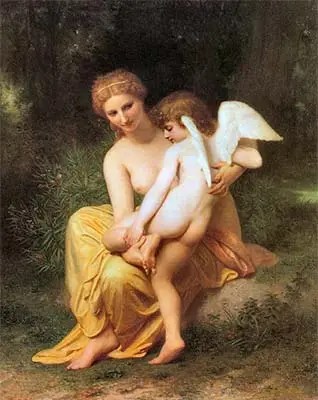
In ancient Roman mythology, Semiramis was worshipped as Venus, and Tammuz as Cupid, her son and husband, symbolizing desire and erotic love.

According to Hindu mythology, Semiramis and Tammuz were revered as the divine avatar Krishna and the beloved son of Devaki.

In Chinese mythology, Semiramis was known as Shing Moo, which means “the Holy Mother.” She was a goddess of fertility, love, and protection.
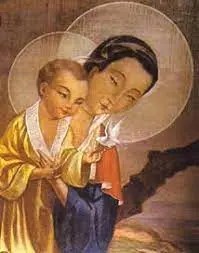
Semiramis’ legacy is carried on in Catholic tradition through the veneration of Mary, the Queen of Heaven and Mother of Jesus, which matches the ancient mother-son archetype and the worship of the divine feminine.

The phenomenon of mother-son worship, exemplified by Semiramis and Tammuz, has indeed had a profound impact on global cultures. The archetype of this evil woman spread throughout many cultures.
Conclusion
As you can see, worship of Semiramis continued after Babylon fell, and it spread to every religion and culture. The Bible forbids worshipping or honouring gods apart from our Creator, who created the heavens and all living things.
Some people might argue that honouring Mary isn’t really worship. However, how can having statues of a feminine deity in your churches not be a form of worship? Even the book of Exodus (20:4-6) forbids us from creating statues of gods or other living beings.
It is imperative that we prioritize the Word of God over man-made doctrines. We need to reestablish a relationship with our Creator and reject the pagan beliefs that have been incorporated into Christianity. Since the Bible is our guide, it should affect how we worship and understand God.
Sources
- Hislop, A. (1858). The Two Babylons: Romanism and its Origins. Retrieved from http://www.biblebelievers.com/twobabylons/index.html
- ‘The Holy Bible, New International Version. (n.d.). Romans 1:25. Retrieved from https://www.biblegateway.com/passage/?search=Romans+1%3A25&version=NIV
- The Holy Bible, New International Version. (n.d.). Jeremiah 7:18. Retrieved from https://www.biblegateway.com/passage/?search=Jeremiah+7%3A18&version=NIV
- The Holy Bible, New International Version. (n.d.). Jeremiah 44:17-19. Retrieved from https://www.biblegateway.com/passage/?search=Jeremiah+44%3A17-19&version=NIV
Photo by Sonika Agarwal on Unsplash





 Makewetalknow
Leave a comment