
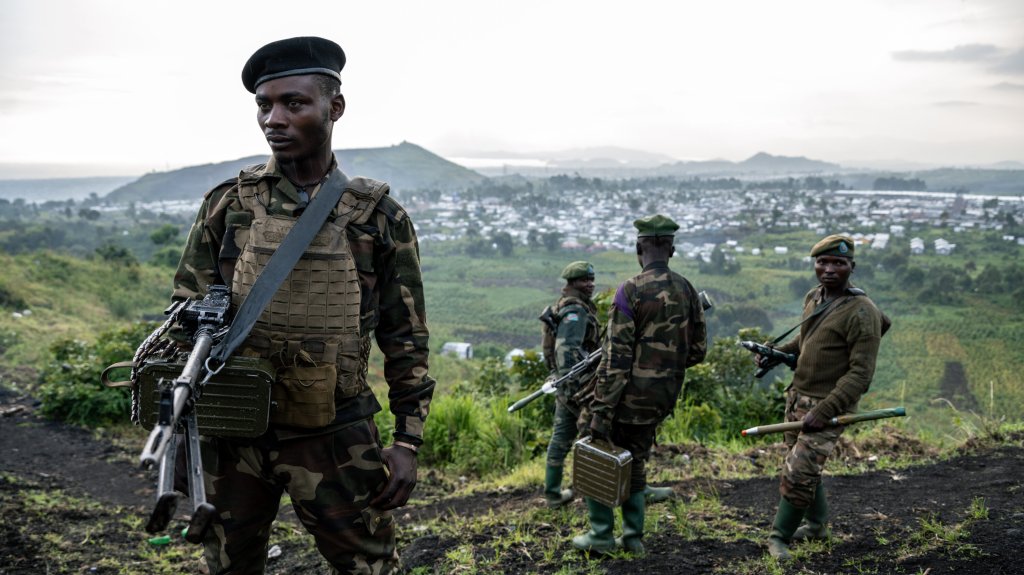
The Democratic Republic of Congo has been ravaged by decades of conflict, with the eastern provinces of North Kivu and Ituri bearing the brunt. Over 25 million people desperately need aid, and well over seven million are displaced. At its peak, the conflict claimed 45,000 lives monthly, with the true death toll potentially being significantly higher.
The crisis has its roots in the country’s tumultuous past. Following independence from Belgium in 1960, power struggles and authoritarian rule set the stage for ongoing violence. The 1994 Rwandan genocide spilled into the DRC, fuelling further conflict. Rwanda’s support for Tutsi militias and the emergence of rebel groups like the Alliance of Democratic Forces for the Liberation of Congo (AFDL) exacerbated the situation.
Today, armed groups in areas like Beni and Bunia perpetuate a cycle of violence, displacement, and food insecurity. Natural disasters, such as the devastating floods in South Kivu in May 2023, have worsened the crisis. Despite the staggering toll of at least six million lives lost since 1996, the international community’s attention has waned. The humanitarian crisis in the DRC demands renewed focus and support to alleviate the suffering of millions.
Read more: The War in the Democratic Republic of Congo is getting worse and no one cares
The First Congo War began on October 24, 1996, when the Tutsi-led Alliance of Democratic Forces for the Liberation of Congo (AFDL), backed by Rwanda, Uganda, Eritrea, Angola, and Burundi, attacked eastern Zaire. The AFDL, led by Laurent-Désiré Kabila, seized power on May 17, 1997, overthrowing Mobutu Sese Seko’s regime. The war was sparked by ethnic tensions, a refugee crisis after the 1994 Rwandan genocide, and weak governance under Mobutu’s dictatorship. The war resulted in hundreds of thousands of deaths and led to Kabila’s presidency.
Kabila’s expulsion of Rwandan troops in July 1998 sparked the Second Congo War. Rwanda backed the Rally for Congolese Democracy (RCD) rebel group, which launched a rebellion against Kabila’s government in August 1998. The conflict drew in multiple countries and involved approximately 25 armed groups, making it one of the deadliest conflicts in African history.
The South African Development Community (SADC) sent troops from Zimbabwe, Namibia, and Angola. The United Nations dispatched the MONUSCO peacekeeping mission. The Lusaka Ceasefire Agreement was signed in 1999, and the Luanda Agreement in 2002. These efforts paved the way for democratic elections in 2006, facilitated by Nelson Mandela and Thabo Mbeki.
Mandela supported dialogue between Mobutu and Kabila, aiming for a peaceful resolution. Despite Kabila’s absence from a dialogue meeting, the two leaders later met to discuss proposals for a resolution, leading to a joint appeal to regional heads of state to refrain from military operations in the Democratic Republic of Congo.
Read more: Genocide: How King Leopold of Belgium massacred over 10 million Congolese
In 2012, the DRC sought aid from the Southern African Development Community (SADC) to combat M23. SADC intervened with troops from Tanzania, South Africa, and Malawi under the Force Intervention Brigade (FIB), effectively countering the rebels and stabilizing the region. However, the M23 rebels began resurging in 2021. Despite the DRC joining the East African Community (EAC) in 2023, which allowed for EAC troop deployment, the effort failed to prevent the rebels’ advance. The DRC government eventually requested EAC troops’ withdrawal and turned to SADC for support.
SADC responded by deploying 2,900 South African soldiers as part of the intervention brigade to reinforce existing DRC troops. Unfortunately, M23 rebels launched a mortar attack near Goma in February 2024, killing two South African soldiers. This incident was part of a broader campaign of violence, with at least four mortar strikes hitting Goma since the start of 2024, resulting in significant loss of life.
The situation drastically deteriorated in 2025, with M23 seizing Goma in January, resulting in at least 3,000 deaths, and capturing Bukavu in February, deepening the humanitarian crisis. The M23’s sophisticated arsenal, including mobile SAM units, anti-aircraft guns, and GPS-guided mortar rounds, has astonished international analysts. The UN has reported on Rwanda’s alleged military, financial, and political support for the M23, despite their denials. UN Secretary General António Guterres expressed concern that UN forces are outgunned by the M23, hindering their ability to confront the rebel group effectively.
How Western Nations are further fuelling the Bloodshed in the DRC
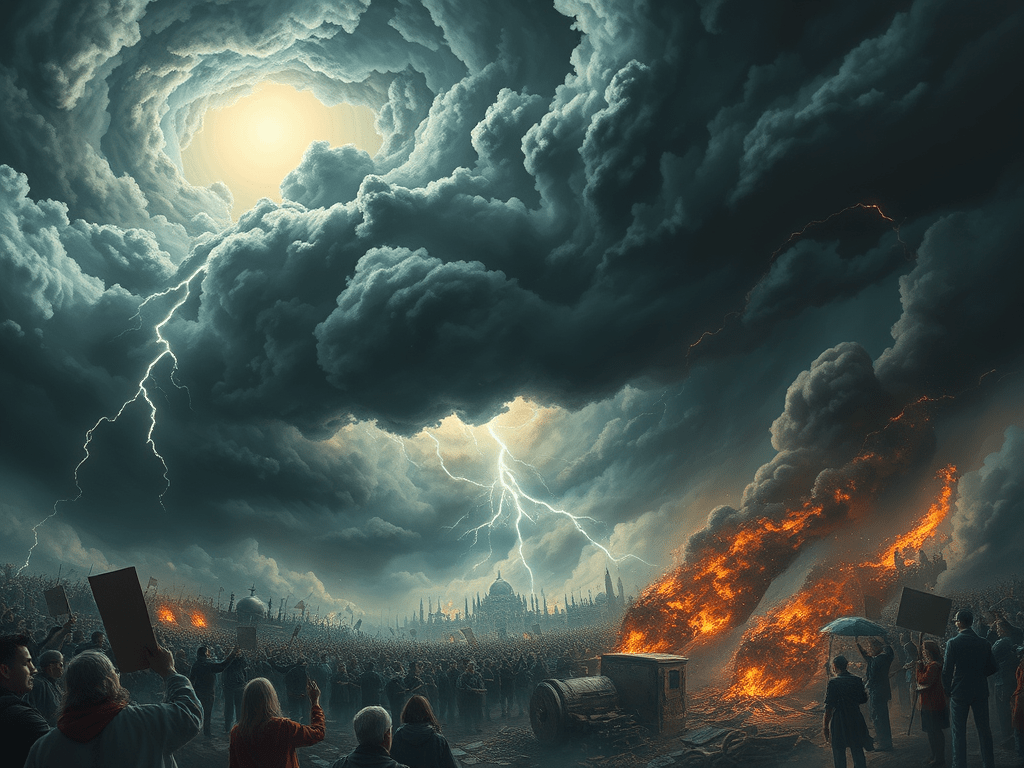
Protests have erupted in the Democratic Republic of Congo as demonstrators accuse Western countries, including Belgium, the US, UK, and France, of perpetuating the conflict and backing the M23 rebel movement. Demonstrators have targeted Western embassies, storming and setting fire to buildings, including those of France and Belgium. Protesters demand accountability from Western countries and the UN forces (MONUSCO) for their perceived ineffectiveness in addressing the crisis.
Rwanda’s involvement in the Democratic Republic of Congo (DRC) conflict is puzzling, given its small size and lack of a weapons factory. Even the United States has acknowledged that Rwanda supports the M23 rebels, but it continues to provide military aid to them. Most Congolese believe that Belgium, the United States, United Kingdom, and France are using Rwanda to cause instability to steal their resources.
Rwanda receives millions of dollars in military assistance from the European Union, the United States, and the UK. In February 2024, it was also reported that Rwanda had procured anti-drone radar military weapons from Poland, a week following the departure of the Polish president from Rwanda. Many believe that the Polish-made military weapon was intended for use in the DRC battle.
The United Kingdom has remained silent regarding the situation in the Democratic Republic of Congo. Some will argue that the United Kingdom is largely ignoring the DRC crisis because it’s shelling out $150 million to the Rwandan government to take in single male travellers who arrived in their country illegally. Belgium and France persist in providing economical and military aid to Rwanda, despite its involvement in the crisis in the Democratic Republic of Congo.
In a remarkable display of unity, the Congolese people have come together with a single, resounding voice. They are calling on nations with vested interests in the region, including Rwanda, the United States, France, and the United Kingdom, to take a step back and respect their sovereignty. Specifically, they are demanding that these countries close their embassies and withdraw their presence from the Congo, allowing the nation to forge its own path towards stability and peace.
Source
Al Jazeera. (n.d.). A guide to the decades-long conflict in DR Congo. Retrieved from https://www.aljazeera.com



 Makewetalknow
Leave a reply to The War in the Democratic Republic of Congo is getting worse and no one cares – Makewetalknow Cancel reply