

A surge in military takeovers has swept across West and Central Africa since 2020, with seven countries falling victim to this trend. What’s striking is that all of these countries share a common history as former French colonies. Many people are upset about this and there have been anti-French protests, which points to a deeper problem. Locals in these nations have been demonstrating against France because they believe that its actions are a kind of neocolonialism that weakens local sovereignty and prolongs economic dependency.
This sentiment has fuelled anti-French sentiment, contributing to the surge in military takeovers. The recent surge of military coups in Africa hints at a new pattern of Western power dynamics on the continent. What internal and external factors connect these events, and why does France seem to be at the heart of it all? Additionally, what role does Russia play in this evolving scenario?
Read more: Sudanese Crisis: The reason behind the conflict in Sudan
Before I continue, I want to provide a detailed overview of how events have deteriorated in the seven African nations affected by the wave of military coups. The seven African countries are Mali, Burkina Faso, Sudan, Chad, Guinea, Niger, and Gabon. Currently, the military governs these nations, having ousted their respective civilian governments. Niger and Gabon are the most recent examples of this trend.
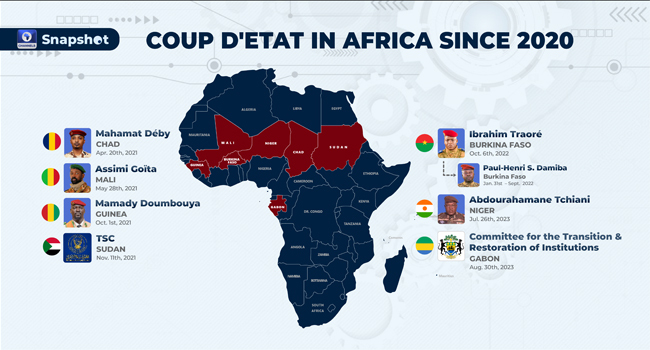
Despite the coup leaders’ perceived self-interest, they’ve received widespread public support. This has led observers to suggest that these coups might be a strategic manoeuvre for Western powers to exert influence. Each country’s circumstances are unique, but common factors contribute to the instability.
France’s lingering colonial influence has created resentment, with many Africans viewing its actions as neocolonialism. The involvement of foreign powers, such as France and Russia, further complicates the situation. A geopolitical shift has been induced by Russia’s growing influence in Africa, as countries are now seeking alternative partners to Western powers.
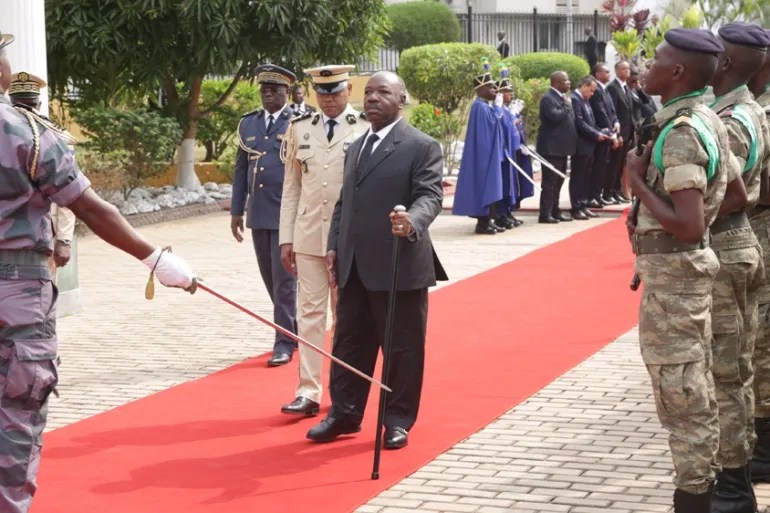
The 2023 coup in Gabon was sparked by President Ali Bongo’s disputed re-election, which critics claimed was rigged. Bongo’s family had ruled Gabon since 1967, supplying accusations of nepotism and authoritarianism. When the coup occurred, widespread celebrations marked the end of the Bongo era. The military seized power, arresting Bongo and promising to restore democracy through new elections.
Niger’s situation differs from Gabon’s. President Mohamed Bazoum was democratically elected in 2021, marking the country’s first civilian-to-civilian power transfer. However, a power struggle between the military and the presidency led to the coup. The July 2023 coup was led by factions of the armed forces, who seized power and suspended the constitution. President Bazoum was placed under house arrest. The coup’s reasons are unclear, but the actors cited the country’s deteriorating security situation.
President Mohamed Bazoum’s plans to modify Niger’s military leadership sparked tension. General Abdourahamane Tchiani, fearing his position was at risk, reacted negatively to the potential changes. This led to a military coup, with General Tchiani seizing power and detaining President Bazoum on July 26, 2023.
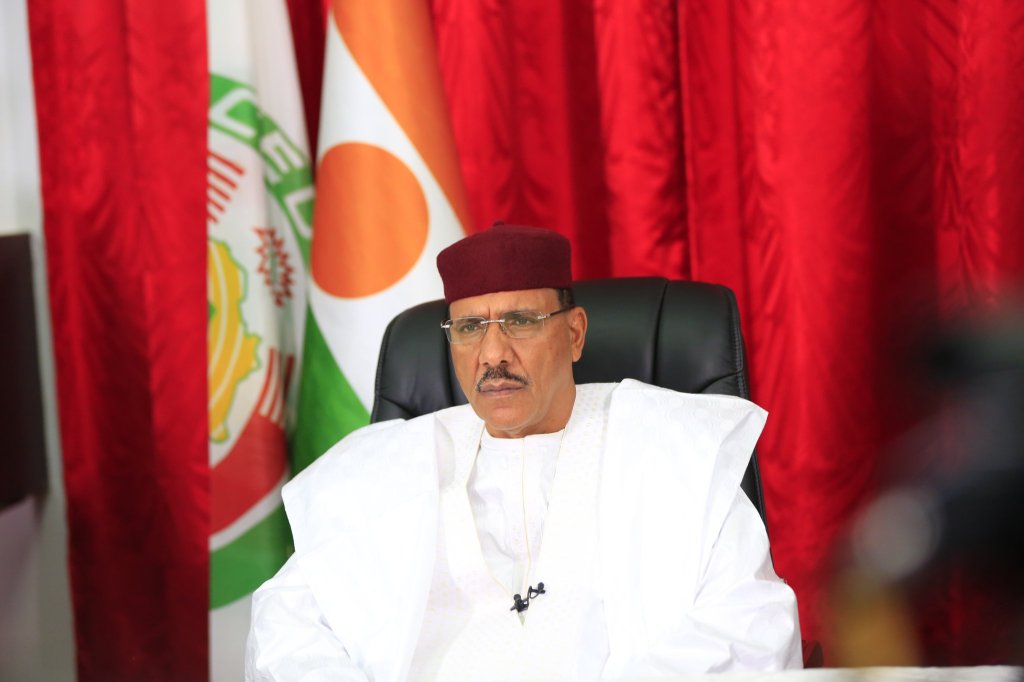
The situation in Niger rapidly escalated as President Mohamed Bazoum was detained by heavily armed soldiers, led by General Abdourahamane Tchiani, at his official residence in Niamey. The soldiers seized power in a coup, citing the country’s deteriorating security situation. General Tchiani then declared himself the leader of a new military junta.

The recent surge in coups across Africa reveals a complex landscape, with each country’s situation unique to its context. However, despite these differences, there are some common threads that run through the recent waves of coups in West and Central Africa, highlighting shared underlying factors that have contributed to these events.
1. Leadership Failure as a result of corruption
There is a growing consensus in Africa that the civilian governments in countries affected by coups were failing to deliver on their promises. Many of these countries are among the poorest in the world, despite being rich in natural resources. The irony is that these valuable assets have not been harnessed to benefit the local populations, a phenomenon that is all too common across Africa.
Countries like Sudan, Gabon, and Chad are endowed with oil reserves, while Niger and Mali have significant uranium deposits. Guinea and Burkina Faso are rich in gold and other minerals. However, despite the vast wealth generated from these resources, the benefits have largely bypassed the ordinary citizens, leaving them to struggle with poverty and limited opportunities.
The handling of power by democratic elites in these nations has generated widespread discontent. Critics argue that the ruling elites prioritize protecting the interests of their colonial masters, particularly France, over using the natural resources for of their citizens. At its core, the surge in coups across West and Central Africa is driven by a toxic mix of economic stagnation, rampant corruption, and entrenched insecurity. These issues have undermined trust in governments, creating fertile ground for military interventions.
2. Insecurity
The security challenges in Mali, Burkina Faso, and Niger are particularly acute. Geography plays a significant role in these concerns, as these countries are located in the Sahel region. This vast territory has become a haven for armed groups affiliated with Al-Qaeda and the Islamic State, posing a persistent threat to regional stability. According to a report by the Institute for Economics and Peace, almost half the deaths from terrorism around the world in 2022 occurred in the Sahel. That’s more than the number of terrorist attacks in all of South Asia and the Middle East.
The escalating security and humanitarian crisis in the Sahel has fuelled widespread discontent among the population, who blame their governments for incompetence. Some even suspect that governments are deliberately allowing security concerns to worsen for their own gain. As a result, many Africans are increasingly open to the idea of a coup that would bring in a military administration. It’s no surprise that the leaders of the coups in Mali, Burkina Faso, and Niger have all cited the security situation as a justification for seizing power.
3. Anti-French Sentiment
The complex and sensitive topic of France’s presence in West and Central Africa. For many Africans, France’s historical legacy as a colonial power is still a deeply felt wound, with ongoing economic and political ties considered a form of neocolonialism. The resentment towards France’s continued influence is palpable, with many arguing that the country’s interests are prioritized over those of the African nations themselves.
At the heart of this issue is the CFA franc, a currency used by 14 African countries, which is pegged to the euro and managed by the French Treasury ¹. This arrangement has been criticized for limiting the economic sovereignty of these nations and perpetuating France’s economic dominance in the region.
The concept of Françafrique, coined by François-Xavier Verschave, refers to France’s informal sphere of influence in Africa, which has been characterized by close ties between French and African elites, as well as significant economic and military cooperation. While France has attempted to rebrand its relationship with Africa, many see these efforts as superficial, with the underlying dynamics of neocolonialism remaining intact.
Neocolonialism, as practiced by France and other former colonial Western nations, perpetuates an unequal relationship with their former colonies, prioritizing their own political and economic interests. A striking example of this is the significant involvement of French companies in extracting natural resources from their former colonies.
France’s involvement in Niger’s uranium mines is a prime example of how African countries’ natural resources are being exploited, with little benefit trickling down to the local population. Despite promises of revenue generation, the economic impact of uranium export is barely felt by Niger’s citizens. This sentiment is echoed across Africa, where many people are frustrated with France’s significant influence over their countries. The perception is that their elected leaders are more aligned with French interests than their own people’s needs. This has contributed to widespread dissatisfaction and, in some cases, has even ignited support for military coups.
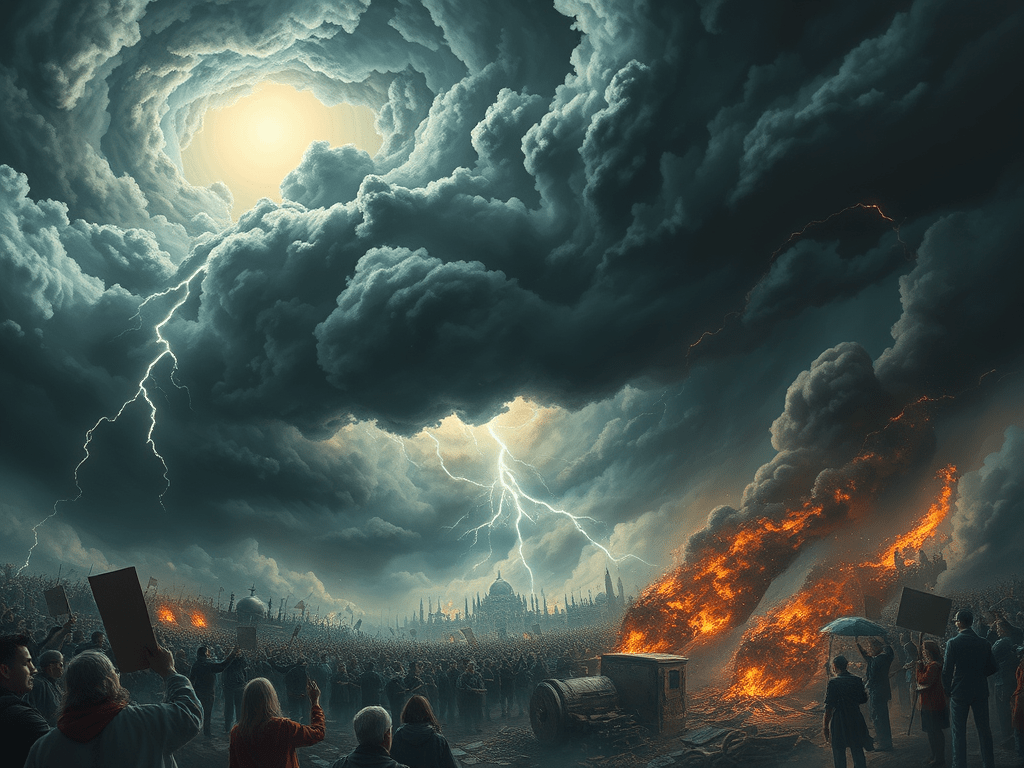
The street protests in Niger, Mali, and Burkina Faso are driven by a desire to break free from France’s neocolonialism, which many believe has perpetuated poverty and instability in the region. Protesters argue that their leaders have failed to address the issue, instead allowing France to exploit their natural resources.
The security threat in the Sahel has, in fact, made people in the region much less friendly toward France. France’s military intervention, which began in 2013 with the deployment of troops to Mali, was initially considered a necessary measure to combat the rising threat of terrorism. However, despite some early successes, the situation on the ground has not improved as much as many had hoped.
In fact, the continued presence of French troops in the region has become a source of resentment among many locals, who view it as a form of neocolonialism. France’s historical legacy as a colonial power in the region and its ongoing economic interests in the Sahel’s natural resources have intensified this perception. France’s counter-terrorism efforts in the Sahel have had limited benefits for locals. Instead, Jihadi groups have exploited the situation, gaining strength and taking advantage of the population. Many now believe France’s involvement has worsened the situation.
The region’s complex issues, including poverty, lack of economic opportunities, and instability, have been exacerbated by France’s military intervention. The presence of foreign troops has created frustration, which Jihadi groups have capitalized on. A more nuanced approach addressing the root causes of terrorism is needed.
Read more: The War in the Democratic Republic of Congo is getting worse and no one cares
The prevailing sentiment in the region is that France’s prolonged involvement in the conflict was never genuinely aimed at resolving it. Instead, many believe France has employed a double standard, secretly enhancing the conflicts to serve its interests. Many people throughout the region believe that, although there may be no evidence to the contrary, many people believe that. In general, many of the coup military leaders have also used this narrative to their advantage. They have firmly positioned themselves on the anti-French or anti-colonial side to win public support.
The situation in West Africa is indeed complex, with military factions leveraging anti-French sentiments to gain credibility. French troops have been expelled from Mali and Burkina Faso, and Niger is likely to follow suit. The call for France to withdraw its 1,500 soldiers from Niger is a significant development in this saga.
How is Russia involved in this?
Russia’s involvement in Africa is a multifaceted strategy aimed at expanding its geopolitical influence, economic interests, and diplomatic reach. By deepening ties with North Africa, expanding its presence in the Central African Republic and the Sahel, and rekindling Cold War-era relationships with Southern Africa, Russia has established itself as a significant player on the continent.
One key aspect of Russia’s strategy is its use of mercenaries, particularly the Wagner Group, which has been deployed in Libya, the Central African Republic, Sudan, and Mozambique. These interventions often support isolated leaders or proxies, allowing Russia to exert influence without committing significant military resources.
Russia has also leveraged its agricultural sector to gain traction in Africa, where many countries rely heavily on food imports. This unique position allows Russia to fill a critical need, setting it apart from other external actors like China.
Furthermore, Russia’s approach to Africa is inherently opportunistic, taking advantage of power vacuums and crises to advance its interests. This strategy is reflected in its involvement in Libya, where Russia supported warlord Khalifa Haftar’s forces, seeking to gain control of strategic territories and resources. Protesters in Mali, Burkina Faso, and Niger were seen waving Russian flags during demonstrations following the coup announcements, in what appeared to be a show of solidarity with Russia.
Russia has stepped into the void left by France’s waning influence in Africa, leveraging its historical ties and anti-colonialist rhetoric to expand its reach. By positioning itself as a champion of African independence and self-determination, Russia has successfully won over some African nations disillusioned with Western powers.
The Wagner Group from Russia is undoubtedly a major contributor to the expansion of Russian power in Africa, especially in regions riven by conflict. By providing military support to governments in exchange for access to natural resources, the Wagner Group has established itself as a significant actor in the region.
But the Wagner Group is more than just a mercenary organization. They’re also invested in various sectors such as logging, information communication, and mining. The Wagner Group has indeed been active in several African countries since 2021, including Mali, where they were recruited by the coup leaders to combat armed groups in the Sahel region. Their involvement has been marked by controversy, with reports of human rights abuses and civilian casualties.
In Mali, the Wagner Group has been accused of killing civilians, including 24 who were travelling to Algeria from Gao. They’ve also been involved in clashes with rebel groups, resulting in further casualties. While there’s been speculation about Wagner’s involvement in Burkina Faso and Niger, there’s no concrete evidence to confirm this. However, it’s worth noting that the Wagner Group has been expanding its presence in Africa, with reported activities in countries like the Central African Republic, Sudan, and Libya.
In general, the prospects for the Wagner group in Africa have become increasingly challenging to predict, particularly since the loss of Wagner’s leader, Yevgeny Prigozhin, in a plane crash in Russia.
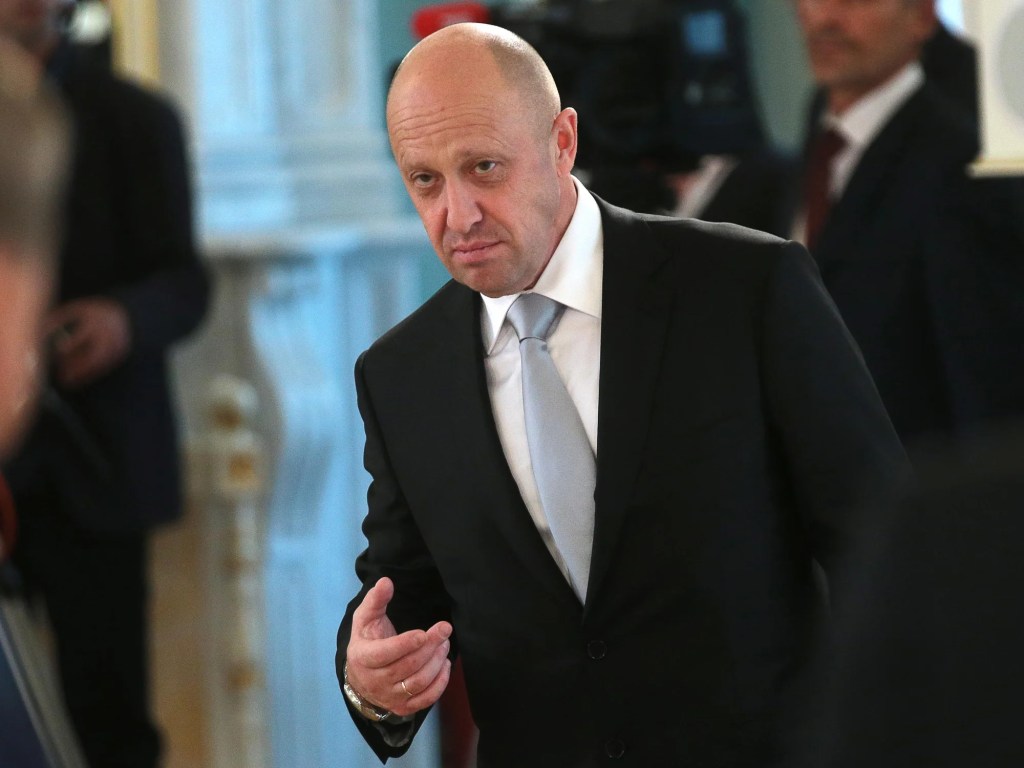
There is a widespread belief that President Putin may have orchestrated the crash as retribution for the mutiny that Prigozhin led against the Russian government. However, as one would expect, the Kremlin has denied any role in his death. It remains uncertain whether the death of Wagner’s Machinery, Prigozhin, would result in the destabilization of the machinery group, as it has accomplished a significant number of objectives for Russia, including the acquisition of resources that undermine the credibility of the West.
Conclusion
The recent coups in Western and Central Africa are a pressing concern because of the complex web of power forces involved. At the heart of these coups are domestic anxieties, such as corruption, economic mismanagement, and security failures, which have escalated fear and discontent among the population.
Regional concerns, particularly in the Sahel region, have also played a significant role. The spread of jihadist movements and armed separatist groups has created a sense of insecurity, which has been exploited by coup leaders to justify their actions. Moreover, larger geopolitical forces are at play, with international powers like France, Russia, and China vying for influence in the region. The return of coups to Africa is, in part, a manifestation of the ongoing international conflict between Western powers and emerging nations like China and Russia
Three countries, Sudan, the Democratic Republic of the Congo, and Chad, are considered to be potential hotspots for the next wave of coup due to their geopolitical significance, existing conflicts, and strategic resources. Sudan is a critical country to watch, given its strategic location and resources. The Sudanese Armed Forces are advancing on the Rapid Support Forces in Khartoum, and the outcome of this conflict could have significant implications for the region. Russia’s interest in establishing a naval base in Port Sudan adds another layer of complexity to the situation.
The Democratic Republic of the Congo is another country where tensions are running high. The M23 rebel group, backed by Rwanda, has been making gains in the eastern DRC, and the situation remains volatile. The DRC’s rich mineral resources and strategic location make it an attractive target for external powers. Chad is also a country to monitor, given its strategic location in the Sahel region and its role in regional security efforts. Turkey’s growing influence in Chad, including the potential establishment of a Turkish military base, could further complicate the regional dynamics.
As the power struggle between the West and Russia in Africa continues to unfold, it remains uncertain which country will be the next focal point. Only time will reveal the answer, as the complex dynamics of regional politics and international interests continue to evolve.




 Makewetalknow
Leave a reply to Sudanese Crisis: The reason behind the conflict in sudan – Makewetalknow Cancel reply