

The conflict in Sudan can be described as a struggle for control between the Sudan army and a paramilitary unit known as the Rapid Support Forces (RSF), led by men who were previously allies. The United Nations estimates that there are 604 people killed, and five thousand injured in the ongoing clashes in Sudan. Fighting is currently happening in different parts of the country, with the most intense fighting happening in the capital, Khartoum.
Most airports in Sudan have been severely damaged by the conflict. Many foreigners are still stuck in Sudan and can’t leave because of fighting at Khartoum’s international airport. The social livelihood of Sudanese has been negatively impacted by the crisis. Over 11 million people are grappling with food scarcity or are unable to procure sufficient, nutritious food. Since the fighting started on April 15, the cost of food has gone up a lot and people can’t move around much. This makes it more difficult for people to obtain food and water.
What’s causing the conflict in Sudan?
Sudan has been experiencing difficulties in establishing a democratic system following decades of one-man rule, and this issue can be attributed to a single individual, namely Omar Al-Bashir, the former president of Sudan. Omar al-Bashir was elected president in the late 1980s after a military coup. He held this position for 30 years before his people demanded his departure. This caused people to protest and create uncertainty.
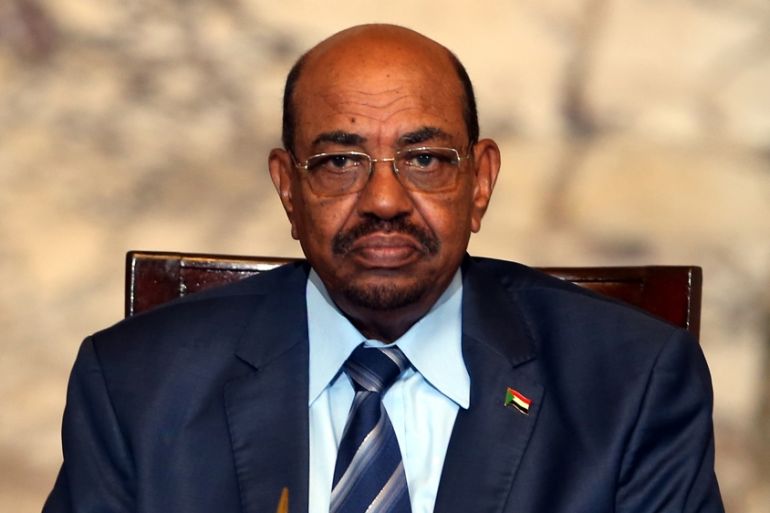
When the protests grew out of control, the Sudanese military saw the uprising as an opportunity to assume power. The Sudanese, on the other hand, were not thrilled by it, as they were opposed to military rule. After pressure from protesters throughout the country, the army finally agreed to share power with different political groups in a transitional government.
Read more: Explainer: Why there are numerous waves of Coups in West Africa
The plan was to transition slowly to a democratic system. But some years later, the army didn’t do what they promised and kicked out the prime minister, Abdalla Hamdok. Thereafter, they decided to regain control of the country.

Fast-forward to this very day, there were discussions between the military and political organizations affiliated with the pro-democracy movement aimed at facilitating the transition to a democratic system. The delay in the transition was, however, attributed to a persistent rivalry between the Sudanese army and the Rapid Support Forces, which has gradually evolved into a separate army.
It is widely believed that this is a personal rivalry between the army leader, General Abdel Fattah Al-Burhan, who is effectively the leader of the country, and the RSF leader, General Mohamed Hamdan Dagalo, popularly known as Hemedti.
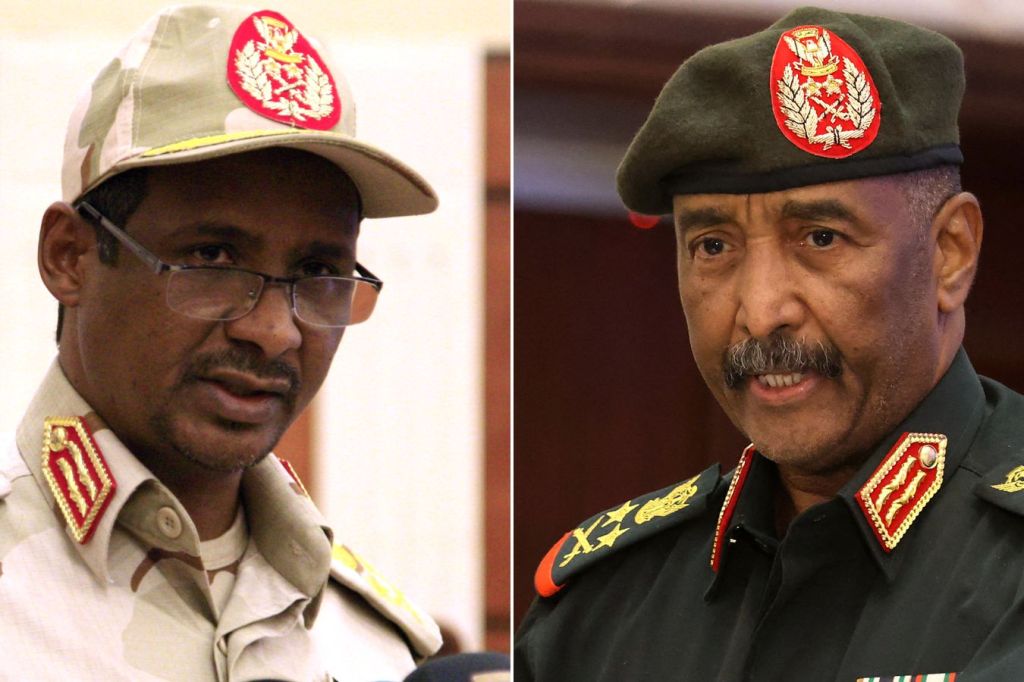
For a considerable period of time, both men were on the same side of the coin, and have been since the conflict in Darfur. Hemedti commanded a militia known as the Janjaweed (Arabic: جَنْجَويد, Romanized: Janjawīd; also transliterated Janjawid). The Janjaweed militia was used by al-Bashir army to combat rebels in the Darfur region. The Janjaweed Militia, according to some, was created to protect the military’s upper echelon and senior commanders.
They’re accused of committing war crimes, especially in the region of Darfur. Al-Bashir, who was deemed the main suspect in the conflict, was initially charged with genocide, but the court concluded that there was insufficient evidence to prosecute him for the act. In 2013, the Janjaweed militia underwent a rebranding as the Rapid Support Forces, and they collaborated with the Sudanese army on various missions.

In 2019, Hemedti and General al-Burhan collaborated to eliminate al-Bashir by using the military to capitalize on the civilian hostility towards Bashir. During the pro-democracy demonstrations, both the RSF and the Sudanese army were accused of the murder of more than one hundred people.
The bloody rivalry between the Sudanese army and Rapid Support Forces (RSF)
Since their initial status as a mere militia, the RSF has progressively gained in strength as they have demonstrated greater autonomy in their actions. They were able to invest a considerable amount of funds both within and outside the country, particularly in the acquisition and sale of gold.
The truth is that the Sudanese army and the Rapid Support Forces (RSF) became very competitive. In the past, they were capable of collaborating for up to four years to preserve their authority. But the rivalry took a new turn when there was a core tension about who was better between them. This brings us to the present circumstance in Sudan. As part of the transition to democracy in the country, discussions were held regarding the means by which this transition would be accomplished.
The transition framework stipulated that the Sudan’s military would quit politics and hand over power to civilians. Furthermore, the RSF was to be incorporated into the nation’s armed forces. The rift in personal relationships between Burhan and Hemedti is preventing this from happening. They can’t agree on when it will happen, which is why things are chaotic in the country. Hemedti is also strongly opposed to the incorporation of the RSF into the armed forces, a move he believes would lead to the disintegration of the nation.
In response, the Army proposed a period of two years, while the RSF preferred a period of ten years. The discussions came to a halt due to the inability of both parties to reach a consensus on the timing of the transition. However, the Sudanese armed forces are putting forth all efforts to counter the rising popularity and influence of the RSF.
They’re aware that the head of the RSF, general Hemedti, has his own political ambitions. The Sudanese military is concerned that if they don’t get the Rapid Support Forces to join forces, this unit will continue to grow beyond the formal military’s control. It is unclear which party initiated the fighting, but on April 15th, both sides began trading accusations that they had attacked each other’s bases in Khartoum. The conflict reached most key areas of Sudan, and both parties engaged in fighting at the presidential palace, airport, and state television channel.
Armed with a substantial amount of air power, the Sudanese military has been targeting RSF bases in the capital, with a significant number of them being reported to be residential areas. Despite their lack of air support capabilities, the RSF has an army of a hundred thousand men and anti-aircraft weapons to defend against aerial assault.
There have been numerous requests for the cessation of the fighting from Sudan’s neighbours, the African Union, and the international community. Countries like Egypt, which has been a close ally of the Sudanese army, and the United Arab Emirates, which has ties to the RSF, should do more to intervene. It seems like neither side is ready to give in.

Many Sudanese are unsure of what will happen in the next few minutes, hours, or days. Others are frustrated, scared, and heartbroken by what is happening. Their nation is consistently being steered off the path to democracy. For most Sudanese, it is a prospect that appears to be increasingly distant at present.
Sources
The Conflict between the Sudanese Army and the RSF, Al-Jazeera
What sparked the violent struggle to control Sudan’s future? AP News
Sudan’s conflict: why is there fighting, and what is at stake in the region? The Guardian




 Makewetalknow
Leave a reply to The War in the Democratic Republic of Congo is getting worse and no one cares – Makewetalknow Cancel reply