

UBER
Uber, the American-based transportation network and taxi company, launched its services in Nairobi, Kenya, in January 2015. With its headquarters in San Francisco, Uber has expanded its presence to eight countries across Africa, including South Africa, Kenya, Nigeria, Tanzania, Uganda, Ghana, Egypt, and Morocco. Since its entry into the Kenyan market, Uber has revolutionized the traditional taxi industry, which had remained largely unchanged for decades. Previously, users had to either hail a taxi on the street or book a local car service at least 30 minutes in advance. However, thanks to Uber and its competitors, it is now possible to hail a taxi using a smartphone from any location.
Recently, in response to ongoing driver strikes, Uber adjusted its pricing in Kenya. The new rates include a base fare of Ksh 100, Ksh 42 per kilometre, and Ksh 3 per minute, resulting in a minimum fare of Ksh 300, up from the previous minimum fare of Ksh 200 and Ksh 35 per kilometre.
Uber has transformed Kenya’s transportation scene by providing unmatched popularity and convenience, but it’s important to recognize both the advantages and disadvantages of this innovative technology. Here’s a balanced view of the pros and cons of Uber in Kenya.
Pros of using Uber in Kenya
1. Uber Exceptional UX App Design
The Uber app’s user experience (UX) is a masterclass in intuitive design. The map interface is the crown jewel, accurately pinpointing your location and allowing you to track your driver’s route in real-time. This feature sets Uber apart from its competitors, providing a seamless and transparent experience.
The app’s logistics are remarkably streamlined, effortlessly connecting riders with nearby drivers. The interface is fast, reliable, and ensures timely pickups. Moreover, Uber’s app includes a robust feedback system, enabling users to report incidents of improper driver conduct and request refunds directly within the app.
Uber’s commitment to continuous improvement is evident in its regular updates, which consistently enhance the app’s UX. By prioritizing user experience, Uber has cemented its position as a leader in the ride-sharing industry.
2. Exclusive Discounts and Refunds with Uber
Uber rewards its loyal customers with various discounts and promotions. New users can enjoy generous incentives, such as:
- Free or discounted rides for first-time users, including 25% off the first 10 rides
- Special discounts for events sponsored by Uber
- Free rides worth up to KES 250 for referrals
Additionally, Uber’s flexible refund policy ensures that users are protected from overcharging. If you feel you’ve been overcharged for a trip, you can easily review your fare and request a refund. Uber will promptly credit your account with Uber credits, which can be used to partially or fully cover your next ride
3. Exceptional Customer Service with Uber
Uber’s customer service is renowned for its swift response times and effective issue resolution. If you encounter any problems, such as overcharging, accidents, or drivers taking incorrect routes, don’t hesitate to reach out to Uber’s customer support team through the app or their dedicated call support number.
You can expect a prompt response with a possible solution, demonstrating Uber’s commitment to providing a hassle-free experience for its users. Their efficient customer service ensures that any issues are addressed quickly, minimizing disruptions to your ride-hailing experience.
4. Reliable Access to a Large Pool of Drivers
One of Uber’s standout advantages is its impressive fleet of available drivers. Whether you need a ride during peak hours or late at night, Uber’s extensive network of drivers ensures that you can get a ride when you need it.
This reliability makes Uber an excellent choice for individuals who require timely transportation to events, appointments, or other time-sensitive commitments. With Uber, you can count on a driver being available to get you where you need to go, on schedule.
5. Uber Assist Prioritize the Safety and Comfort of Seniors
Uber has introduced Uber Assist, a specialized car type option designed to cater to the unique needs of elderly passengers. This thoughtful service provides certified drivers trained to assist seniors, ensuring their safety and comfort throughout the ride.
While prices for Uber Assist may be slightly higher than standard rates, the peace of mind that comes with knowing your elderly loved one is receiving extra care and attention makes it well worth the investment. This initiative demonstrates Uber’s commitment to inclusivity and prioritizing the needs of vulnerable populations.
6. Convenient Fare Splitting with Uber
Uber has introduced a convenient feature that allows customers to split fares when sharing a ride with a group. This functionality enables users to schedule a ride and automatically split the cost with fellow passengers, making it easier to divide expenses.
By facilitating fare splitting, Uber eliminates the hassle of calculating and exchanging cash payments, reduces personal interactions with drivers, and provides a seamless and comfortable way to get where you need to go. This feature is perfect for group outings, social events, or simply carpooling with friends or colleagues.
Cons of using Uber in Kenya
1. Uber Expensive Pricing Concerns
While Uber offers numerous benefits, it also has its cons. One notable disadvantage is its pricing, which can be steep, particularly during peak hours or in heavy traffic conditions like those found in Nairobi. Uber’s pricing model is based on a combination of base fare, price per kilometre, and price per minute.
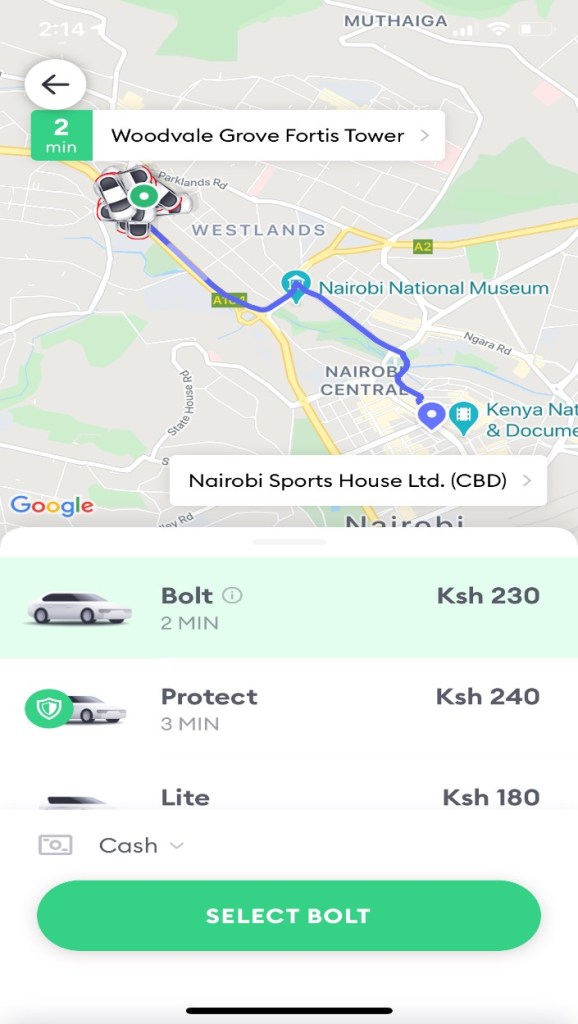
To illustrate the cost, I compared the prices of Bolt and Uber for the same route, from Woodvale Grove Fortis Tower, Westlands to Nairobi Sports House, Moi Avenue, CBD, a distance of approximately 4.2 kilometres.

2. Lack of M-Pesa Payment Option on Uber App
One notable limitation of Uber’s service in Kenya is the absence of M-Pesa, a popular mobile money payment option, on its app. This oversight is surprising, given the widespread adoption of M-Pesa in Kenya and its potential to promote local economic growth.
Currently, Uber’s payment options are limited to cash, credit or debit cards, and PayPal. While some users may opt to send money directly to drivers via M-Pesa, this workaround is not an official payment option and may not be comfortable for all users. By not integrating M-Pesa into its app, Uber misses an opportunity to cater to local preferences and promote financial inclusion
3. Issues with Driver Misconduct is a Massive Concern
One significant concern with using Uber is the potential for driver misconduct. Some drivers may engage in unethical practices, such as taking longer routes to increase fares, driving slowly, or making unnecessary stops.
While Uber’s rating system helps to identify and remove poorly performing drivers from the platform, the company’s open employment policy can make it challenging to eliminate the issue. As a result, some drivers may continue to prioritize their own interests over providing a smooth and efficient ride for passengers.”
4. Uber’s Automated System can be an issue
Have you ever wondered why your Uber fare seems to skyrocket during peak traffic hours in Nairobi? The answer lies in Uber’s automated system, which utilizes algorithms to match drivers with riders and calculate fares.
While this system is designed to optimize efficiency, it’s not foolproof. Technical glitches or errors can lead to accidental overcharging, leaving riders with a hefty bill. This highlights the limitations of relying exclusively on automated systems, which can sometimes lead to unfair or incorrect charges.
BOLT
In July 2016, Bolt, an Estonian online taxi app, launched its services in Nairobi, Kenya. Initially known as Taxify, the company rebranded to align its identity with its expanded vision of transportation, which now encompasses ride-hailing, scooter sharing, and more.
The Bolt app boasts a user-friendly interface, operating on a straightforward system. Passengers can request a ride, track the vehicle’s movement in real-time, pay conveniently via cash or automatic in-app payment, and rate their journey. Bolt has changed the way people move around Nairobi by making the experience smooth and quick. It is now a popular choice for both locals and tourists.
Pros of using Bolt in Kenya
1. Competitive Pricing
One of the standout advantages of Bolt is its affordability. Compared to Uber, Bolt offers significantly lower rates, charging Ksh. 2.3 per minute, whereas Uber charges Ksh. 3 per minute. This price difference can add up, making Bolt a more economical choice for riders in Nairobi
2. Flexible Cancellation Policy
Bolt offers a convenient cancellation policy that benefits riders. If you need to cancel a ride before the driver arrives, Bolt doesn’t charge any cancellation fees, providing you with flexibility and peace of mind.
3. Transparent Pricing
Bolt provides riders with complete transparency when it comes to pricing. Before requesting a ride, you can view the charge rates for your chosen car option, including the cost per kilometre, per minute, wait time, and minimum fare. This feature will help you make informed decisions and avoid surprises charges.


4. Referral Rewards
Bolt incentivizes users to invite friends to join the platform. When you refer a friend, you’ll receive a reward in the form of a free trip. Additionally, Bolt regularly offers promo codes, providing users with even more opportunities to save and enjoy discounted rides.
Cons of using Bolt in Kenya
1. No New User Incentives
One downside of using bolt in Kenya is that they don’t offer rewards or discounts to first-time users, unlike its competitor Uber. This means that new users won’t receive any special incentives or promotions when they sign up for the service.
2. Limited Driver Availability in Remote Areas
One of the most frustrating experiences with Bolt is being stranded in an inaccessible area with no available drivers nearby. This can leave users feeling helpless and disconnected.
A notable disadvantage of using bolt is its limited driver availability, particularly during peak hours or in certain areas, leading to frustrating wait times. In contrast, Uber tends to have a more extensive network of drivers, making it easier to find a ride when needed.
3. Limited In-App Support
Unlike Uber, Bolt’s app does not provide a direct channel for reporting driver misconduct, disputing fares, or submitting other concerns. Instead, users must call Bolt’s customer support number, which can be inconvenient and time-consuming. This lack of in-app support can make it more difficult for users to resolve issues promptly.
4. Bad User App Experience
Bolt’s app is marred by numerous technical difficulties, leading to a frustrating user experience. Common problems include destination addresses failing to appear on the map after a driver has accepted a request, and trips suddenly disconnecting unexpectedly. These glitches and errors can cause significant inconvenience for users.
To improve customer satisfaction, Bolt needs to invest in upgrading and refining its app to eliminate these technical difficulties and provide a seamless experience.
5. Challenging Refund Process
Unlike Uber, which offers flexible refund options, including Uber points, Bolt’s refund process is more cumbersome. If you’re overcharged, Bolt requires you to input your debit or credit card details within the app to receive a refund, which can be inconvenient and may raise security concerns for some users.
6. Bolt Safety Concerns Raise Serious Red Flags
Bolt has recently faced intense scrutiny due to alarming safety concerns. While I won’t delve into specifics, it’s disturbing to note that numerous individuals I know who use bolt have encountered driver misconduct issues. This is unacceptable for a company aiming to compete with Uber in the Kenyan market.
Moreover, there have been disturbing reports of young women being kidnapped or sexually assaulted by Bolt drivers during rides. It remains to be seen whether the company will take decisive action to overhaul its driver quality and address the severe damage to its public image.
7. Bolt Drivers tend to charge extra than the actual fee
One of the most frustrating aspects of using bolt is the unethical behaviour of it’s drivers. Many users, including myself, have fallen victim to drivers demanding additional payment beyond the app’s estimated fare. This issue has sparked widespread complaints on social media, with drivers allegedly charging exorbitant rates, often 200% higher than the standard fee, for each kilometre travelled.
Experts attribute this problem to the rising cost of living in Kenya and the relatively low earnings of Bolt drivers, which may incentivize them to engage in unfair practices.
My Take
Ultimately, despite the debate surrounding Uber and Bolt, both companies are poised to continue growing in Kenya, given their dominance in the market. However, safety remains a top priority for Kenyans, and unfortunately, Bolt Kenya has fallen short in this regard.
In my assessment, Uber edges out bolt as the superior taxi service in Kenya. This is largely due to Uber drivers’ heightened professionalism and commitment to delivering exceptional service.
Fortunately, every business has room for growth and improvement, even in the face of challenges. To regain the trust of disillusioned customers, Bolt must focus on effective management and robust reputation management.
Note: This article is an independent review and not sponsored by any company. As a frequent user of both Uber and Bolt services in Kenya, I am sharing my opinions and experiences.




 Makewetalknow
Leave a comment