
While studying paganism, I discovered that many of our modern traditions and holidays may have their roots in ancient rituals. Surprisingly, many of the traditions we value have a darker history than we realize.
One such example is Valentine’s Day, which is commonly regarded as a harmless celebration of love, but its origins are far more complicated and sinister than heart-shaped cards and candy would indicate.
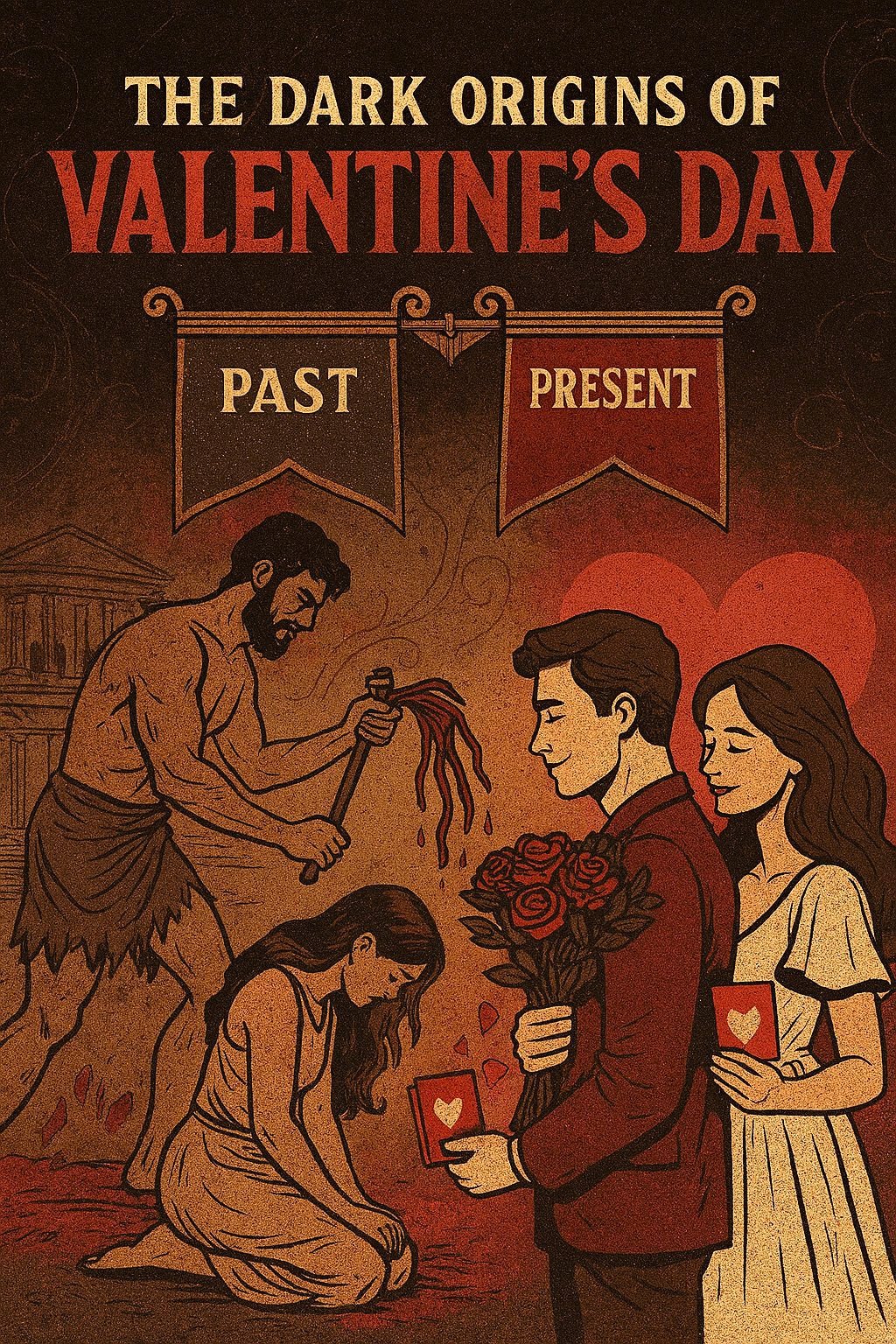
This romantic holiday originated in ancient Rome, where fertility, violence, and ritual converged in the Lupercalia festival. Observed annually from February 13 to 15, Lupercalia was dedicated to Lupercus, the Roman deity of fertility and shepherds.
The festival started with the sacrifice of goats and dogs, whose hides were fashioned into strips known as februa. Roman priests known as the Luperci would run through the streets, gently striking women with these bloody strips in order to promote fertility. The ritual was thought to cleanse the city and bring about health and prosperity.
Another disturbing tradition involved a lottery system in which men drew names of women from a jar to be their partners for the duration of the festival—sometimes for longer. These pairings were at random, and they frequently resulted in relationships that blurred the lines between ritual and romance.
As Christianity gained popularity, the Church attempted to curtail such pagan excesses. Lupercalia was officially abolished by Pope Gelasius I in the fifth century and replaced by St. Valentine’s Day on February 14. Even this substitution was not clear, as the Church recognized at least three martyred saints named Valentine, all of whom were executed by the Roman Empire.
According to one legend, a Valentine secretly performed weddings in defiance of Emperor Claudius II’s ban on young men marrying, which led to his imprisonment and execution. Another story goes that he healed his jailer’s blind daughter and signed a farewell note to her as “from your Valentine.”
Despite the Church’s efforts to sanitize the holiday, traces of Lupercalia persisted. The practice of pairing men and women has evolved into modern customs such as gift exchange and romantic gestures. Even color symbolism (red for blood and passion, white for purity and new life) can be traced back to ancient fertility rites.
Valentine’s Day did not take on a more romantic tone until the Middle Ages, when poets such as Geoffrey Chaucer linked the day to courtly love. Handwritten notes gave way to mass-produced cards by the 18th century, and by the twentieth century, the holiday had become a commercial juggernaut, fuelled by industries selling chocolates, flowers, and jewellery.
Today, Valentine’s Day is celebrated all over the world, often stripped of its violent and chaotic origins. But underneath all the candlelit dinners and sweet nothing, there is a history of ritual sacrifice, haphazard matchmaking, and cultural rebranding. The transition from Lupercalia to Valentine’s Day reveals not only a change in values, but also an intriguing story about how we commemorate a pagan holiday.
Conclusion
As you have read, many modern celebrations have their roots in ancient pagan cultures that did not acknowledge or obey the laws of the Most High God.
When you participate in celebrations for which you have no knowledge of the origins, you are simply imitating dark rituals practised by pagans in the past.




 Makewetalknow
Leave a comment