

Since establishing diplomatic relations, Ghana and Nigeria, two of West Africa’s most powerful economies, have maintained a complicated relationship. Their relationship has been strained, with mutual distrust, especially in trade and immigration. What’s more ironic about the two countries is that while British colonialism shaped their shared history, politics, and culture, it did not always promote cooperation.
During the colonial era, Nigerian Hausas were brought to Ghana to fight the Ashanti Empire, laying the groundwork for the British colonial army. However, this shared history did not result in peaceful relations after independence.
When Ghana gained independence in 1957, many Nigerians emigrated, laying the groundwork for future rivalry. This complex rivalry pave the way for one of the darkest chapters in Ghana-Nigeria relations: the mass deportation of Ghanaians from Nigeria in 1983, known as the “Ghana Must Go” crisis.
Over 1 million Ghanaians were deported under the orders of Nigerian President Shehu Shagari’s military regime, tearing many families apart and leaving a bitter legacy that continues to this day.
Why Ghanians Migrated in Large Numbers to Nigeria
In 1958, Nigeria discovered oil as a young country on the verge of independence. Despite the brutal military regimes that marred that period, the oil money was steady, and there were high hopes that Nigeria could prosper into a thriving economy. Being an oil-rich country, Nigeria had been enjoying the benefits of elevated oil prices, especially during the 1970s.
This decade brought a golden era, and Nigeria became Africa’s wealthiest nation, securing its title as the Giant of Africa. By 1974, Nigeria’s oil wells were producing some 2.3 million barrels a day.
As a result of this oil boom, job opportunities increased dramatically, particularly in the construction and service industries. During this time, Nigeria’s overall standard of living rose significantly, attracting people from both urban and rural areas in Nigeria and across West Africa.
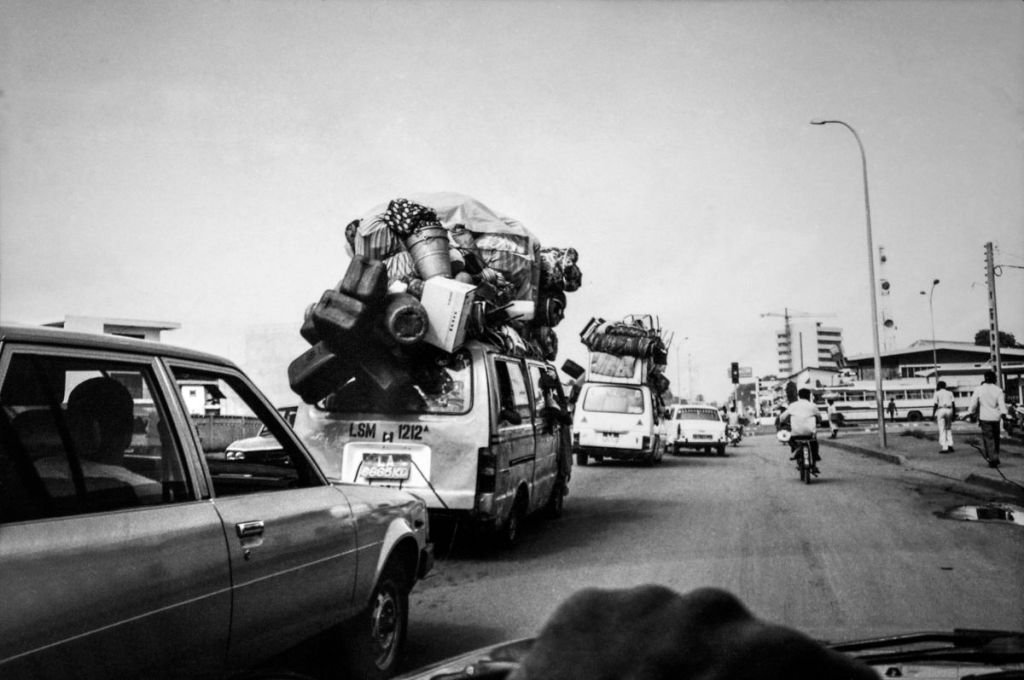
While Nigeria was experiencing a financial boom, its closest English-speaking neighbour, Ghana, was experiencing the polar opposite. A decline in cocoa prices resulted in a devastating combination of famine and civil unrest.
Following the 1966 coup that deposed independence leader Kwame Nkrumah, Ghanaian politics experienced a string of military coups and fragile political regimes. This happened as Ghana’s GDP fell dramatically between the 1970s and 1983 when the country declared bankruptcy. Even Ghana’s currency depreciated, and the country’s economy collapsed.
Due to a scarcity of spare parts and raw materials, Ghana’s factories were operating at only about 20% capacity. Ghana’s economy was in dire need of repair, despite the promises of several military and civilian governments that came to power. By the late 1970s, smuggling and profit sharing had become so common in Ghana that few people were immune to corruption allegations.
Nigerian recruiters flocked to Ghana searching for skilled workers, enticing them with job opportunities that locals were unwilling or unable to fill. As news of these opportunities spread, many Ghanaians considered relocating to Nigeria, drawn by the promise of better prospects and familiar administrative systems. These individuals came from diverse backgrounds, including labourers, traders, artisans, teachers, architects, lawyers, and doctors.
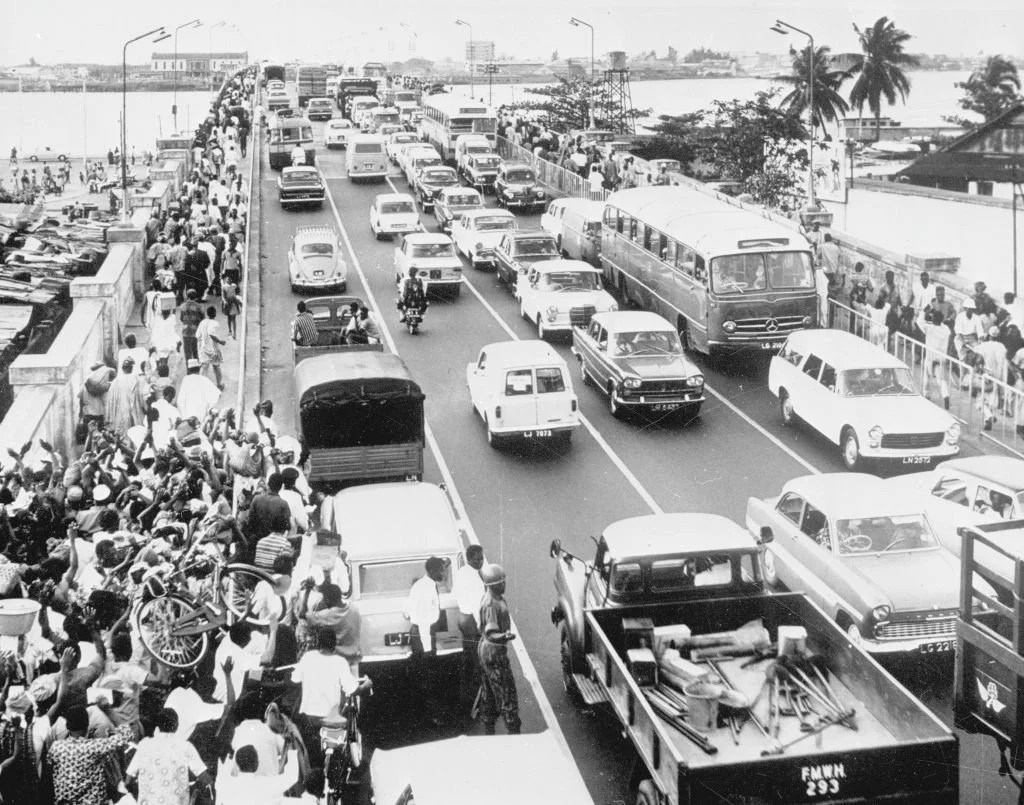
Nigeria experienced a surge in Ghanaian migrants, with many families having a member working there. Law offices, shoe repair shops, ice cream stands, and restaurants were bustling with Ghanaians and other West Africans. Many migrants believed they were entering Nigeria under the ECOWAS protocol, which allows citizens from member countries to enter without a visa for 90 days.
Furthermore, some migrants entered Nigeria without the proper documentation, often with the assistance of dishonest immigration officials. Many of them who were legally admitted went so far as to exceed the protocol’s 90-day limit without requesting or receiving an extension. Ghanians of all backgrounds were thriving and peacefully coexisting with Nigerians throughout the country.
What led to the Deportation of Ghanians from Nigeria
At that time, Nigeria was under President Shehu Shagari’s leadership, who assumed office after the 1979 elections following General Olusegun Obasanjo’s military government handover.

Ghana’s diplomatic relations with Nigeria remained cordial under President Hilla Limann until Flight Lieutenant Jerry Rawlings seized power in a December 31, 1981 coup, overthrowing Limann’s government, a close ally of Nigerian President Shehu Shagari. The abrupt change strained relations, creating conditions for tensions to rise.
Nigeria had to reconsider its foreign policy after Rawlings’ “Second Coming” coup caused a dramatic change in Ghana’s leadership. As Nigeria had recently transitioned to civilian rule, the Shagari administration hesitated to officially recognize Rawlings’ government, further straining relations.

Rawlings, on the other hand, expressed dissatisfaction with the Shagari-led administration, citing concerns about corruption. In 1982, Nigeria stopped crude oil shipments to Ghana, amidst tensions between the two governments. Tensions increased as Rawlings was the target of multiple coup attempts between 1982 and 1983.
Tensions between Ghana and Nigeria were further strained by Ghana’s 1969 Aliens Compliance Order, which led to the deportation of Nigerians and other immigrants. In response, Nigeria issued an executive order in 1983 expelling approximately 2 million undocumented West African migrants, including about 1 million Ghanaians.
Nigeria’s economic success began to wade due to falling oil prices, dropping from $37 to $29 per barrel between 1982 and 1983. The country’s reliance on oil made it vulnerable, and by 1983, 90% of its foreign reserves had disappeared. This led to austerity measures, job losses, and food shortages. Politicians blamed the nation’s problems on migrants, citing events such as the Maitatsine riot in Kano in 1980 and a robbery at Vice President Alex Ekweme’s home that involved people later identified as two Ghanaians.
On January 17, 1983, Nigeria’s Federal Minister of Internal Affairs, Alhaji Ali Baba, ordered unskilled foreigners residing and working illegally in Nigeria to leave by January 31, 1983, while skilled individuals could stay until February 28, 1983. Security agents would inspect businesses and households to identify defaulting migrants, who would then be repatriated and placed on a stop list. Companies that employ undocumented migrants would face penalties. The only exceptions were federal and state government employees, parastatals, Cameroonian citizens, and children born in Nigeria before 1963.
Following Nigeria’s official decree, many illegal immigrants began to leave the country. Nigerian police physically harmed those being displaced, including beatings and gassing, to force them to flee the country. Immigrants who were told to leave used the most readily available bag to carry their luggage. This strong-checkered bag earned the name “Ghana Must Go,” which is still widely used in Africa today.
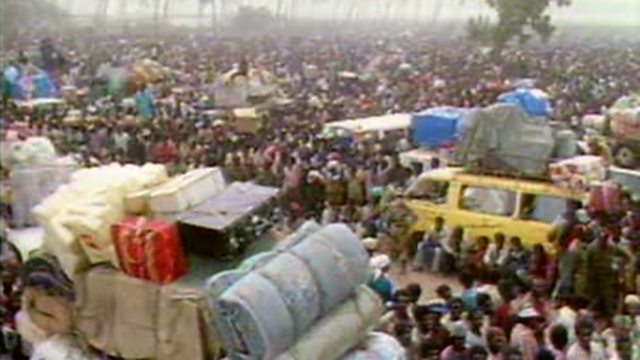
Many Ghanaians fled Nigeria via Benin’s Semé border or Lagos’ port, looking for boats to Ghana. Many were even trapped between Benin and Togo. A daily 1,000 people were transported to Ghana on special flights, but most of them were unable to pay the $150 fare. Dozens were loaded onto trucks that were open and hot and headed for Ghana. Borders were chaotic, with desperate people selling belongings to pay doubled fares, carrying chairs, and dragging checkered bags.
Ghana’s lack of a direct border with Nigeria contributed to chaos on Benin’s semé border. This also happened because Togo closed its border with Benin, trapping immigrants, after Ghana closed its border with Togo to stop coup plotters. Jerry Rawlings eventually reopened Ghana’s border with Togo, which allowed Togo to reopen its border with Benin so that Ghanaians could rejoin their homeland.
Despite the large-scale exodus of Ghanaian immigrants, the deportation order primarily affected Ghanaians who lived in Lagos, Nigeria’s capital at the time. The expulsion order had no effect on those who had already relocated to other parts of Nigeria, where they thrived, particularly in Aba and Onitsha, in the southeast.
Most Ghanaians were welcomed, and they formed vibrant communities that were deeply rooted in local cultures and contributed to the region’s arts and culture. Highlife music, which combines Ghanaian and Igbo traditions, became popular, with bands like Okukuseku International Band and artists like Dan Amakye Dede.
The Aftermath
The 1983 expulsion of Ghanaians from Nigeria was criticized for being too sudden, with reports indicating that key government departments were unaware of the order. Many Ghanaians had to leave Nigeria quickly, facing challenging conditions.
The expulsion drew widespread criticism, with some viewing it as a move to shift focus from Nigeria’s economic challenges and allegations of corruption against the Shagari regime. The Nigerian government’s decision was criticized internally and internationally, with concerns raised about violating international agreements and African hospitality. The deportation of over 1 million Ghanaians impacted Nigeria-Ghana diplomatic relations.
President Shehu Shagari, who orchestrated this tragic event, eventually won the 1983 elections. Unfortunately, he was overthrown in a coup by Major General Muhammadu Buhari on December 31, 1983. As for Ghana, the country’s economy suffered some more before a swift climb up after interventions from the International Monetary Fund and the World Bank.
Today, Ghana and Nigeria have strengthened their economic and diplomatic ties, emerging as West Africa’s dominant economies. Their bilateral relations are built on trade and people-to-people connections, fostering cooperation and partnership.
Recently, trade volumes between the two nations have surged, with Ghana exporting goods like cocoa and oil to Nigeria, while Nigeria exports petroleum products and manufactured goods to Ghana. The rivalry between the two countries remains, but it is based only on strong brotherly love for one another.
Further Reading:
- Ghana Country Study. (Library of Congress, 1995)
- Nigeria Country Study. (Library of Congress, 1992)
- Osaghae, E. E. (1998). The Ghana-Nigeria Relationship. African Affairs, 97(388), 341-356.
- West Africa Study. (Oxford University Press, 2001)



 Makewetalknow
Leave a comment