

Africa, the world’s second-largest continent, boasts breathtaking landscapes and vibrant cultures, making it an ideal destination for leisure seekers. With over 2 billion inhabitants and approximately 5.2 million tourists annually, Africa offers a diverse array of fascinating countries to explore.
From the majestic pyramids of Egypt to the stunning safaris of South Africa, and from the pristine beaches of Mauritius to the ancient rock-hewn churches of Ethiopia, Africa’s rich heritage and natural beauty promise an unforgettable holiday experience for travellers.
Ghana, situated along the Gulf of Guinea in West Africa, is one of the continent’s greatest success stories and a rising star in African tourism. Dubbed the “African country for newbies,” Ghana offers an irresistible blend of captivating culture, stunning landscapes, and warm hospitality. Strategically located between Côte d’Ivoire and Burkina Faso, Ghana is an easily accessible and enchanting destination that embodies the essence of West Africa.
The entertainment and lifestyle hub of Africa is located in Accra. This pulsating city offers a rich cultural experience, with spicy local cuisine, vibrant African art, and historic colonial landmarks waiting to be explored. Beyond Accra’s bustling streets, a wealth of exciting experiences awaits in the surrounding areas. From stunning natural landscapes to historic sites and traditional villages, there’s no shortage of thrilling adventures within easy reach
Are you planning a trip to Ghana? Look no further! In this article, I’ll take you on a journey through some of Ghana’s most breathtaking destinations, showcasing the best places to visit and experience the country’s rich culture, stunning landscapes, and warm hospitality.
1. Accra

Accra, Ghana’s vibrant capital, is a melting pot of cultures, beliefs, and lifestyles. With a population of over two million people, this Vast city pulsates with energy, offering a unique blend of traditional Ghanaian art, mouth-watering cuisine, and electrifying nightlife. Amidst the bustling streets, you’ll find a diverse and welcoming community, making it easy to connect with locals and fellow travellers alike.
There is never a dull moment in Accra, as there is always something fun to indulge in. You can choose fancy bars such as Skybar25 or Bistro 22, which are popular among tourists and people from nearby countries. Not to forget, there are also eateries called Auntie Muni Waakye and Bush Canteen, serving up delicious local dishes like jollof rice and waakye.
In most art galleries in Accra, you will find images from Ghanaian social artists such as Kwesi Botchway and Afia Prempeh, as well as internationally recognized artists such as Serge Clottey and Betty Acquah.
For those who are art enthusiasts and are interested in learning more about Ghanaian art history, you will find pieces of Ghanaian and other African artists in showrooms across the city. These pieces include contemporary art at Gallery 1957, older African works at Berj Gallery, and rotating visual-art installations at the Nubuke Foundation.
Other places of importance to visit in Accra are Labadi Beach, Coco Beach, Makola Market, and the National Museum of Accra. All of these places are important to the city’s art and cultural heritage.
2. Kumasi
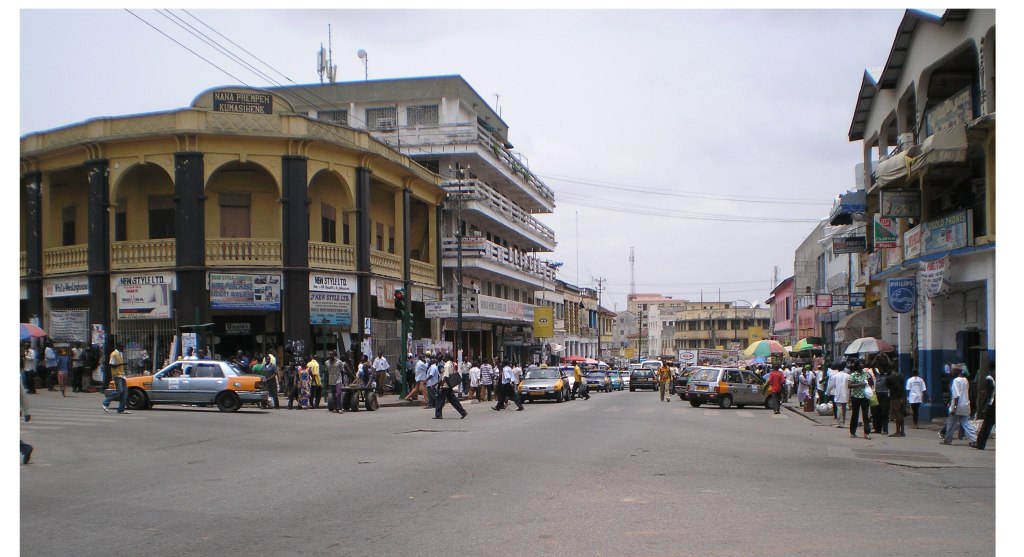
Kumasi is the second-largest city in Ghana and was previously the capital of the country. Its residents, commonly referred to as Ashanti, possess a rich cultural heritage and language that have persisted in the region for centuries.
Not only that, but Kumasi is also renowned for its exquisite gold jewellery, vibrant kente cloth, and intricately crafted wooden stools. The city’s bustling markets, filled with colourful textiles, handicrafts, and local delicacies, are a magnet for visitors from far and wide, offering a fascinating glimpse into Ghana’s rich cultural heritage.
According to the Kumasi Metropolitan Assembly, the Kejetia market is the largest single market in West Africa, with over 10,000 stores and stalls. The market occupies an area roughly the size of a football stadium.
If you want to learn more about the history of Kumasi, the Manhyia Palace is a great place to visit. The Manhyia Palace, which is currently a museum dedicated to the Ashanti monarchy and customs, was constructed by the British colonial government in 1925 for King Asantehene Agyeman Prempeh the first. This was done to mark his return from nearly three decades in exile in the Seychelles.
For several generations, the palace would remain the royal residence, until Otumfuo Opoku Ware II moved to a new residence in 1974. Two decades later, it was transformed into a museum that exhibits items belonging to the royal family. The antique collection showcases a fascinating array of historical artifacts, including intricately designed war-dresses, once worn by royalty during ceremonial events, and talking drums, which played a vital role in communication during communal gatherings, serving to share stories, commemorate milestones, and mourn loved ones.
Kumasi is a city that pulsates with energy, offering a vibrant calendar of events that promise to captivate and inspire. To experience the city’s infectious enthusiasm firsthand, plan your visit carefully to coincide with one of the many festivals and celebrations, ensuring an unforgettable adventure in this captivating Ghanaian city.
It’s also worth noting that every sixth Sunday, the Akwasidae Festival takes place to honor past kings and invoke their blessings by reciting their names.
3. Tamale

Tamale is a city in the Kingdom of Dagbon that has a population of 758000 people and is the oldest capital city in the Northern Region of Ghana. The city was once hailed as the fastest-growing city in West Africa. Its architectural landscape is a fascinating blend of old and new, featuring modern structures alongside historic buildings that have stood the test of time for over 150 years, telling the story of a city that seamlessly weaves tradition and progress.
Tamale was once a small village under the rule of Dagbon. The area was known for its cattle trails. In 1907, the British decided to set up an administrative headquarters in the Dakpema region after the Germans had taken over Yendi.
Since the addition of a road in 1920, Tamale has emerged as a significant economic hub in the Northern Territories. Tamale boasts a thriving artistic and literary community, evident in its plethora of art studios, poets, and musicians. The city’s vibrant cultural landscape is dotted with numerous art studios, showcasing the creative talents of local artists and artisans, making Tamale a haven for art enthusiasts and creative souls.
Tamale comes alive with vibrant annual festivals, including the mesmerizing Fire Festival, Eid al-Fitr, and Eid al-Adha, which are celebrated with great fervor throughout the city. At the heart of Tamale lies the stunning Central Mosque, distinguished by its striking green-topped minaret. This sacred landmark attracts a steady stream of Muslim worshippers, who gather for daily prayers, infusing the city with a sense of spirituality and community.
Tamale is also well-known for its arts and crafts. For unique souvenirs, you can visit the National Cultural Centre, where you will find items such as jewellery, drums, and handmade baskets intricately woven from grass, straw, and bamboo.
4. Cape Coast

Cape Coast is a city and a fishing port located in the Cape Coast Metropolitan District and Central Region of Ghana. It is regarded as one of the nation’s most historic cities, designated as a World Heritage Site, and is home to the Cape Coast Castle, with the Gulf of Guinea located to its south.
As of the 2021 census, Cape Coast’s settlement population stood at 189,925 people, with the predominant language being Fante. Steeped in history, Cape Coast Castle played a poignant and pivotal role in the transatlantic slave trade, serving as a haunting holding site for enslaved individuals from the 16th to the 19th centuries, leaving an indelible mark on the region’s past.
Behind its deceptively serene whitewashed walls, Cape Coast Castle conceals a dark and tumultuous history. Originally built by the Dutch and later seized by the British, the fort stands as a poignant testament to the transatlantic slave trade’s atrocities. As US President Barack Obama poignantly noted during his 2009 visit, “the blood of the slaves who died [here] is a reminder of the capacity of human beings to commit great evil.”
Nowadays, Cape Coast Castle holds a revered place on the UNESCO World Heritage List, inviting visitors to delve into the complexities of Ghana’s colonial past. Guided tours provide a poignant and immersive experience, granting access to the fort’s historic dungeons and ramparts, and offering a powerful reminder of the site’s profound historical significance. Moreover, the West African Historical Museum, situated inside the castle, houses a significant collection of ceremonial drums and ancient pottery.
5. Volta River

The Volta River is a vital and extensive river system in Ghana, originating in the Bobo-Dioulasso highlands of Burkina Faso. From its source, the river flows southwards into Ghana, dividing into three main tributaries: the Black, White, and Red Volta. Notably, the Black Volta forms part of the international border between Ghana, the Ivory Coast, and Burkina Faso in the north-west region.
The Volta flows south from Akuapim-Togo ranges to Ada Foah in the Gulf of Guinea. The Oti River is one of its smaller tributaries and flows into Ghana from Togo in the east. At Akosombo, the Volta River was dammed to generate hydroelectricity.
The largest man-made reservoir by area in the world is Lake Volta, which stretches from Akosombo Dam in the south to the northern part of the country. Previously, the country of Burkina Faso was known as the Upper Volta, after the nearby river.
The Volta Region is home to Mt Afadjato, which is the tallest mountain in Ghana. You can reach the summit in two and a half hours and enjoy great views of Ghana and Togo to the east. In addition to the local animals, you might see hippos, tortoises, lizards, and butterflies.
Another interesting fact to know is that the region is also home to a monkey sanctuary and numerous waterfalls, including Wli Waterfalls, which is the highest waterfall in West Africa. The lower falls are accessible by a 30-minute walk, followed by a longer climb to the upper falls. Both sets have pools where you can enjoy a cold dip.
6. Aburi Botanical Gardens

Aburi is a town in the northern part of Accra, in the Akuapim South Municipal District in South Ghana. The advantageous aspect of Aburi is that it is situated less than an hour’s drive from Accra. It has plenty of fresh air, making it a great place to escape the hustle and bustle of the capital and spend some time in nature. The area is also known for its botanical gardens and the Odwira Festival.
Perched at a higher altitude, Aburi boasts a refreshingly cooler climate compared to Accra. The winding road that ascends the hillside to Aburi is a toll road, with fees currently set at approximately 0.50 GHS for cars, 1.00 GHS for 4×4 vehicles, and higher rates for vans and trucks.
Families hailing from across Ghana and beyond flock to Aburi Botanic Gardens for a leisurely excursion, strolling alongside the majestic palm trees, and snapping photographs to commemorate the occasion. Visitors to Aburi are frequently observed posing alongside the palms.
The lush gardens showcase a diverse array of tree species, originating from far-flung locations in Central America, Mexico, Malaysia, India, and the Caribbean, with some dating back to the late 19th century. Additional attractions within the gardens include a stunning orchid collection, beautifully landscaped rock gardens, and a playground designed specifically for children, catering to visitors of all ages.
The gardens have also been honored with tree plantings by several distinguished guests. Notably, Queen Elizabeth II planted a majestic mahogany tree in 1961, and Prince Charles followed suit in 1977, planting a stunning silver oak tree, leaving a lasting legacy of their visits.
Credit
Image courtesy of Royal Africa Travel



 Makewetalknow
Leave a comment