
The increase in urban populations is occurring globally, and it is anticipated that by 2050, approximately 68 percent of the global population will reside in urban areas, surpassing the current 55 percent. One-third of this growth is attributed to just three countries: China, India, and Nigeria. But as cities grow, a large part of society, especially people with disabilities, continues to be left out and excluded.
People with disabilities in Nigeria face persistent prejudice, discrimination, and barriers to receiving necessary social assistance and economic opportunities. The current economic climate, as well as the Nigerian government’s inability to implement the disability law, have posed additional challenges for them.
Despite the passage of the Discrimination Against Persons With Disabilities (PWDs) Prohibition Act in 2018, which mandates public organizations to allocate at least five per cent of their workforce to people with disabilities, the prospects for this particular demographic group remain severely constrained.
According to the statistics from Guardian Nigeria, 29 million people in Nigeria live with disabilities. This is 18.3 percent of the total population. Among the most prevalent disabilities are Visual impairment, hearing impairment, physical impairment, intellectual impairment, and communication impairment. For example, people with disabilities may experience negative attitudes in the home and in the community, including name-calling, negative conceptions, and misconceptions about the causes of impairments (usually associated with cultural or religious customs and beliefs).
Together with the structural limitations and difficulties, this also reinforces the obstacles faced by people with disabilities in obtaining basic amenities such as education, medical care, public transportation, and communal security nets. The government’s attempts to narrow the employment gap in both the public and private sectors have failed, leaving employment rates for people with disabilities far behind those without them.
It is not just in Nigeria that the rights of people with disabilities are neglected. According to the 2018 Population and Housing Census, Malawi has 1,734,250 people with disabilities, which is about 11.6 percent of the total population aged above five years. Of these, 134,636 are people with albinism.
To tackle this widespread issue, the Special Needs Initiative for Growth (SNIG) Nigeria, In collaboration with Salama Africa Malawi, has launched a groundbreaking disability advocacy project titled, “Breaking Boundaries, Empowering Abilities into the Nigerian and Malawi Workforce.” The project features the world premiere of a short documentary film and a collaborative workshop with industry professionals.
This documentary tells the stories of 10 people with disabilities as they tell their stories about their personal journeys and the obstacles they’ve had to overcome on their way to work. The project will bring together five people with disabilities from Dzaleka Refugee Camp in Malawi and five people with disabilities from Nigeria. Their narratives are intertwined into a documentary-style film, which will in due course take center stage in a distinctive horizontal training and dialogue initiative.
The film is geared up to be a platform for in-depth discussions, bringing together people with disabilities and hiring managers for a mutually beneficial encounter. The goal of this project is to break down the barriers that are preventing youth with disabilities from getting jobs in Nigeria and Malawi, with the ultimate aim of transforming organizational attitudes from mere legislative compliance to the creation of genuinely inclusive workspaces.
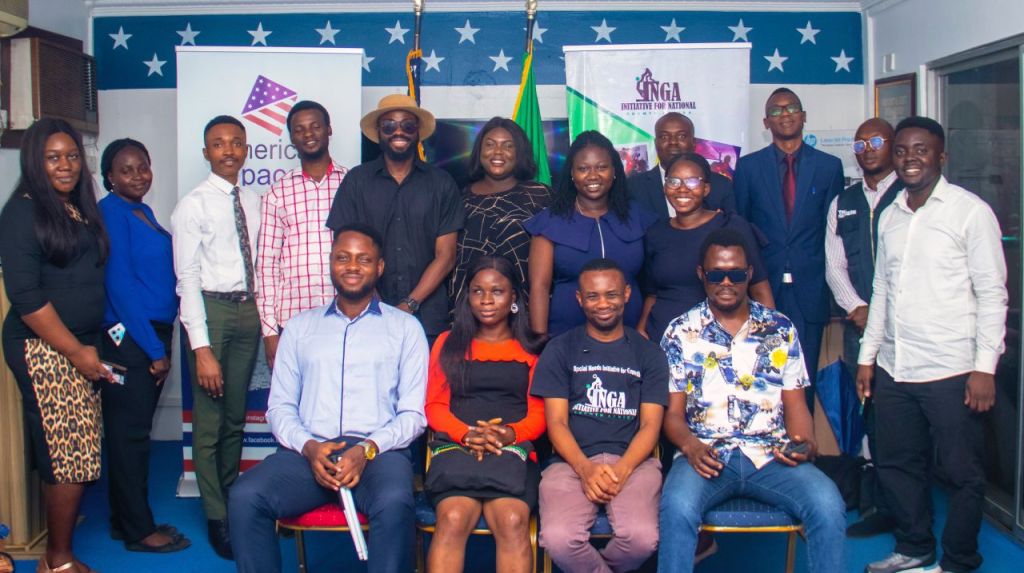
The official start of the project took place simultaneously at American Corner in Lagos, Nigeria, and the Salama Africa Building in Malawi, on October 25, 2023. The event featured opening remarks from, the Founding Executive Director of the Special Needs Initiative for Growth, and Toussaint Farini, the Founder of Salama Africa.
They emphasized the urgent need to encourage the inclusion of people with disabilities in the workforce, drawing inspiration from the tireless efforts of Judy Heumann, a renowned disability rights activist who dominated the global disability movement for over 40 years.
Both Toussaint Farini, the founder of Salama Africa, and Racheal Inegbedion, the founding executive director of the Special Needs Initiative For Growth, are recipients of the 2023 Leveraging Innovations in New Communities (LINC) Grants of the Mandela Washington Fellowship, funded by the U.S. Department of State and implemented by the International Research and Exchanges Board.
The Mandela Washington Fellowship for Young African Leaders is a flagship program of the Young African Leaders Initiative, recognizing accomplished leaders between the ages of 25 and 35 who have a track record of promoting innovation and positive impact in their communities and countries.




 Makewetalknow
Leave a comment