

The All-Seeing Eye symbol, or Eye of Providence, originated in ancient Babylonian religion, representing Shamash, the sun god, and bridging mortal and divine worlds. It represented divine guidance and was hailed as a symbol of sun worship, spirituality, and power. The symbol has also been interpreted as representing divine guidance or providence.
Nimrod was said to be the king pin who promoted idolatry and sun worship all over the world. This is why Babylon is mentioned in the Book of Revelation 18:2 as a symbol of ungodly institutions.
The Religion of the Ancient Babylonians
The ancient Babylonians had a complex system of beliefs, associating planets with specific gods like Marduk (Jupiter) and Ishtar (Venus). They believed in various divine beings that influenced human affairs, including gods, spirits, and messengers.
The Sumerian seal of Asmar features mythological creatures and symbols, likely conveying messages about the relationships between different aspects of life and the divine, reflecting the Babylonians’ understanding of the world.
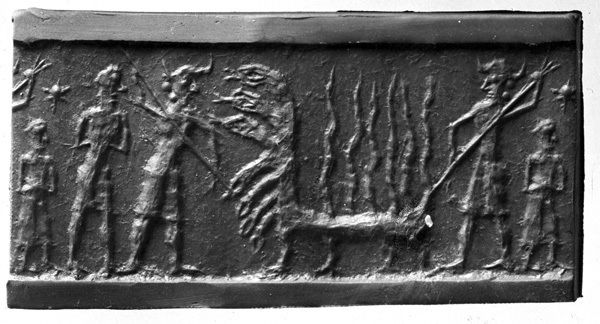
The ancient Babylonians also had a complex cosmology, believing the universe was governed by a hierarchy of divine beings, such as
- Supreme god Anu as king of the gods
- Pantheon of gods/goddesses associated with nature/human life
- Divine messengers/intermediaries
- Astrology’s influence on human affairs
- Significance of rituals and sacrifices to appease gods
- Mythology explaining natural phenomena and cosmic order
- Divination and omens guiding important decisions
- Afterlife and underworld beliefs, with gods like Nergal
The Babylonians also documented their beliefs in works such as the Enuma Elish and the Epic of Gilgamesh, which demonstrate their complex cosmology and relationships between celestial bodies, gods, and divine beings. They believed specifically in the following:
Moon
The Babylonians associated the Moon with Tsaphiel, an archangel, and Sin (Nanna), the moon god, who was closely linked to silver metal and the lunar cycle, reflecting the importance of celestial rhythms and symbolism in their mythology.

Mercury
The Babylonians associated Mercury with Rapha-el (archangel) and Nabu (Babylonian god), which were linked to hollow glass, symbolizing wisdom, communication, or celestial significance.

Venus
The Babylonians associated Venus with Hamali-el (archangel) and Ishtar (Babylonian goddess), linked to polished copper, symbolizing love, beauty, and value. Ishtar was a key deity in Babylonian mythology, often associated with fertility, war, and the planet Venus.

Sun
The Babylonians associated the Sun with Zerachi-el (archangel) and Utu/Shamash (Babylonian sun god), linked to gold, which symbolized power, radiance, and value. Utu/Shamash represented justice, law, and the life-giving properties of the sun.

Mars
The Babylonians associated Mars with Uri-el (archangel) and Nergal (Babylonian god), linked to steel, symbolizing strength, war, and fiery energy. Nergal represented war, violence, and the planet Mars’ reddish hue.

Jupiter
The Babylonians associated Jupiter with Gabri-el (archangel) and Marduk (Babylonian god), linked to pure tin, symbolizing expansion, wisdom, and divine authority. Marduk was a chief deity, representing creation, order, and the planet Jupiter’s significance.

Saturn
The Babylonians associated Saturn with Micha-el (archangel) and Ninib (Babylonian god), possibly linked to Ninurta or another deity, associated with lead, symbolizing structure, discipline, and time. Ninib/Ninurta represented agriculture, war, and Saturn’s significance.

The Babylonians had a complex system associating archangels and gods with planets and metals, with specific adornments for each archangel, like:
- Gabriel: silver bracelets
- Michael: lead
- Uriel: steel
- Raphael: hollow glass with quicksilver
- Zarakhiel: gold
- Tsaphiel: silver
- Hamaliel: polished copper
They also considered planets to be manifestations of the sun god, who was portrayed as a seven-headed dragon, and believed in planetary influences headed by seven “devils” or “dispensaries of evil,” such as Shaitan or Lucifer.
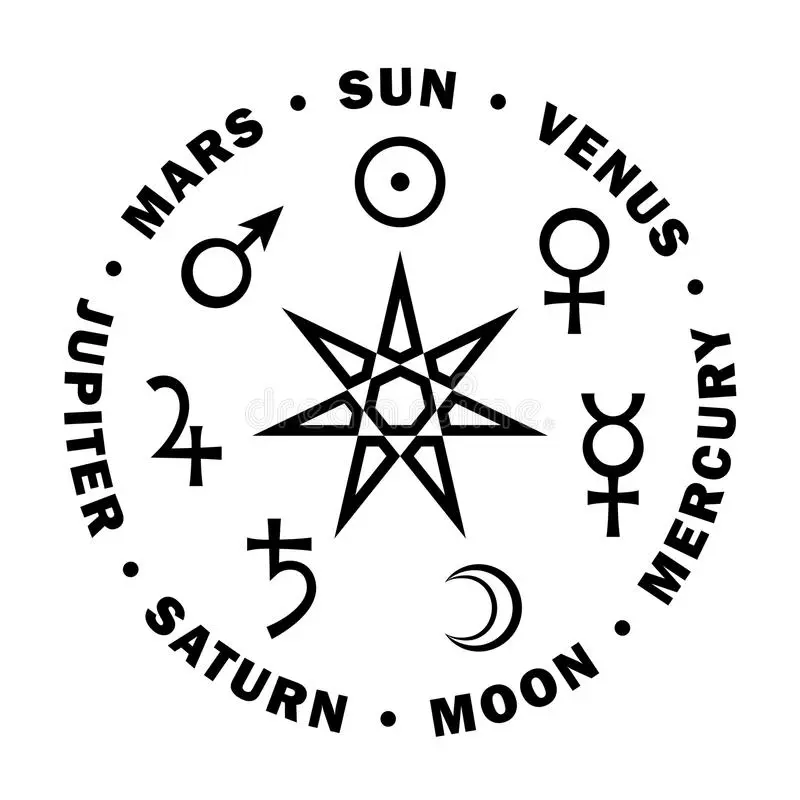
Babylon’s planetary associations had a long-lasting impact on cultures such as the Romans and secret societies. The Seven Malakoth are found in Freemasonry’s 28th degree, and they connect ancient mysticism to modern esoteric practices.
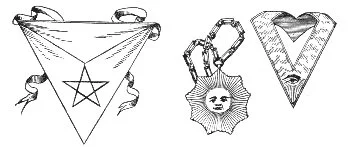
The “Architect of the Universe” exemplifies divine craftsmanship and cosmic order. Masonic symbolism also connects to ancient concepts such as gnosis and the serpent, highlighting the tradition’s pursuit of spiritual knowledge.

Freemasonry’s symbolism and rituals have Kabbalistic roots, with Hebrew symbols, language, and secret words incorporated into Masonic practices. This suggests that Kabbalistic scholars, particularly in France and Germany, helped to shape Freemasonry’s rituals and degrees.
This confirms Freemasonry’s rituals and degrees were influenced by Hebrew forms, language, and Kabbalistic elements, as documented in Henry Leonard Stillson’s “History of Freemasonry and Concordant Orders” (1904).
When we look critically at rituals of all degrees, from the registered apprentice to the master in blue masonry, we find that everything has been taken from Hebrew in forms, language, and secret words. Every word is Kabbalistic. So, what is the implication? The Kabbalists invented the rituals of the degrees of origin, and Kabbalistic scholars in France and Germany multiplied the degrees by elaborating on the legends’ of the first three.
Henry Leonard Stillson, “History of Freemasonry and Concordant Orders”, (U.S.A.:The Fraternity Publishing Company, 1904), 104-105
Albert Pike’s “Morals and Dogma” explores Freemasonry’s esoteric and philosophical roots, linking it to ancient mysticism, Kabbalah, and other traditions, offering insight into the craft’s deeper symbolism and spiritual dimensions.
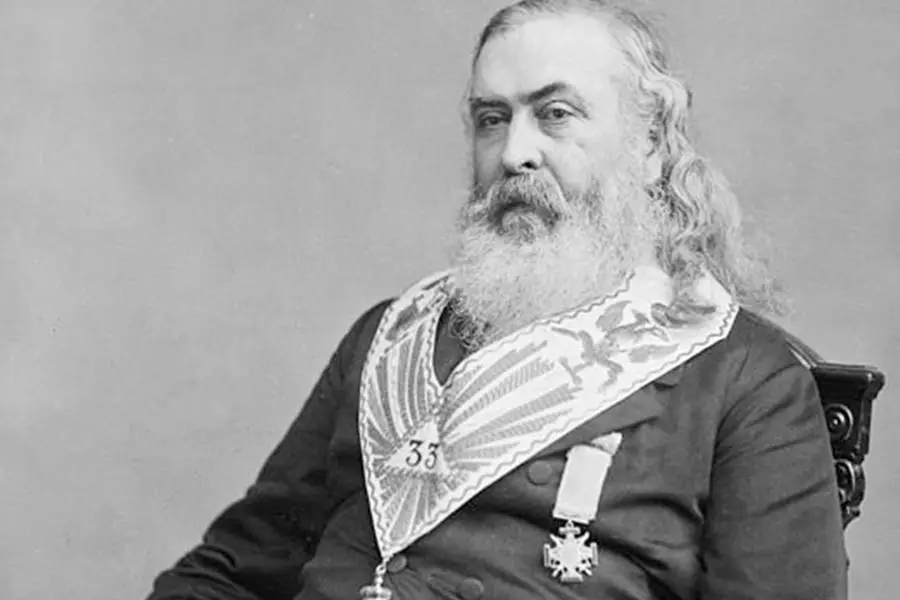
The Holy Kabbalah was the tradition of Seth’s sons. He was taken from Chaldea by Abraham, taught to the Egyptian priesthood by Joseph, collected and purified by Moses. It also concealed under symbols in the Bible, revealed by the Saviour to Saint John, and contained, entire, under hieratic figures analogous to those of all antiquity, in the Apocalypse of that Apostle… Masonry is a search for light. This search leads us directly back, as you can see, to the Kabbalah. In this old and misunderstood mixture of absurdity and philosophy, the Initiator will locate the source of many doctrines.
Albert Pike, Morals and Dogma (Richmond, Virginia: L.H. Jenkins, 1871, Reprinted 1944): 97, 741
Albert Pike also added that
“Every Masonic lodge is a temple of religion, and his teachings are the teaching of religion. It is the true religion revealed to the old patriarchs, that masonry has taught over many centuries, and will continue to teach as long as time lasts” (emphasis added)
Albert Pike, 33rd Degree Free Mason
Furthermore, regarding the Kabbalah, he was quoted as saying:
“The Kabbalah, the Gnostic’s, and the Schools are the religion and Philosophy of Masonry… All the truly dogmatic religions have uttered Kabbalah and are returning. Everything scientific and grand in the religious dreams of all the Illuminati, Jacob Boehme, Swedenborg, Saint Martin, and others, is borrowed from the Kabbalah, all the Masonic associations owe to it their Secrets and their Symbols (emphases added).”
Albert Pike, 33rd Degree Free Mason, Ibid: 213–214, 27, 744.
These ancient traditions, such as Kabbalah, have roots that go back beyond the Chaldean period. They are based on foundational texts such as the Garden of Eden story and the Sefer Raziel HaMalakh, which reveal the serpent’s role in knowledge transmission. It also explains important details about how the serpent taught the woman using the following doctrines:
1. The Teaching of the Immortal Soul
The serpent’s statement in the Garden of Eden, “You will not surely die” (Genesis 3:4), can be interpreted as promising immortality or suggesting that disobedience has no consequence. This idea has been explored in various philosophical and theological contexts, often touching on the nature of the soul and the human condition.
2. The Teaching of Self-Consciousness
In the teaching of self-consciousness, the serpent’s promise, “You will be like God, knowing good and evil,” can be considered a symbol of empowerment through knowledge and self-awareness. This transcendence of limitations and access to hidden truths and gnosis, allows individuals to see reality beyond what appears on the surface.
Masonic Rituals Connection
Masonic initiation rituals include symbolic journeys related to celestial movements or the path of the sun, which reflect themes of spiritual growth and transformation. These rituals’ funerals celebrate mystical death and rebirth, echoing the doctrine of the immortal soul and drawing parallels with ancient mythologies like Osiris or Dionysus. This symbolism represents the concepts of transformation, renewal, and spiritual evolution.
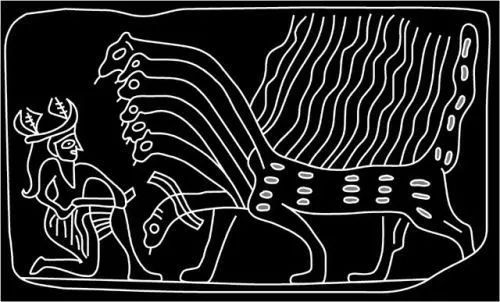
In some esoteric traditions, the number 666 is associated with the astrological dragon, as it is the sum of the 36 decan astrological gods. This concept is related to gematria, a method of assigning numerical values to words or phrases that is widely used in Jewish mysticism and Kabbalah traditions.
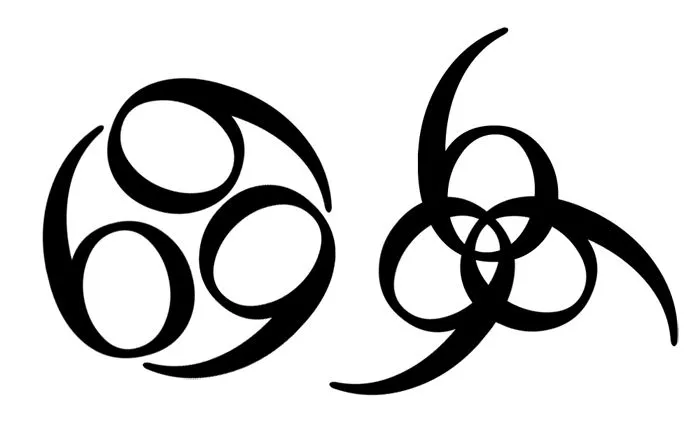
In Christianity, 666 is known as the “number of the beast” (Revelation 13:18), symbolizing imperfection or incompleteness, often linked to man-centered worship or pagan practices. The all-seeing eye and seven-headed dragon are considered symbols of pagan idolatry, representing false systems of illumination or gnosis, as well as resistance to divine authority. This is the religion that Babylon introduced to the world, and it is all connected to Satan.
Photo by Marek Studzinski on Unsplash
Source
Encyclopedia Britannica. (n.d.). Symbolism of the eye. Encyclopedia Britannica. https://www.britannica.com/topic/symbolism-of-the-eye
British Museum. (n.d.). The Babylonians. British Museum. https://www.britishmuseum.org/the-babylonians
British Museum. (n.d.). The Babylonians. Retrieved from https://www.britishmuseum.org
Encyclopedia Britannica. (n.d.). Babylonian religion. Encyclopedia Britannica. https://www.britannica.com/topic/Babylonian-religion
Speiser, E. A. (Trans.). (1958). Enuma Elish. In J. B. Pritchard (Ed.), The ancient Near East: An anthology of texts and pictures (pp. 31-37). Princeton University Press.
George, A. (Trans.). (1999). The Epic of Gilgamesh: The Babylonian epic poem and other texts in Akkadian and Sumerian. Penguin Books.



 Makewetalknow
Leave a comment