

The world’s elite, who worship Satan, have incorporated pagan and satanic holidays into our customs. Almost every holiday and festival we celebrate today has its origins in paganism and Satanism. One example is New Year’s Day, which has nothing to do with the actual New Year observed during the Bible era.
The biblical new year was supposed to start in March, after Creation. According to Deuteronomy 16:1-2, God directed the Israelites to begin their year in Abib (Nisan), which is also the month in which Passover is observed. Nisan is established as the first month in Exodus 12:1-2, and this is further supported in Esther 3:7, demonstrating the significance of Nisan as the year’s divinely appointed beginning.
According to the Collins dictionary, Nisan is the first month of the year in the Hebrew calendar, which typically falls between March and April in the Gregorian calendar. The Book of Esther (Esther 3:7) also confirms this by identifying the 30-day month of Nisan, which corresponds to March-April on the Gregorian calendar.

Interestingly, Nisan’s timing coincides with the arrival of spring, bringing new life as crops begin to grow in March, April, and May. This corresponds perfectly to the original Hebrew calendar, in which Nisan marks the beginning of the new year. In contrast, the modern New Year’s celebration in winter appears out of sync with natural cycles. The ancient Babylonians, rebuked in scripture, similarly celebrated Akītu in March, highlighting spring’s significance as a time of renewal.
This raises an important question: if March was considered New Year’s Day in the biblical era, where did the modern tradition of celebrating the new year on January 1st come from? This leads to only one possible answer. The Roman Empire.
How January 1st became the New Year’s Day
The modern celebration of New Year’s Day on January 1st originates from ancient Roman traditions. King Numa Pompilius replaced March as the first month with January, which was named after the pagan deity Janus.
In 153 BCE, January 1 was formally established as the start of the Roman year, and Julius Caesar’s Julian calendar (46 BCE) reflected this. After the fall of Rome (5th century CE), Christian nations adapted the Julian calendar to their practices.

As a result, alternative New Year’s Days arose, such as March 25 (Feast of the Annunciation) and December 25. However, the Julian calendar’s leap year error caused events to become out of sync, prompting Pope Gregory XIII to institute the Gregorian calendar in 1582, designating January 1st as New Year’s Day.
This reform addressed the leap year issue, but it was implemented gradually. Catholic countries, such as Italy, France, and Spain, were the first to adopt it, followed by Protestant and Orthodox countries centuries later.

In 1752, Great Britain and its American colonies switched to the Gregorian calendar, which moved New Year’s Day from March 25 to January 1. This change had a major impact on timekeeping. As globalization spread, non-Christian countries, such as China in 1912, adopted the Gregorian calendar for civil purposes while retaining traditional calendars. Ethiopia celebrates its unique New Year, Enkutatash, in September, which showcases diverse calendar traditions worldwide.
The January New Year’s Day and its connection to the Pagan Roman god Janus
The name January comes from the ancient Roman god Janus, a two-faced deity who represents new beginnings, transitions, and duality. Naturally, the first month was dedicated to Janus, the protector of gates, doors, and new beginnings.
The Romans honored Janus by commemorating their new year with promises and offerings.. They built 12 altars in his temple and dubbed him the “father of the years.” This tradition inspired modern New Year’s resolutions and gift-giving, with figs and honey representing good luck and renewal.
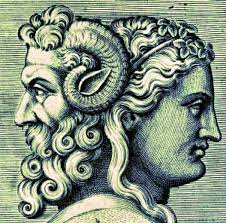
The Roman festivities that took place on the Kalends (the first day of the month) left an indelible mark on modern traditions. For example, it was during these ancient Roman festivities that kissing on New Year’s Eve became customary.
Read More: How Ancient Babylonian Religion is still practised today in the Catholic Church
Additionally, as was customary since 153 BCE, chief magistrates of the Roman Republic would assume office on January 1st. Priests would present offerings of spelt with salt and a traditional barley cake known as the ianual, which was especially made for their god, Janus, while newly appointed consuls would offer prayers to Janus.
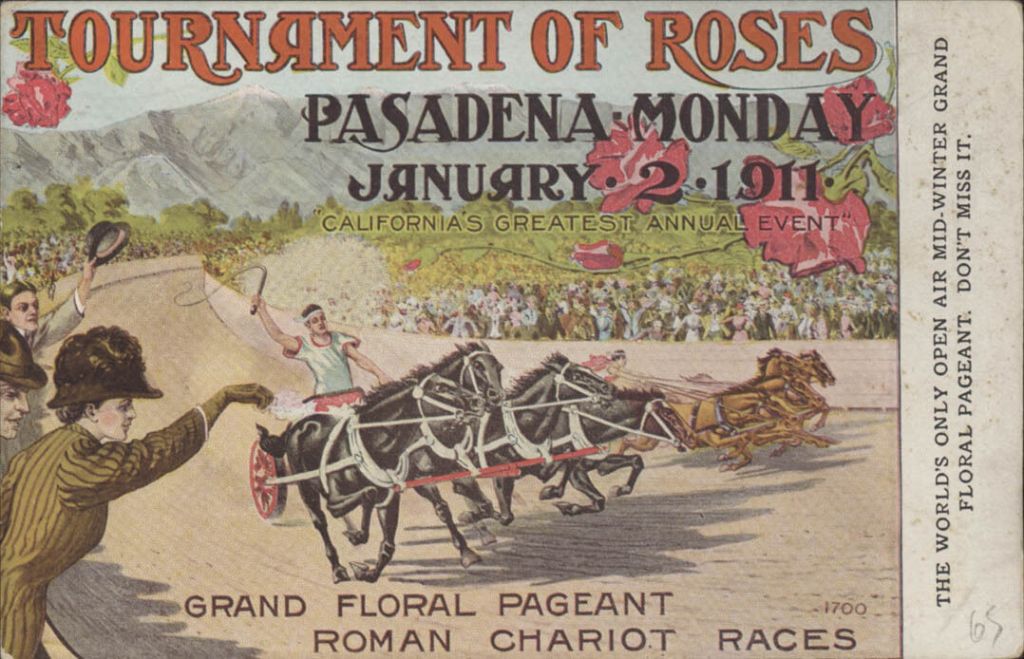
Ironically, on January 1st, there was a procession in Rome, which is similar to the modern Tournament of Roses parade. The Rose Parade, since 1890, features flower-adorned floats, echoing ancient Roman celebrations. Initially, it featured flower-adorned horses and riders, as well as fireworks, which are thought to have originated in China.
Conclusion
As you can see, nothing has changed; we are simply replicating the pagan customs that the Romans once followed. God’s instructions state that the new year should begin in Abib (March or April on our calendar), not January.
The Roman Catholic Church’s Christianization of January 1st is a complete violation of what our Creator has given us. It is critical to research holidays and pray for discernment in order to tell the difference between truth and lies.
Sources
Books:
Blackburn, B., & Holford-Strevens, L. (1999). The Oxford companion to the year. Oxford University Press.
Cohen, S. (2018). The U-shaped origins of the Christian liturgical calendar. In A. K. Petersen, I. S. Gilhus, L. H. Martin, J. S. Jensen, & J. Sørensen (Eds.), Evolution of the gods (pp. 251-272). Brill.
Talley, T. J. (1991). The origins of the liturgical year. Pueblo Publishing.
Journal Articles:
- Connelly, M. (2018). The origins of Christmas and the date of Jesus’ birth. Journal of Early Christian Studies, 26(3), 341-364.
- Jones, P. (2017). The Roman calendar and the origins of the Julian year. Journal of Roman Studies, 107, 71-94.
- Stuckrad, K. (2013). The invention of the New Year’s festival in ancient Rome. Numen, 60(2-3), 151-173.
Online Sources:
Vatican News. (n.d.). The origins of the Christian calendar. Retrieved from https://www.vaticannews.va/en/church/news/2020-01/origins-christian-calendar.html
Britannica. (n.d.). January. Retrieved from https://www.britannica.com/topic/January-month
History.com. (n.d.). New Year’s Day. Retrieved from https://www.history.com/topics/holidays/new-years-day






 Makewetalknow
Leave a comment