
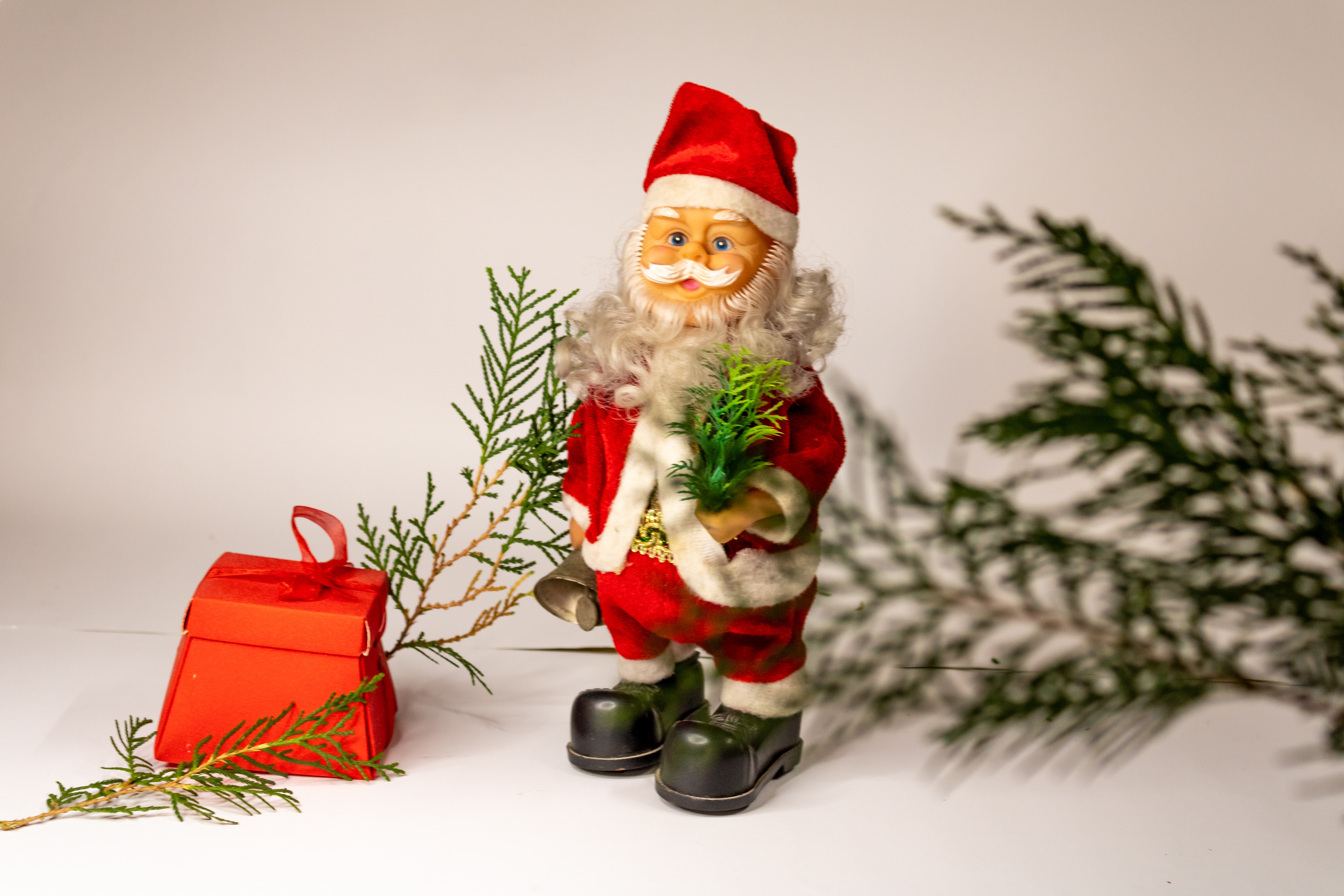
While millions of people worldwide celebrate Christmas, many are unaware of its dark history. For billions of children and adults, Santa Claus symbolizes the holiday season and is the source of children’s hope. However, many people do not realize that their beloved holiday icon, has a dark history.
In fact, he is not who most people believe him to be. If people had known his true identity from the start, they might have achieved consciousness, putting an end to his mad fame of the past 60 years. It took me a long time to figure it out, but I finally discovered the truth. I finally came to the conclusion that Santa Claus is actually Satan after doing a great deal of research from different books and scriptures.
To find out, we must reread the scriptures and some books that I will list below. In this article, I’ll expose the dark history of Santa Claus and why Christians all over the world should avoid celebrating Christmas.
The True Origin of Santa Claus
Thousands of years ago, the Moabites and Canaanites worshipped Baal and Tammuz, and other ancient pagan deities like Chemosh and Molech. In reality, these deities were demonic entities, fallen angels under the leadership of Lucifer, who claimed the earth as their domain. They changed the way people worshipped, pretended to be gods on earth.
Around December 25th, ancient Moab performed a disturbing winter solstice ritual, a ceremony with a long history of sacrifice and devotion. This public ceremony included the offering of infants born that year to the deity Chemosh and Molech. Desperate parents would offer their children to Molech, believing that this would fulfill their prayers.

In his book, the prophet Jeremiah described how the Moabites would give their children to Molech in exchange for blessings and worship of their fallen gods.
35 And they built the high places of Baal, which are in the valley of the son of Hinnom, to cause their sons and their daughters to pass through the fire unto Molech; which I commanded them not, neither came it into my mind, that they should do this abomination, to cause Judah to sin.
Jeremiah 32:35
According to historical records and biblical accounts, including 2 Kings 3:27, the priest of Chemosh would light massive fires inside the hollow metal idol, turning it red-hot. In a horrific act of devotion, the priest would take children from their parents and place them on Chemosh’s scorching lap.
Read More: Beware: Superman is actually the Fallen Angel Lucifer (Satan)
This barbaric act was intended to appease the deities Molech and Chemosh by providing the Moabites with fertility and prosperity. The intense heat would burn the children alive, eliciting heartbreaking screams. Our Creator’s heart was moved as he specifically condemned this heinous act, which claimed the lives of numerous children, in Jeremiah 7:31.
31 And they have built the high places of Tophet, which is in the valley of the son of Hinnom, to burn their sons and their daughters in the fire; which I commanded them not, neither came it into my heart.
Jeremiah 7:31

This would also not be the only occasion when our Creator would oppose the practice of child sacrifice to Molech. He also did as referenced in Leviticus 18:21:
21 And thou shalt not let any of thy seed pass through the fire to Molech, neither shalt thou profane the name of thy God: I am the Lord.
Leviticus 18:21
Where this becomes interesting and leads to the purpose of this article is that their idol god Molech was frequently depicted wearing a distinctive hat, similar to what Santa Claus would wear. This headgear also looks like the one worn by Mithra, the pagan sun god.
Note: The artwork below is a representation of both Mithra and Molech. The hats they wear are strikingly similar to those of modern-day Santa Claus.

This interpretation could only mean one thing. It means that over time, the pagan god, Molech, was later renamed Santa Claus because they both share one important feature. That is their love for children.
Given Molech’s association with children and distinctive headgear, he was later renamed to Santa Claus. The occults who control this world had a plan to bring their pagan gods back to life and give them a likeable persona. They leveraged people’s love for family gatherings and festive traditions, rebranding Molech to fit our desires.
As a result, the new Molech, Santa Claus, no longer required child sacrifice, but instead used gifts to coerce souls. Parents now bring their kids willingly, risking spiritual harm.
An Obvious Connection Between Molech and Santa Claus
The Bible does warn us that Satan is a master of deception. It’s one thing to change Molech’s name to Santa, but it’s quite another to modify his worship style. Molech evolved into a loving older man dressed in red who lavished gifts on children. Children were greeted with gifts instead of being killed in his honor.
Read more: The Dark History of Easter and its Pagan Origins
As was done in the past when Santa Claus was Molech, families around the world still carry out this ancient pagan custom during the Christmas season by having their kids sit on his lap. However, God made one thing visible to the world.
If you put a baby under the age of two in the lap of Santa Claus, he will cry right away. This is because babies at that age still have angelic intuition, which allows them to distinguish between good and evil. This is commonly referred to as a heightened sense of danger. Based on their biological holiness, their instinctive reaction implies that they are experiencing a Satanic presence in Santa. Here are some photos I was able to find of children who become terrified when placed on Santa’s lap:


As children grow older and their Holiness decreases, they begin to see Santa as a benevolent figure who showers them with gifts. This is similar to what the ancient Moabites did while praying to Molech, offering their children in exchange for new year’s blessings.


Furthermore, many people are unaware that wearing red has ancient satanic roots that can be traced back thousands of years. In ancient Moabites culture, red indicated the beginning of a blood sacrifice, including child sacrifice and possibly cannibalism. During the ritual of offering the children to Molech, the priest would raise the weeping infants to the audience while dressed in red.
This disturbing tradition has been passed down through the centuries, with global elites, celebrities, actors, and superstars engaging in the same satanic practice of child sacrifice as their forefathers, the Moabites. This explains why thousands of children go missing each year in the United States and around the world. The book of Isaiah (63:2-4) even revealed the disturbing link between red attire and satanic worship.
2 Why is your apparel red, And your garments like the one who treads in the wine press? 3 I have trodden the wine trough alone, and of the people, there was no one with me. I also trod them in my anger and trampled them in My wrath, And their lifeblood is sprinkled on My garments, and I stained all My clothes. 4 For the day of vengeance against ungodliness was in my heart, and my year of redemption of those who put their trust in me, the year of My redeemed has come.
Isaiah 63:2-4
Since Santa Claus became the face of Christmas, many disturbing songs were written to commemorate him. One of these songs is Santa Claus Is Coming to Town. If you listen to that son’s lyrics, you will notice a connection to Molech. The song revolves around three themes: reward, punishment, and surveillance.
To emphasize the similarities between Santa Claus and Molech, I have highlighted specific passages from the lyrics of “Santa Claus is Coming to Town”.
You better watch out, You better not cry, You better not pout. I’m telling you why, Santa Claus is coming to town. He’s making a list, He’s checking it twice
He’s going to find out who’s naughty or nice. Santa Claus is coming to town. He sees you when you’re sleeping, And he knows when you’re awake. He knows if you’ve been bad or good, So be good, for goodness’s sakeSanta Claus is Coming to Town lyrics
I know most people will miss the point of this song, but I’ll explain it. The lyrics depict Santa as a dark figure who can observe children’s behaviour while they sleep or awake. This simply means that he is an all-knowing, immortal being with dark intentions.
The system of rewarding good kids with gifts and punishing bad kids with coal is similar to how Molech administer justice. The Moabites would use coal to start fires, killing their children. The same coal is now given to naughty children by Santa Claus.
Read more: Exposed: How the Holy Trinity verse was added to the Modern Bible
Furthermore, Santa’s mystical vehicle resembles the chariot driven by the pagan sun god Mithra. Simply put, this strange connection suggests that Santa is a modern-day version of the Moabites’ pagan gods. These ancient deities were not completely removed from the Bible, but rather repackaged and rebranded. In actuality, this is just another of Satan’s crafty methods to deceive people into worshipping him in one way or another.

Today, many children and Christians regard Santa Claus as more important than their Creator. Children’s minds are highly impressionable, and their development is shaped by their environment. They are naturally drawn to things that appear fun and exciting, which can make them more susceptible to believing in ideas that are not true.
Must Read: Revealed: We Existed in Heaven as Celestial Beings Before We were Born into this World
Santa is often viewed as a benevolent provider of gifts and wealth, similar to the pagan deity Molech, who was worshipped for his supposed ability to grant prosperity. This explains why Satan finds it so easy to target children. In essence, what this means is that the world has been unknowingly paying homage to Molech through Christmas.
The Dark truth about Santa Claus and his Accomplices
Many ancient cultures tell a dark story about Santa Claus, who is frequently depicted as an elf. The Ancient Celts considered elves to be witches or wizards who practiced the dark arts.

If we look at the historical context of elves, beginning with the 1828 Webster’s Dictionary, we can get a clear answer:
An Elf is a wandering spirit; a fairy; a hobgoblin; an imaginary being which our rude ancestors supposed to inhabit unfrequented places, and in various ways to affect mankind. Hence, in Scottish, elf-shot is an elf-arrow; an arrow-head of flint, supposed to be shot by an elf; and it also signifies a disease supposed to be produced by the agency of spirits.
Websters Dictionary 1828
Helena Blavatsky, a famous Russian-American mystic and author who co-founded the Theosophical Society in 1875, shed light on the nature of elves, stating:
“Elves are “disembodied spirits”, used in “magic and sorcery” and are “the principal agents in séances.”
H.P. Blavatsky, Isis Unveiled, Vol I, p. 262
Dr. Kurt E. Koch, a prominent German Protestant theologian and writer, offered his insights on elves, stating:
Elf – If a person wants their help, he must apply to their chief, the devil himself. The idea that these spirits are demonic in origin is in accordance with the Bible.
Dr. Kurt Koch, Occult ABC, p. 82, 83
Cathy Burns, an American author, shared a similar perspective on elves, noting:
Elf: ‘A small, often mischievous creature considered to have magical powers.’ Although some of these creatures may appear cute on the surface, all of them are nonetheless demonic entities that have their origin in the occult world.
Cathy Burns, Masonic and Occult Symbols Illustrated, p. 77
Moving forward, in several European countries, including Holland, Austria, Germany, Italy, and others, Santa Claus is still referred to by his original name: Sinterklaas or Sint-Nicolaas.

Across Europe, Sinterklaas took on various forms, with steeds ranging from flying goats to majestic horses. In Scandinavian legends, he rode a goat named Yule, whereas elsewhere, a white horse represented his grandeur. By the 1500s, he had transformed into a benevolent gift-giver, soaring through the skies in a fantastical chariot accompanied by his enigmatic sidekick Krampus.

Krampus is a terrifying half-goat, half-human demon who visits Sinterklaas each year, targeting misbehaving children and threatening to drag them to hell. As a dark counterpoint to Sinterklaas’ generosity, Krampus uses fear to enforce good behaviour.

Over time, Sinterklaas transformed into Santa Claus in some cultures. Good behaviour earns gifts from Santa, while misbehaviour invites Krampus’ punishment, ranging from kidnapping to beatings with sticks.
Sinterklaas eventually evolved into Saint Nicholas, reportedly inspired by the 4th-century Bishop of Myra. According to tradition, good behaviour earns gifts from Santa or Sinterklaas on his birthday, whereas misbehaviour invites Krampus’ punishment, which ranges from kidnapping to beatings with sticks. Saint Nicholas came to be associated with gift-giving, whereas Krampus came to represent punishment.

Interestingly, ancient folklore claims that Saint Nicholas captured Satan. However, this is just another confusing narrative they used to hide Santa Claus’ origin. What many people do not realize is that Sinterklaas is actually Krampus in his real form. This is because Satan adores the concept of a dual personality who can change his appearance to suit his needs.
Read more: Exposed: The TV Network Nickelodeon was Created to Honour Lucifer (Satan)
He can tempt you with both good and evil. He did it once while posing as the pagan god Molech, and now he does it as the beloved Santa. Despite his reputation as the devil, he also took on the persona of Santa Claus to play both a good and bad character.
Various European festivals, particularly in Alpine regions, incorrectly celebrate Satan as Krampus, also known as the Christmas Devil. These events frequently feature people dressed in terrifying costumes, symbolizing Krampus’ role as a punisher of mischievous children. Here are some photos from various festivals across Europe.
WARNING: GRAPHIC CONTENT AHEAD
Please be aware that certain images and videos related to Krampus may contain mature themes, graphic content, or disturbing visuals that may not be suitable for all audiences. Viewer discretion is strongly advised.


These images and videos show the character Krampus and his connection to Santa Claus. In my previous article, I did explain how the goat-headed one represents Satan, the temporary god worshipped in Illuminati.

In certain traditions, the goat-headed figure known as Baphomet is the image of Satan. The Illuminati, a secret group of all famous people and world leaders, worship Satan through this goat symbol.
You can see from the picture that Krampus and Baphomet have the same appearance. This confirms my earlier point that Krampus and Santa Claus are both Satan.
Saint Nicholas is Another Name for Satan
The legacy of Saint Nicholas has sparked debate among Christians, who are still unsure of his true identity. Although some people still consider him a saint, the Second Vatican Council, which met in 1962, declared that there is no historical evidence of a Roman Catholic bishop named Nicholas. This means that Saint Nicholas did not exist.

The name Nicholas even appears in the Bible, particularly in the Book of Revelation, where he is associated with the Nicolaitans, a sect that apparently worshipped Nicholas as a deity (Revelation 2:6, 2:15). God even spoke about their practices because he knew the Nicolaitanes worshipped their leader, Nicholas, who is nothing more than Satan.
So hast thou also them that hold the doctrine of the Nicolaitans, which thing I hate.
Revelation 2:15
The term “Nicolaitanes” originates from the Greek name Nikolaos (Νικόλαος), with “nikos” (Νικός) meaning “victory” and “laos” (λαός) meaning “people.” It refers to followers of Nikolaos or Nicholas.
Read more: How Ancient Pagan Babylonian Religion is still practised in the Catholic Church
Historically, the Nicolaitanes were a group known for practices such as eating food offered to idols and engaging in immoral behaviour. They were no different from the Moabites or any other pagan cult in that human sacrifice was a component of their ritual. If you look at their leader, Nicholas, you’ll notice that his name contains references to Satan and, eventually, Santa Claus.
Nick is a common abbreviation for Nicholas, similar to the Greek abbreviation Nikos. Nick is the abbreviation for Nicholas, as Santa Claus is also known as Saint Nicholas and Old Nick. The Oxford English Dictionary does identify “Old Nick” as a colloquialism for Satan or the devil.

Devil: Besides the name Satan, he is also called Beelzebub, Lucifer and in popular or rustic speech by many familiar terms such as Old Nick.
Oxford English Dictionary Vol III D-E
The Concise Dictionary of English Etymology confirms that “Old Nick” is a nickname for the Devil, which supports the etymological connection between this term and the name Nicholas.
Definition of ’Old Nick’ (NOUN), informally, a jocular name for Satan
The Concise Oxford Dictionary of English Etymology
The Encyclopedia of Occultism and Parapsychology uses “Old Nick” as a synonym for Satan, which is consistent with other reference works.
Old Nick: “A well-known British name of the Devil. It seems probable that this name is derived from the Dutch Nikken, which means the devil
Encyclopedia of Occultism and Parapsychology, p.650
Gail Anne Riplinger, an American author and speaker, known for advocating the King James Only movement, wrote this about Saint Nicholas.
“(Saint Nick) or “Ole Nick” is listed among the fallen angels or devils in the Dictionary of Fallen Angels. December 25 is actually “the feast in honor of the birth of the son of the Babylonian queen of heaven, later called Saturnaha by the heathen Romans.”
Gail Riplinger, New Age Versions, p. 52
We can now understand why God despised the Nicolaitanes sectarian group, as they were deeply rooted in the worship of Nicholas, also known as Old Nick or Satan.
Read more: Exposed: Speaking in tongues is satanic and does not mean you are filled with the Holy Spirit
This also explains why Nickelodeon has grown in popularity over time to become one of the largest cartoon television networks. It got that way because it contains the name of the devil. When Satan’s names, NICK + EL + ODIN, are combined, the result is NICKELODIN.
Nick, as previously stated, is the definition of the devil. EL is the name given to angels, as Satan was a fallen angel. ODIN, the All-Father, is another name for Satan in Norse mythology.
This explains why Satan is described in the Bible as the god of this world. He has captured the essence of everything we celebrate today. He is the center of attention, and we frequently follow his lead. While many of us go about our daily lives, we forget that we are indirectly honouring the god of this world and his holidays.
Santa’s Trademark Laugh, “Ho, Ho, Ho,” is also the Devil’s Laugh
A series of plays in the 17th century featured Robin (Puck) Goodfellow, a half-man, half-goat demon known for mischief and mayhem in English folklore. The character was based on medieval folklore, portraying him as a shape-shifter and trickster who played pranks on humans.

What many people don’t realize is that Robin Goodfellow is another version of Satan or Santa. This is because he was known for laughing in the same way that Santa did. What makes this even more interesting is that Krampus and Robin Goodfellow share a similar appearance in that they are both half man, half goat.
Some scholars also believe Robin Goodfellow’s image is another depiction of the devil. According to Wright Allen’s book, History of the Hobgoblin:
Robin (puck) itself was a medieval nickname for the devil. Robin’s trademark laugh is “Ho Ho Ho”
Wright, Allen W. “The History of a Hobgoblin.”
Phyllis Siefker, author of “Santa Claus, Last of the Wild Men,” observed that Robin Goodfellow’s laughter is similar to Santa Claus’ iconic “ho, ho, ho.”
In these plays, the devil’s common entry line, known as the “devil’s bluster,” was “Ho! Ho! Ho!
(Siefker, Phyllis. Santa Claus, Last of the Wild Men: 1997, p. 69)
Additionally, the character Puck from Shakespeare’s “A Midsummer Night’s Dream” shares a similar laugh, “ho ho ho”, with Santa Claus. This laughter has also been linked to Satan in various literary works.
As if that weren’t enough, Hollywood ironically revealed that Santa Claus is actually Satan in one of their Disney miniseries called “The Santa Clauses.”
In this video, which I’ve included in this article, the children misspelled Santa as Satan. This is not an error; they just want you to know that Satan has been misspelled as Santa over the years.
Conclusion
In all of my years of reading the Bible, I have examined every version and found no mention of Christmas or a specific Santa Claus on December 25th. Every literal work that I have shared with you has demonstrated that the character known as Santa Claus is a creation of Satan.
When the Christmas bell rings every year, many families go bankrupt. It costs the average family at least $1,205 for gifts, decorations, and holiday meals. That comes to about $902 per person in the US, with 71% of the budget going toward gifts. By 2026, Christmas worldwide ecommerce is set to gulp a staggering $7 trillion, with online sales projected to hit $253.4 billion during the holiday season.
Even the blind can see from these statistics that Christmas is all about Santa Claus, not the birth of the Messiah. If a holiday is designed to leave you broke after it ends, it cannot be from God, but rather from the devil. This explains why Christmas is so popular throughout the world.
According to the Bible, Satan is the god of this world. Once you understand this, you will understand why Santa Claus and Christmas have been so popular.
Through the disclosure contained within this article, you have been forewarned.
Sources
Blavatsky, H. P. (1877). Isis unveiled: A master-key to the mysteries of ancient and modern science and theology (Vol. 1). J.W. Bouton.
Burns, C. (1992). Masonic and occult symbols illustrated. Sharing Light Publications.
Koch, K. E. (1978). Occult ABC. Kregel Publications.
Riplinger, G. A. (1993). New age Bible versions: An exposé. AV Publications.
Siefker, P. (1997). Santa Claus, last of the wild men: The origins and evolution of Saint Nicholas. McFarland & Company, Inc.
Wright, A. W. (n.d.). The history of a hobgoblin.
Bannatyne, L. P. (2001). Santa Claus: A Biography. Routledge. p. 132.
The Bible. (n.d.). Jeremiah 32:35, 2 Kings 3:27, Jeremiah 7:31, Leviticus 18:21, Isaiah 63:2-4, Revelation 2:6, 2:15 (King James Version).
The concise Oxford Dictionary of English etymology. (1996). Oxford University Press.
The Oxford English Dictionary (Vol. III, D-E). (1989). Clarendon Press.
Encyclopedia of occultism and parapsychology (5th ed., Vol. 2). (2001). Gale Group.
Shakespeare, W. (1600). A midsummer night’s dream.
Petrov, E. V. (2018). Symbols of the Ancients: Iconography and Cultural Evolution. Oxford University Press.
Fraser, J. T. (2020). Pointed Hats and Cultural Universals: An Anthropological Inquiry. Journal of Comparative Symbolism, 34(2), 123-145.




Leave a Reply