

NASA has been a pioneer in space exploration since its inception in 1958. The Soviet Union’s launch of Sputnik I in 1957 prompted the US to create its own satellite, Explorer 1, launched on January 31, 1958. President Eisenhower proposed a civilian agency to oversee the US space program, and NASA was established around the National Advisory Committee for Aeronautics (NACA), created in 1915.
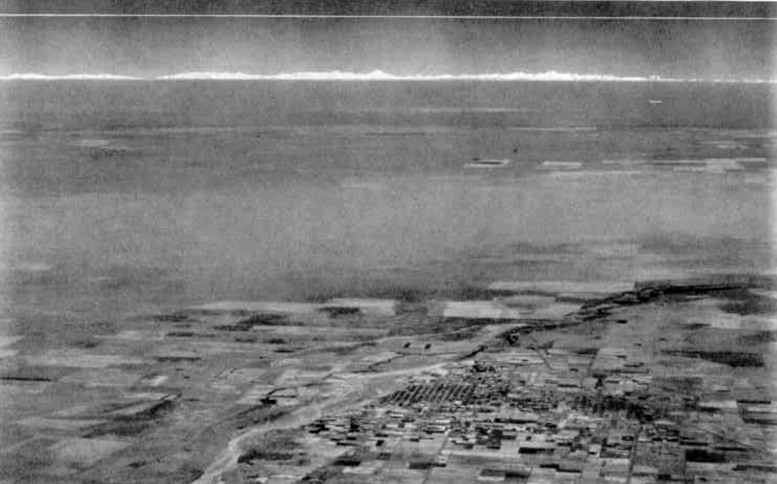
read the original caption in the May 1931 issue of The National Geographic
Magazine.
Under President John F. Kennedy’s administration, NASA aimed to put a man on the Moon by the end of the 1960s. The Apollo program achieved this goal with Neil Armstrong’s successful Moon landing in 1969. NASA also launched unmanned programs like Viking, Mariner, Voyager, and Galileo to explore other bodies in the solar system. NASA has captured significant images and achieved notable milestones. Capt. Albert W. Stevens photographed the Earth’s curvature from 21,000 feet (6.4 km) over Argentina in 1930.
Read more: Exposed: UFO’s are Chariots from Heaven sent by God to Watch Humanity
A German V-2 ballistic missile captured the first pictures of Earth from space in 1946, and the Explorer 6 satellite took the first photograph of Earth from orbit in 1959. The TIROS-1 weather satellite returned the first television images of the round Earth in 1960. The Soviet Molniya 1-3 communications satellite captured the first full-disk photograph of Earth in 1966. The ATS-1 advanced technology satellite transmitted the first image of Earth from geostationary orbit in 1967.
Must Read: Revealed: We Existed in Heaven as Celestial Beings Before We were Born into this World
NASA’s Apollo missions also achieved remarkable feats. The Lunar Orbiter 1 spacecraft captured the first picture of Earth from lunar distances in 1966. The Surveyor 3 robotic lander took the first photograph of Earth from the lunar surface in 1967. The Apollo 8 mission’s Earthrise photos inspired the ecology movement in 1968.
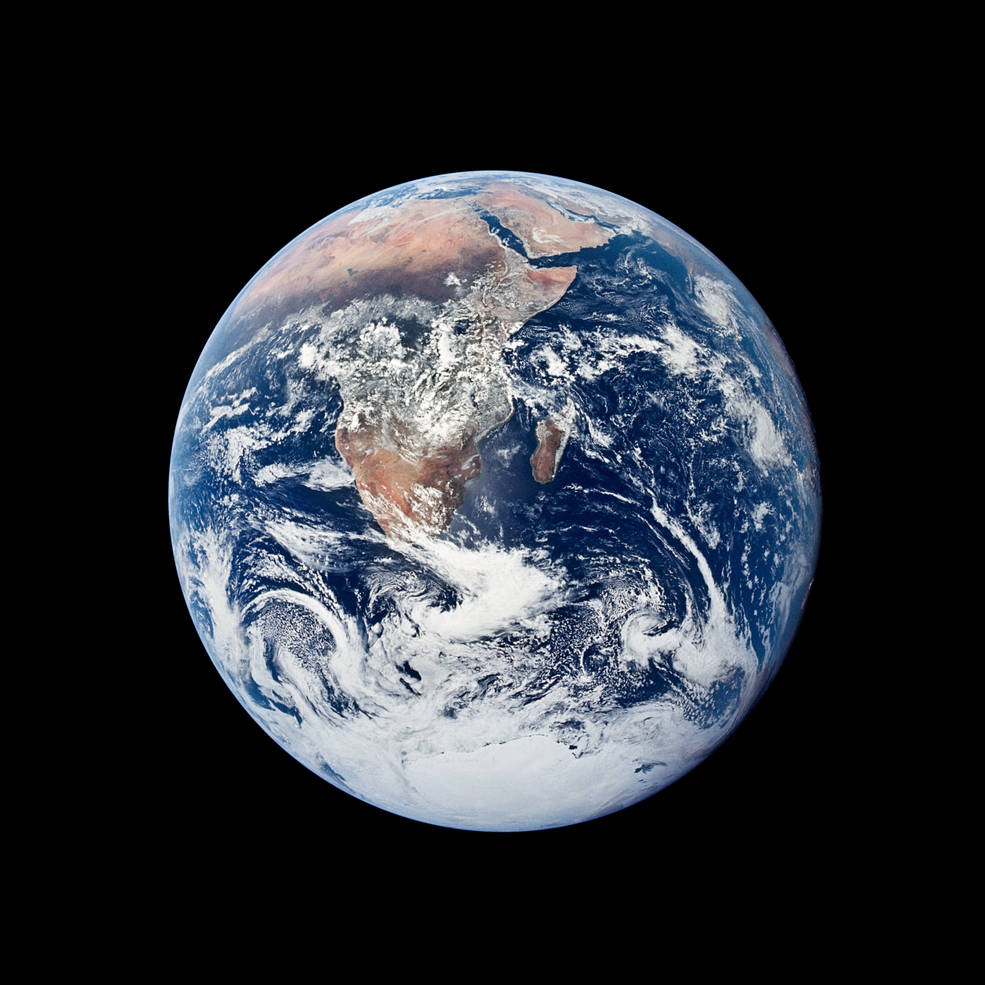
One of NASA’s most iconic images is the Blue Marble, taken by Apollo 17 astronauts from 72,000 miles (ca. 115,873 km) away. More recently, NASA’s Cassini spacecraft captured a remarkable series of pictures of Saturn, including The Day the Earth Smiled. The planets NASA explores are named after ancient Roman gods and goddesses.
Jupiter, the largest planet, is named after the king of the Roman gods, associated with the sky and thunder. Mars is named after the Roman god of war, while Mercury is named after the messenger of the gods, known for swiftness and cunning. Saturn is named after the Roman god of agriculture and time, and Venus is named after the goddess of love and beauty.
The Roman pantheon has had a lasting impact on the naming of celestial bodies. Uranus, named after the Greek god of the sky, and Neptune, named after the Roman god of the sea, were discovered later and added to the list of planets.
Bible Passages that Prove that We Live on a Flat Stationery Earth
The Bible is a collection of divine stories, prophecies, and instructions from God, given to prophets thousands of years ago. Composed in Hebrew, Aramaic, and Koine Greek, it comprises 66 books divided into the Old and New Testaments.
The Old Testament, with 39 books, chronicles God’s interactions with humanity from creation to around 450 BC, including the story of Adam and Eve. The New Testament focuses on Jesus Christ’s life, death, burial, resurrection, and ascension, providing guidance for Christians on living according to His teachings.
Read more: Exposed: UFO’s are Chariots from Heaven sent by our Creator to Watch Humanity
Several Bible passages suggest that the Earth is not a spinning ball, as claimed by NASA. Instead, they imply that we may live under an enclosed, solid structure. Here are some key verses that prove NASA’s theory wrong:
1. Genesis 1:6-7 KJV

6 And God said, let there be a firmament in the midst of the waters, and let it divide the waters from the waters. 7 And God made the firmament, and divided the waters which were under the firmament from the waters which were above the firmament: and it was so. 8 God called the firmament Heaven, and the evening and the morning were the second day.
Genesis 1:6-7 KJV
The concept of the “firmament” is crucial in understanding the biblical description of creation. According to the Bible, the firmament was created amidst the waters to separate the lower waters from the upper waters. Wikipedia defines the firmament as a vast solid dome created by God to divide the primal sea into upper and lower portions, allowing dry land to emerge.
This biblical account implies that God created a solid vault within the waters, establishing a clear separation between the waters above and below. The separation of dry land and water enabled the creation of a habitable environment for humanity.
2. Genesis 1:14 (KJV)
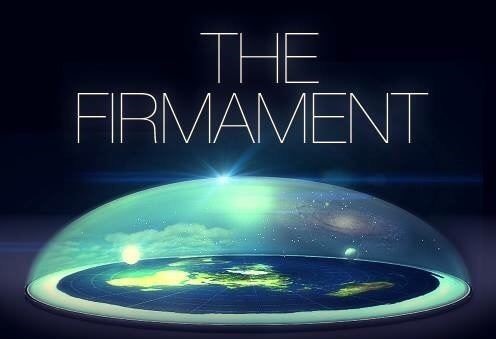
And God said, let there be lights in the firmament of the heaven to divide the day from the night, and let them be for signs, and for seasons, and for days, and years.
Genesis 1:14 (KJV)
According to the biblical account, God placed lights in the firmament to separate day and night, with the sun and moon serving as markers for this distinction. This perspective emphasizes their role in distinguishing between day and night rather than their astronomical functions.
3. Genesis 1:16 (KJV)
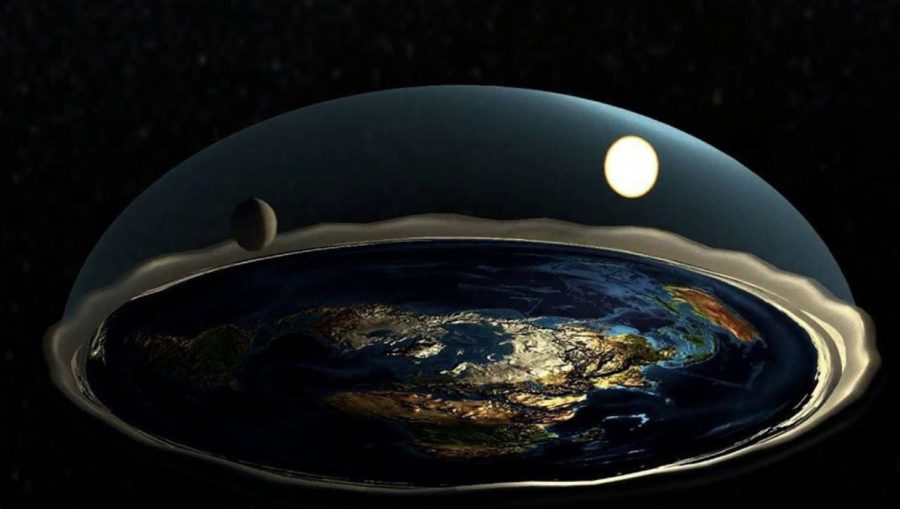
And God made two great lights; the greater light to rule the day, and the lesser light to rule the night: he made the stars as well.
Genesis 1:16 (KJV)
The Bible describes the sun and moon as the two great lights created in the firmament. Notably, it is said that the sun rules over the moon, which may explain why daytime is longer than nighttime. This biblical reference raises questions about NASA’s claims of landing on the moon.
If the moon is, in fact, a lesser light that reigns over the night, as depicted in the bible, how can NASA justify its claim that humans have walked on the surface of the moon?
4. Job 37:18 (KJV)
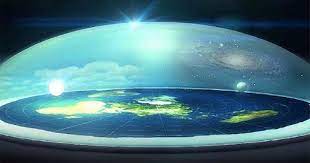
18 Hast thou with him spread out the sky, which is strong, and as a molten looking glass?
Job 37:18 (KJV)
In the book of Job, Elihu, one of Job’s friends, offered words of comfort during his time of distress. In his testimony, Elihu described the firmament in the sky as being like a molten glass structure (Job 37:18). This verse also shows that the ancient believers understood the firmament’s nature and composition.
5. Psalm 19:1 (KJV)

The heavens declare the glory of God, and the firmament sheweth his handywork.
Psalm 19:1 (KJV)
Psalm 19 beautifully describes the firmament as a testament to God’s divine glory and craftsmanship. This verse highlights the biblical theme of creation, reflecting God’s majesty and creative power.
6. Psalm 19:6 (AMP)

The sun’s rising is from one end of the heavens, And its circuit to the other end of them, And there is nothing hidden from its heat.
Psalm 19:6 (AMP)
The biblical description of the sun’s movement in a circuit or circular path within the firmament is explored. According to this view, the sun’s movement creates day and night cycles as it rotates from one end to the other and returns to its starting point, switching positions with the moon. This movement is illustrated by time differences between regions, such as Europe and America, where the sun’s rising and setting create alternating periods of day and night. The sun and moon’s circular movement within the firmament is described as the cause of day and night cycles worldwide.
7. Proverb 8:27 (AMPC)
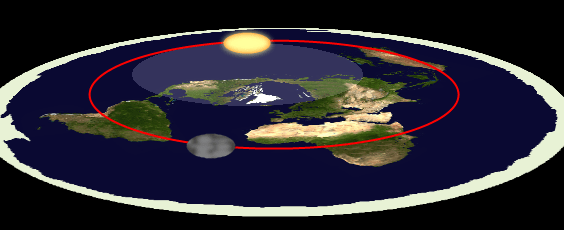
When He prepared the heavens, I [Wisdom] was there; when He drew a circle upon the face of the deep and stretched out the firmament over it,
Proverb 8:27 (AMPC)
Proverbs 8:27 describes God’s creation of the earth’s surface as a circle with a solid firmament above, separating the terrestrial and celestial realms. This biblical passage highlights the intentional design and structural integrity of God’s creation.

The United Nations logo features a circular map of the world, which some believe reflects the biblical description of the earth’s circular shape in Proverbs 8:27.
8. Job 38:10-11 (CSB)
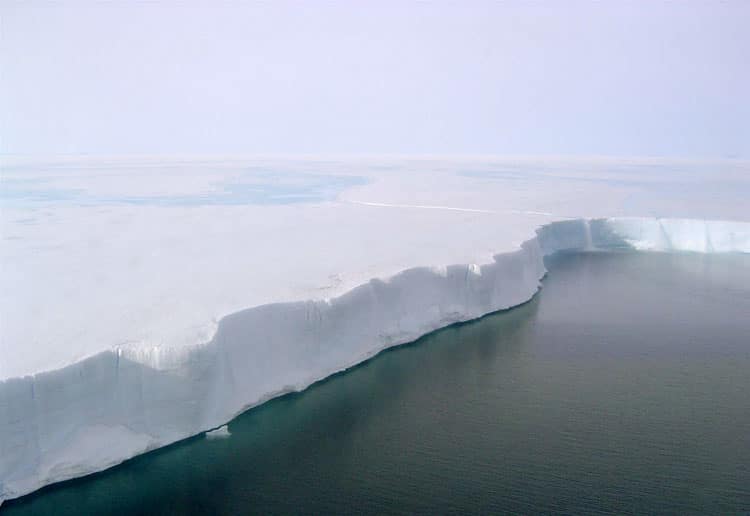
when I determined its boundaries and put its bars and doors in place, when I declared, “You may come this far, but no farther; your proud waves stop here”?
Job 38:10-11 (CSB)
This passage suggests Antarctica might be one of the boundaries established by God, citing its unique features such as no indigenous inhabitants, no history of war, and stringent environmental protections. These characteristics set Antarctica apart from other continents. Its untouched and preserved state is highlighted as a potential testament to God’s design. The continent’s dedication to scientific inquiry makes it different from other regions.
9. Proverbs 8:29 (AMP)

When He set for the sea, its boundary so that the waters would not transgress [the boundaries set by] His command, When He marked out the foundations of the earth
Proverbs 8:29 (AMP)
The waters surrounding Antarctica’s ice walls are described as having a peculiar temperature threshold, remaining resistant to fluctuations. This stability is notable, and some see it as a remarkable example of God’s design in the natural world. The precise maintenance of this temperature threshold is highlighted as a fascinating aspect of Antarctica’s unique environment.
10. 1 chronicles 16:30 (KJV)

Fear before Him, all the earth! The world also shall be stable, that it be not moved.
1 chronicles 16:30 (KJV)
This Bible verse directly contradicts NASA’s round Earth theory. This passage specifically states that God designed the Earth to be stable, immovable, and non-rotating, challenging the fundamental principles of NASA’s round Earth theory.
11. Isaiah 40:22 (KJV)
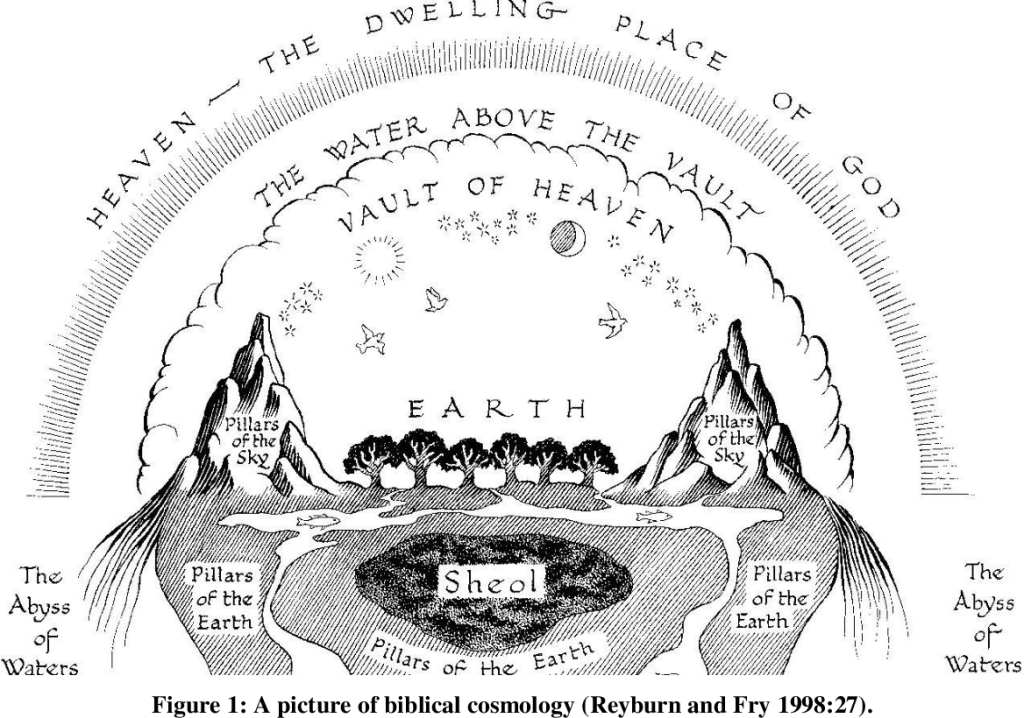
It is he that sitteth upon the circuit of the earth, and the inhabitants thereof are as grasshoppers; that stretcheth out the heavens as a curtain, and spreadeth them out as a tent to dwell in
Isaiah 40:22 (KJV)
This verse poignantly reminds us of the Most High God’s majestic presence, seated upon His throne above the firmament. It also humbles us, as we are compared to miniature grasshoppers in His sight. This emphasizes the vast chasm between God’s greatness and humanity’s relative smallness.
12. Isaiah 40:28 (AMP)

Do you not know? Have you not heard? The Everlasting God, the Lord, the Creator of the ends of the earth does not become tired or grow weary; There is no searching of His understanding.
Isaiah 40:28 (AMP)
The Bible describes the earth as having “ends” or “edges,” suggesting a finite creation with boundaries. This concept contrasts with the idea of the Earth being an endless sphere.
13. Book of Psalms 104:5

He established the earth on its foundations so that it will not be moved forever and ever.
Psalm 104:5 (AMP)
Psalm 104:5 describes the earth as being stationary, immutable, and unshakeable, established by God on its foundations to remain forever unchanged.
14. Matthew 3:3 (AMP)

This is the one who was mentioned by the prophet Isaiah when he said, “The voice of one shouting in the wilderness, ‘Prepare the road for the Lord, Make His highways straight (level, direct)!’”
Matthew 3:3 (AMP)
Many biblical passages describe the earth’s paths as straight rather than curved. These scriptures, among other things, propose that God designed the earth’s pathways to be straight, contradicting the curvature implied by a round Earth.
15. 2 Peter 3:5 (AMP)

For they willingly forget [the fact] that the heavens existed long ago by the word of God, and the earth was formed out of water and by water,
2 Peter 3:5 (AMP)
The Apostle Peter provides valuable insight into the earth’s formation in 2 Peter 3:5, stating, This scripture highlights the biblical account of creation, where the earth emerged from water, without any reference to a spinning, spherical Earth suspended in space.
How the continent Antarctica may be connected to the biblical flat earth
Antarctica, a natural reserve dedicated to peace and science, holds profound significance as the earth’s farthest reaches, meticulously designed by God. The Antarctic Treaty, effective since June 23, 1961, safeguards this frozen landscape, covering the Southern Hemisphere below 60°S latitude. With 46 countries ratifying the treaty, representing about 80% of the global population, access to Antarctica is strictly regulated, fuelling curiosity about the secrets it holds and sparking questions about what lies beyond its icy boundaries.
If you were fortunate enough to embark on a journey to Antarctica, you would stumble upon a colossal ice wall encircling the earth. This ice wall is, in fact, the boundary created by God. Venture beyond it, and you would discover the lower part of the firmament. It is not surprising that world powers are reluctant to allow unrestricted access to Antarctica, since they seek to bury the truth. The limited access to Antarctica raises questions about the intentions of those who want to keep its secrets buried.
Conclusion
This article has examined 15 pivotal Bible verses that challenge NASA’s claims about the Earth. With over 200 scriptures describing the Earth as an immovable land beneath a solid firmament, these selected verses provide a concise yet compelling case. It is clear that science is being used to hide the creator from his creations.
The same powers promoting this narrative also advanced the notion of human origin from apes, a claim disputed by many due to perceived inconsistencies in the evidence. What is even stranger is that all the planets allegedly said to be close to Earth, such as Venus, Mercury, Mars, Jupiter, Saturn, Uranus, and Neptune, are all named after various Roman pagan gods.
The debate over Earth’s shape boils down to perspective. Will you trust scientific findings from organizations with their agendas, or will you turn to biblical descriptions that offer a spiritual view of the world? The decision is yours.
Source
British Antarctic Survey. (n.d.). Retrieved from https://www.bas.ac.uk
National Aeronautics and Space Administration. (n.d.). Retrieved from https://www.nasa.gov



 Makewetalknow
Leave a comment