
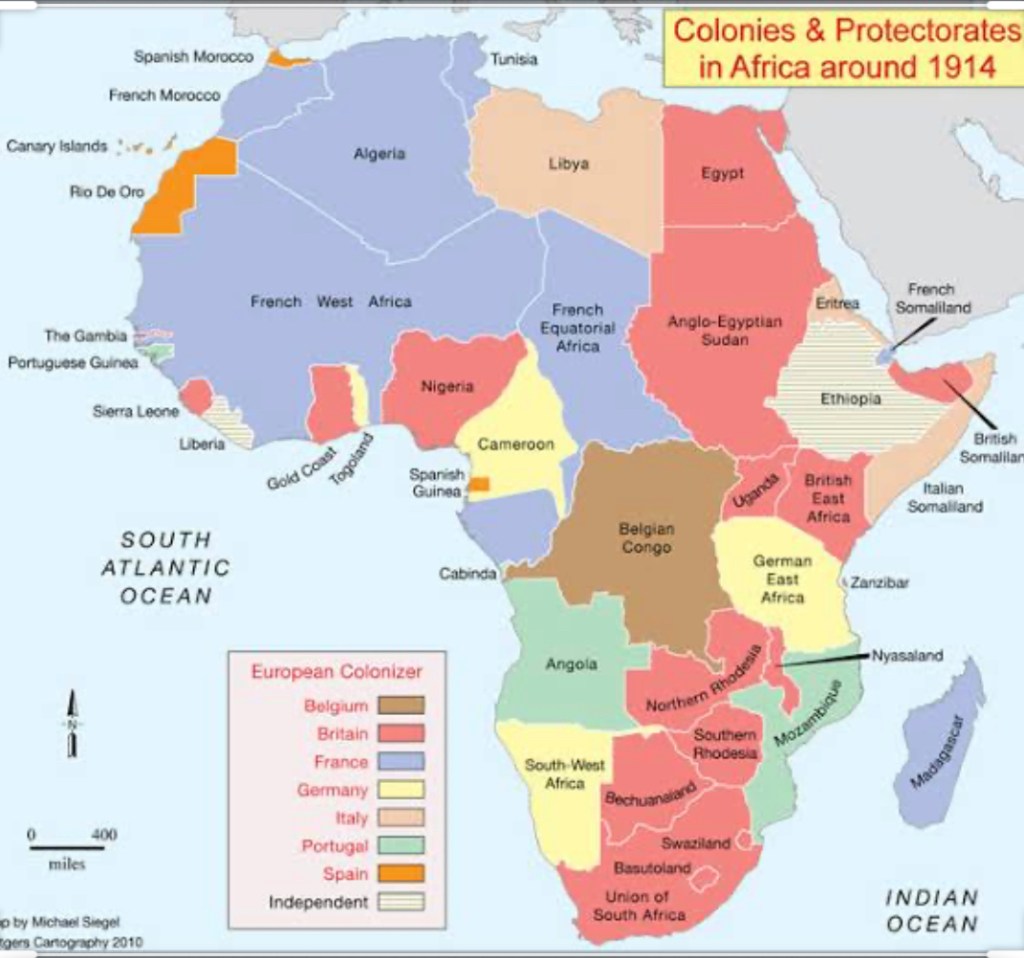
In many of my previous posts, I have discussed the impact of colonialism on the multitude of social, cultural, and economic challenges we face in Africa. The biggest problem that colonialism brought to Africa is that it took away our African languages, beliefs, and cultures. Many of us have either become lost, brainwashed, or have completely forgotten our culture and values. Instead of embracing our own identity, appearance, and language, we have opted to embrace that of others.
Today, in Africa, a man’s intelligence is measured by his proficiency in a language that he doesn’t identify with culturally. The moment an African is unable to communicate in any of the colonial languages, he is considered unintelligent. The irony of this is that if this applies to a man from France or England who cannot speak any African language that is foreign to him, no one will consider him unintelligent.
In every African society, people’s names are being judged by their pronunciation along with their origin. In fact, this phenomenon is widespread in every aspect of our societal and economic life. When you have a name that identifies with your culture, you are often ridiculed because it either sounds funny or is too long. You are most likely to get accepted and more favoured if you have a name that identifies with a colonial identity.
If I wear my African traditional attire, I am considered unfashionable and out of date. However, if I adorn clothes made by foreign brands like Gucci, Balenciaga, and the rest, then I am up-to-date and stylish. Some companies may even decline an opportunity to employ you due to the Africanization of your name. An African with the name Jack Williams is more likely to be noticed than someone with the name Mwangi, Otieno, Adebisi, Nwachukwu, Lethokuhle, or Andile.
One thing that we can learn from the Chinese is that they have a strong tradition of embracing their language and culture. They’re so proud of their dialect, their culture, and how they dress. This is why, whenever you intend to visit their territory, you have no other choice but to learn their language and how to eat their food. Unfortunately, the African situation is quite different. We developed a strange way of accepting another culture that we didn’t know before. Every region in the continent is guilty of this.
The regions that were colonized by France still hold a strong affection towards France and are extremely proud of their French language. Those who were colonized by the British have refused to let go of the shackles of the British influence. The same thing applies to those who were colonized by the Portuguese or Spanish, too.
Our native languages and cultures have become alien to us because of this. Africans who want to work in European countries like Germany, France, and others need to learn those languages before they can work or do anything useful. However, this is not the case in Africa, as any European from these same countries can work freely without learning Swahili, Yoruba, or Xhosa.
We are too quick to praise African scholars for their good use of English, but we overlook those who use their native language to create the same literal works. How many Europeans do you see who obsess over our native African languages and give their children African names?
Since colonization, our continent has been through a lot. You’d think we’d get our act together and be proud of our culture and dialects, but that’s not the case. Instead, we are becoming an imitation of another individual’s image. We have been conditioned to love anything foreign and hate anything local. Our reasoning has been influenced by it, which is why we use it to our disadvantage.
A few years ago, there was a Twitter dispute (now referred to as X) between Kenyans and Tanzanians regarding which nation possessed superior English proficiency. The Kenyans on X argued that they’re better at English than the Tanzanians. I was disappointed to see a group of African people defending another man’s language. I would have had no issue if the argument had been about who spoke better in Swahili, but instead, it was the opposite.
Those comments made me realize that Africa still has a long way to go, and I’m worried about the future. I can only imagine if we used all the energy we had learning foreign languages to teach our younger ones our culture, we could break this chain of inferiority.
I have always been a strong advocate for giving priority to our African language. The fastest way to unify a people is through the exchange of language. The most spoken African language is Swahili, which is spoken by over 200 million people. Originally considered to be an obscure island dialect of the African Bantu language, Swahili has since evolved into the most internationally recognized language in Africa.
Africa’s Swahili-speaking area now covers a full third of the continent from south to north and on the opposite coast. As a result of the coordinated efforts of the government of Tanzania, Swahili has been designated as one of the three official languages (along with English and French) of the East African Community (EAC) countries, namely Burundi, Democratic Republic of the Congo, Kenya, Rwanda, Somalia, South Sudan, Tanzania, and Uganda.
Because of this, I advocate that Swahili should replace various colonial languages in Africa and become the national language. Instead of English, French, and Portuguese, Swahili should be our preferred language of communication.
In addition to our indigenous native languages, Swahili can be utilized as the primary language of the African populace. This would not only enhance our economic, social and cultural expansion, but also provide us with a fresh identity that we can identify with, rather than one that lacks any connection to us.
The time has come for us Africans to establish a unified identity that will make us stand out as a group. I believe that adopting Swahili as a common language for us is that identity that can unify us uniquely within our diverse tribal differences. This will enable us to evaluate our intelligence based on our native language and culture, rather than relying on other foreign languages that lack a connection to us.




 Makewetalknow
Leave a comment